Nanjing Road shopping is the reason most first-time visitors to Shanghai end up on this street, whether they planned to or not. The road runs about 5.5 kilometres from the Bund to Jing’an Temple. You do not have to be a serious shopper to get something out of it. If you are one, this is where the city packs its department stores, its century-old specialty shops and a run of luxury malls into a single walkable line.
The thing to understand before you go is that the road has two halves with completely different personalities, split at Middle Xizang (Tibet) Road. East Nanjing Road, the section nearest the Bund, is the historic pedestrian street: mid-priced stores, old-name Chinese shops, food halls, neon, and a sightseeing tram trundling up and down. West Nanjing Road, running from People’s Square out towards Jing’an, is the luxury district, where Plaza 66 and HKRI Taikoo Hui hold the designer flagships. Most people walk the East section for the atmosphere and ride the metro a stop or two west if they want the high-end malls. This guide covers both, plus what is actually worth buying, where to eat, the scams that target tourists here, and how to get in and out.
Table of Contents
- Nanjing Road at a Glance
- A Short History of the Street
- East Nanjing Road vs West Nanjing Road
- What to Buy on Nanjing Road
- East Nanjing Road Shopping: Stores and Malls
- Luxury Malls on West Nanjing Road
- Century-Old and Traditional Shops
- The Dangdang Sightseeing Tram
- Where to Eat on Nanjing Road
- A Suggested Walking Route
- Getting There by Metro
- Scams to Avoid on Nanjing Road
- Practical Tips and Common Mistakes
- Bargaining and Pricing
- Frequently Asked Questions
Nanjing Road at a Glance
Nanjing Road (南京路, Nánjīng Lù) is the main east–west commercial street through central Shanghai. It starts at the Bund, where it meets Zhongshan East 1st Road on the Huangpu River, and runs west for about 5.5 kilometres to the area around Jing’an Temple. Signs and locals treat it as two roads. Nanjing Road East (Nanjing Dong Lu) runs from the Bund to Middle Xizang Road at People’s Square and lies in Huangpu District. Nanjing Road West (Nanjing Xi Lu) is the longer stretch beyond it, and most of it is in Jing’an District.
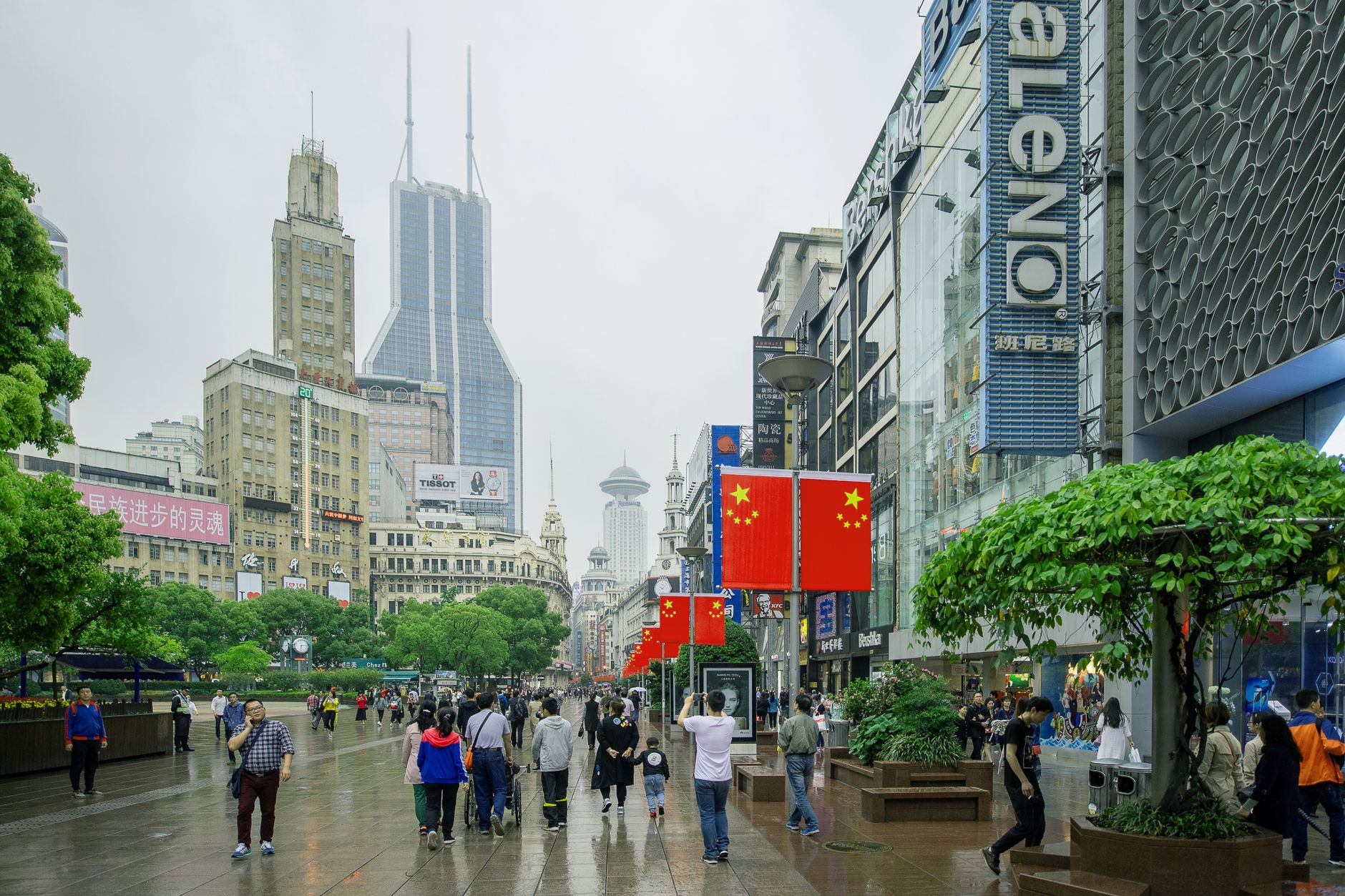
The part you will spend most time on is the pedestrian street, which now covers the whole of Nanjing Road East: about 1.5 kilometres of car-free paving from the Bund to Middle Xizang Road. The western kilometre, from Middle Henan Road to Xizang Road, was pedestrianised in September 1999, and a 500-metre extension to the Bund opened in September 2020. Older guides that start the pedestrian zone at Henan Road are out of date. The luxury malls are a separate trip on the West side, easily reached because Metro Line 2 runs under nearly the whole road.
| Nanjing Road East | Nanjing Road West | |
|---|---|---|
| Stretch | The Bund to Middle Xizang Road, about 1.5 km, all pedestrianised | Middle Xizang Road to Jing’an Temple, about 4 km, open to traffic |
| Feel | Crowds, neon, department stores, food halls, the tram | Luxury malls, office towers, hotels, wide pavements |
| Key stops | No.1 Department Store, No.1 Food Store, Lao Feng Xiang, Duoyunxuan, the White Rabbit Store | Plaza 66, HKRI Taikoo Hui and the Starbucks Reserve Roastery, Zhang Yuan, Jing’an Temple |
| Metro | East Nanjing Road (Lines 2, 10), People’s Square (Lines 1, 2, 8) | West Nanjing Road (Lines 2, 12, 13), Jing’an Temple (Lines 2, 7, 14) |
| Prices | Mid-range, with snack shops for a cheap meal | Designer prices in the malls |
| Bargaining | Fixed prices in shops; ignore the touts | Fixed prices |
| Best time | Weekday mornings, or after dark for the neon | Any weekday; weekends are busier |
Most shops open around 10:00 and close around 22:00, though hours vary from shop to shop. The biggest public holidays are the crowded ones, when the street is managed with crowd control. If crowds bother you, avoid those days and start early.
A Short History of the Street
Nanjing Road grew up as a commercial street in the 1840s and 1850s, in the British Settlement north of the walled Old City; in 1863 the British and American settlements merged to form the International Settlement. The road began as a short lane called Park Lane and was formally renamed Nanking Road in the 1860s. By the 1930s it was Shanghai’s leading shopping street, anchored by the “Big Four” department stores: Sincere, Wing On, Sun Sun and Da Sun, the last of them opening in 1936. Da Sun was also the first department store on the street to install escalators.
One of those buildings is still where you shop: Da Sun is now Shanghai No.1 Department Store. Commerce on the street was heavily disrupted during the Cultural Revolution (1966 to 1976). The reforms of the 1980s and 1990s brought it back: state-owned department stores were modernised, foreign brands returned, and on 20 September 1999 the stretch from Middle Henan Road to Middle Xizang Road became a pedestrian street. The 2020 extension carried it the rest of the way to the Bund. What you see today is a layering of eras, from late-Qing shop names to 1930s department stores and present-day flagships, standing more or less shoulder to shoulder.
East Nanjing Road vs West Nanjing Road
The two halves of the road divide at Middle Xizang Road, and they suit different visitors. East Nanjing Road is the famous, touristy half: pedestrianised from the Bund to People’s Square, mid-priced, and full of old-name Chinese shops, department stores with deep histories, high-street brands and street snacks. It is busier than the West side because day-trippers flow straight off the waterfront onto it, so expect crowds during the day.
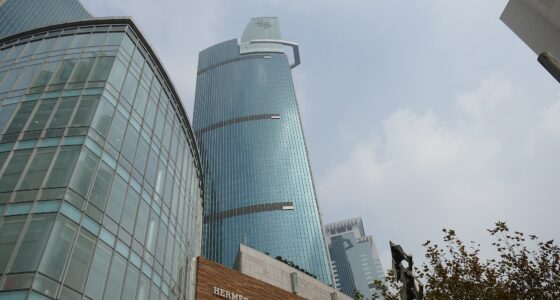
West Nanjing Road is the luxury half, running from People’s Square out through Jing’an. This is where the designer money is: Plaza 66, HKRI Taikoo Hui, CITIC Square and a handful of other malls carrying Chanel, Hermès, Louis Vuitton, Dior, Prada, Cartier and the rest. The crowd skews local and business rather than tourist, quiet during the working day and busier at weekends. If you only have one afternoon, walk the East section from the Bund to People’s Square (about 1.5 kilometres), then ride Line 2 one or two stops west if you want the malls, or just the contrast.
What to Buy on Nanjing Road
Because the street sells everything from a bag of White Rabbit sweets to five-figure handbags, it helps to go in knowing what is actually worth buying here.
Traditional Chinese goods. The cluster of old-name specialty shops is the most distinctive thing about Nanjing Road shopping. Gold and jade (Lao Feng Xiang), calligraphy and painting supplies (Duoyunxuan) and traditional medicine (Cai Tong De Tang) all have houses on the street that have traded for well over a century. These are the souvenirs with real provenance, as opposed to the mass-produced trinkets sold everywhere else. For a fuller breakdown of what makes a good Shanghai keepsake, see our Shanghai souvenirs guide.
Local food to take home. The old food halls sell packaged Shanghainese specialties that make better presents than another fridge magnet: White Rabbit sweets, butterfly pastries, preserved plums and fruit, traditional cakes, tea. The fresh-meat mooncakes and cured duck they are also famous for are best eaten here, because most countries refuse meat at the border.
Fashion and luxury. If you came for brands, the West side malls carry the full luxury roster, and the East side covers high-street and fast-fashion names. Tax-free shopping is available to international visitors at designated stores above a minimum spend (see the tips section).
China Chic souvenirs. A newer category worth a look is the guochao (China Chic) boutiques selling design-led local souvenirs, from building-block kits of Bund landmarks to keychains shaped like shikumen lane-house doorways. The city’s own official souvenir range, Shanghai Gifts (上海礼物), has a counter in the No.1 Food Store.
What to be careful about: roadside “silk” and “pearl” vendors, and anyone who pulls you off the street with a deal. Quality on those is wildly inconsistent. Buy fabric and jewellery from established shops, not from someone working the pavement.
East Nanjing Road Shopping: Stores and Malls
The pedestrian street is best handled on foot, browsing as you go rather than aiming for a single target. A few places stand out enough to plan around. House numbers start at the Bund and climb as you walk west, which makes the addresses below easy to find.
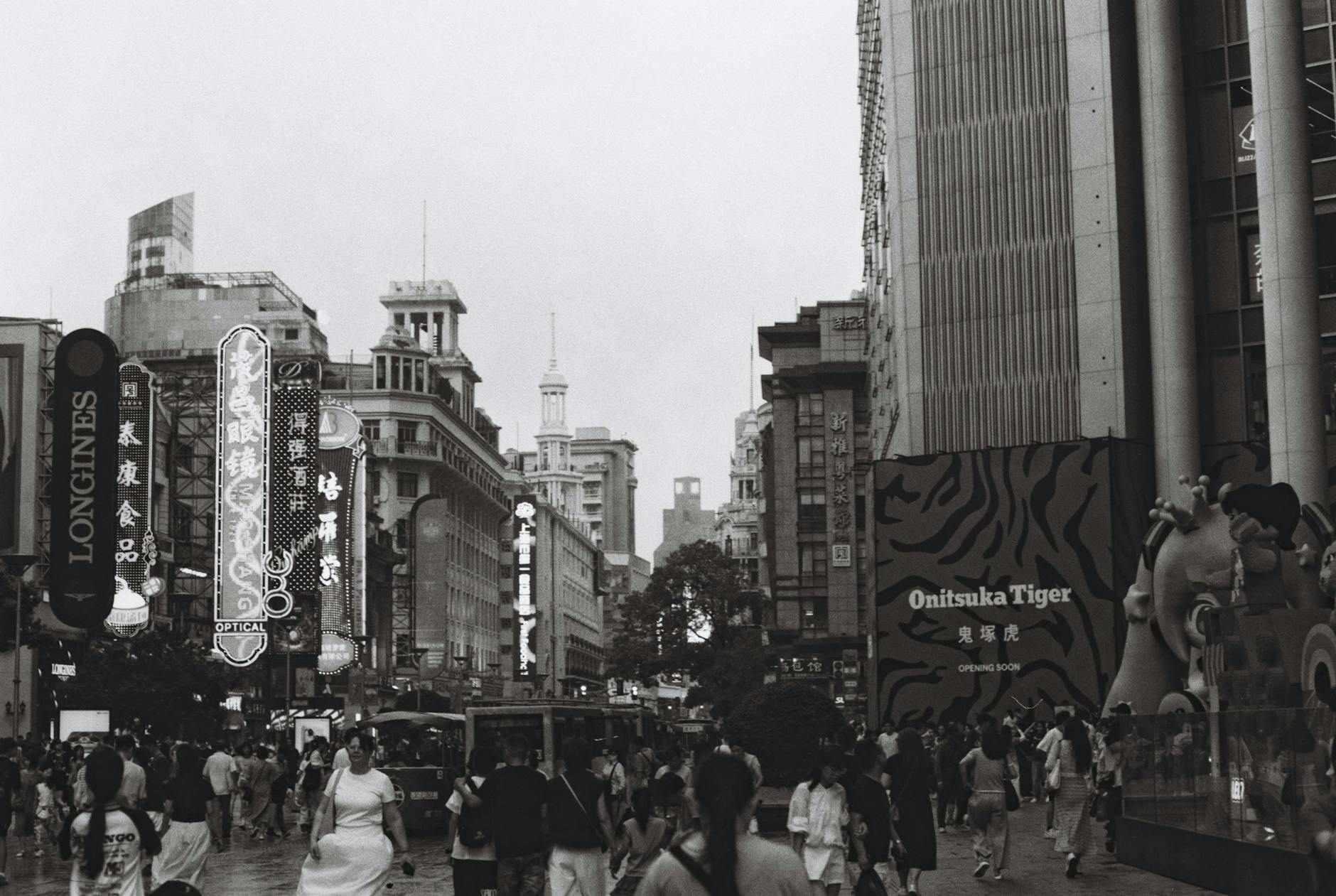
Shanghai No.1 Department Store (上海市第一百货商店), 830 East Nanjing Road, at Middle Xizang Road. The anchor of the western end, in the 1936 Da Sun building, the last of the Big Four. Nine floors of mid-range Chinese and international brands, gifts and household goods. Worth a walk-through for the building even if you buy nothing.
Shanghai No.1 Food Store (上海第一食品商店), 720 East Nanjing Road, in the old Sun Sun building. The best single stop for edible souvenirs: White Rabbit tins, mooncakes in season, preserved fruit, tea and Shanghai cakes. Inside are Huadian’s butterfly pastries and Lao Xiang Zhai’s, sold by weight at ¥110–130 per 500 grams, plus a Shanghai Gifts counter.
Apple Nanjing East. Apple’s store on East Nanjing Road.
New World Daimaru (新世界大丸百货), 228 East Nanjing Road, towards the Bund end. Billed by the city as the largest one-stop department store on Nanjing Road, and open 10:00–22:00.
High-street names and flagships. Between the older buildings you will pass the familiar global and Chinese chains in modern mall units, and Pop Mart, the blind-box toy brand behind Labubu, has a flagship on the street.
Heritage facades. Part of the appeal is the architecture. Art Deco and early-modern buildings along the street now house restaurants, boutiques and hotels behind their original frontages, and they reward looking up rather than only into shop windows. At the Bund end, the Peace Hotel (1929) turns the corner from Nanjing Road onto the river.
Luxury Malls on West Nanjing Road
The mall scene on the West side begins around People’s Square and continues into Jing’an. These are the heavy hitters. For how they compare with Pudong’s malls, see our guide to the best malls in Shanghai.
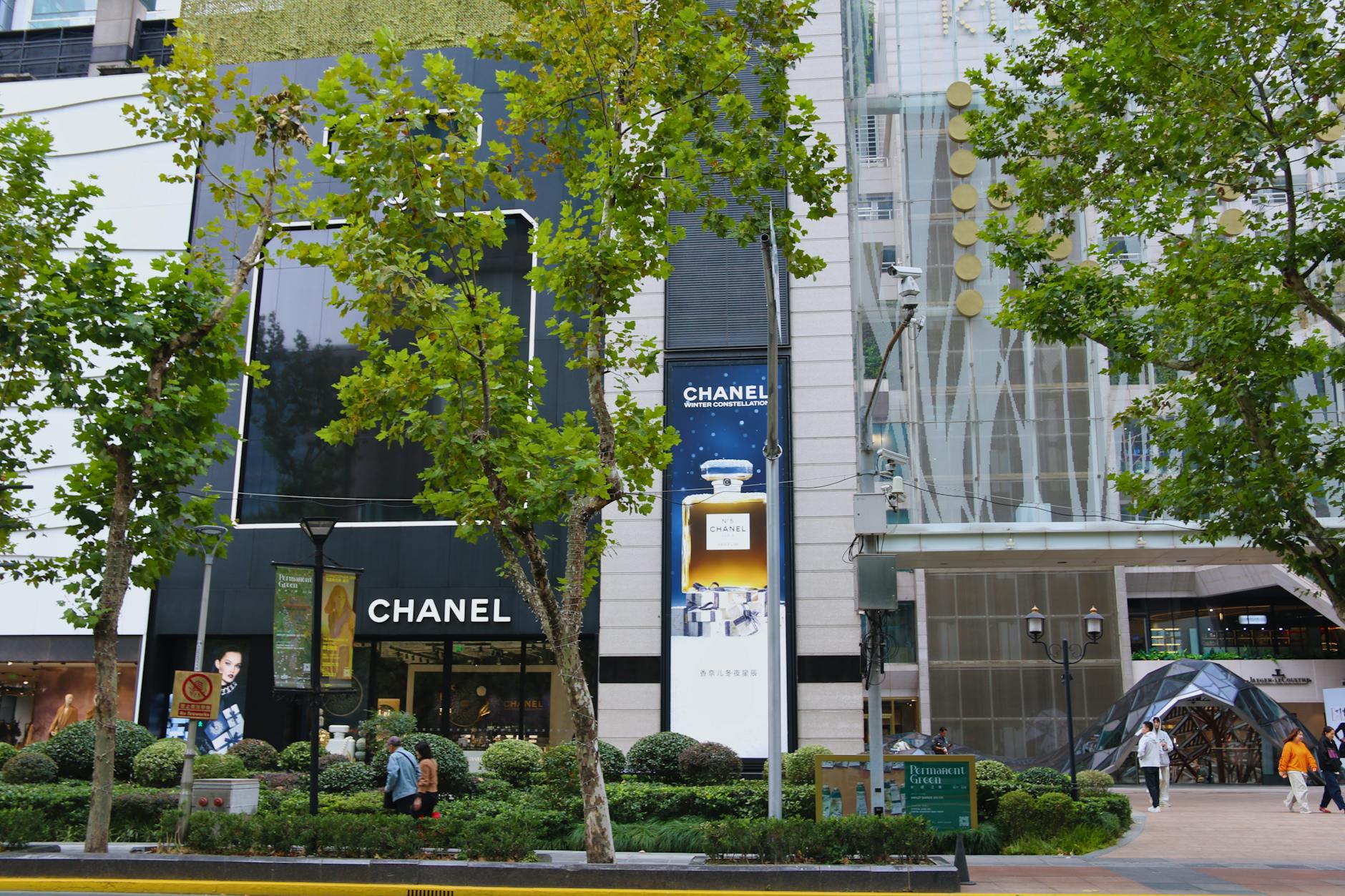
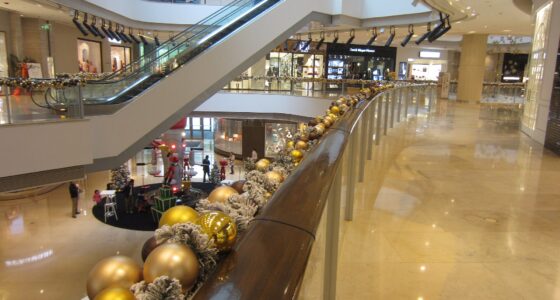
Plaza 66 (恒隆广场), 1266 West Nanjing Road. The benchmark luxury mall in Puxi: five floors and more than 100 international luxury brands and dining outlets, with Chanel, Dior, Hermès and Louis Vuitton among the names. If you only enter one mall on the West side, make it this one.
HKRI Taikoo Hui (兴业太古汇), 789 West Nanjing Road. Opened in 2017 with around 250 brands spanning luxury and mid-range, and one of the better dining line-ups on the street. Its draw for non-shoppers is the Starbucks Reserve Roastery, a 2,700-square-metre working roastery that was the first in Asia when it opened in December 2017. The complex has its own hotel, Upper House Shanghai, which was called The Middle House until Swire Hotels renamed it in October 2025, and The Sukhothai Shanghai sits beside it at 380 Weihai Road. Many visitors find this the most enjoyable mall to spend time in, as opposed to just shop.
Zhang Yuan (张园), at Taixing Road and Wujiang Road, a few minutes from West Nanjing Road station. Shanghai’s largest and best-preserved shikumen compound, laid out as a private garden in 1882 and opened to the public in 1885. More than 1,100 families were moved out from 2019, and the western half reopened in December 2022 as a luxury retail quarter of restored lane houses. Even if you buy nothing, it is the most interesting place on the road to see what big money does with old Shanghai.
CITIC Square (中信泰富广场). An easy add-on if you are already walking the West side.
Westgate Mall (梅龙镇广场). A mid-range mall that is popular with locals and useful if you want everyday brands rather than designer ones.
Réel, on West Nanjing Road. Luxury and lifestyle brands in a quieter building with a boutique feel, usually less crowded than Plaza 66 or Taikoo Hui.
Apple Jing’an. Designed by Foster + Partners and opened in 2024, it sits below ground under a circular public plaza beside Jing’an Park, across Nanjing Road from Jing’an Temple. Worth a look for the design alone.
Century-Old and Traditional Shops
Beyond the malls, the East section keeps a handful of Chinese houses that have been trading for well over a century. These are where to look for souvenirs that mean something, and all of them have fixed prices.
Lao Feng Xiang (老凤祥), with jewellery shops on East Nanjing Road. Founded in 1848, a long-established Chinese jeweller specialising in gold and jade. Gold is priced by the gram at the day’s rate plus a making charge, so ask for both figures.
Duoyunxuan (朵云轩), 422 East Nanjing Road. Founded in 1900, and still one of the city’s long-established names for calligraphy and painting supplies: brushes, ink, paper, red seal paste and work by Shanghai artists. The right place for a serious, lasting souvenir.
Cai Tong De Tang (蔡同德堂), 450 East Nanjing Road. A traditional Chinese medicine house founded in 1882. Interesting to browse even if you buy nothing.
The White Rabbit Store, 100 East Nanjing Road, at the Bund end. Gift boxes and tins of the milk sweet that Shanghai has made since 1943.
Shen Da Cheng (沈大成). A traditional cake shop for glutinous-rice sweets and mung bean cakes, including a pistachio version.
Silk. Nanjing Road’s great silk houses are mostly history. Laou Kai Fook (老介福), the city’s biggest silk shop in the 1930s, has mostly withdrawn from its old building at 257 East Nanjing Road. For a scarf, a fixed-price shop with a fibre label beats any street pitch; for made-to-measure silk, go to the South Bund Fabric Market.
Shanghai Foreign Languages Bookstore. On Fuzhou Road, the old book street a few blocks south, and useful for English-language books, maps and Chinese-learning material.
For more on haggling at the city’s markets, our Shanghai markets and haggling guide goes deeper on technique.
The Dangdang Sightseeing Tram
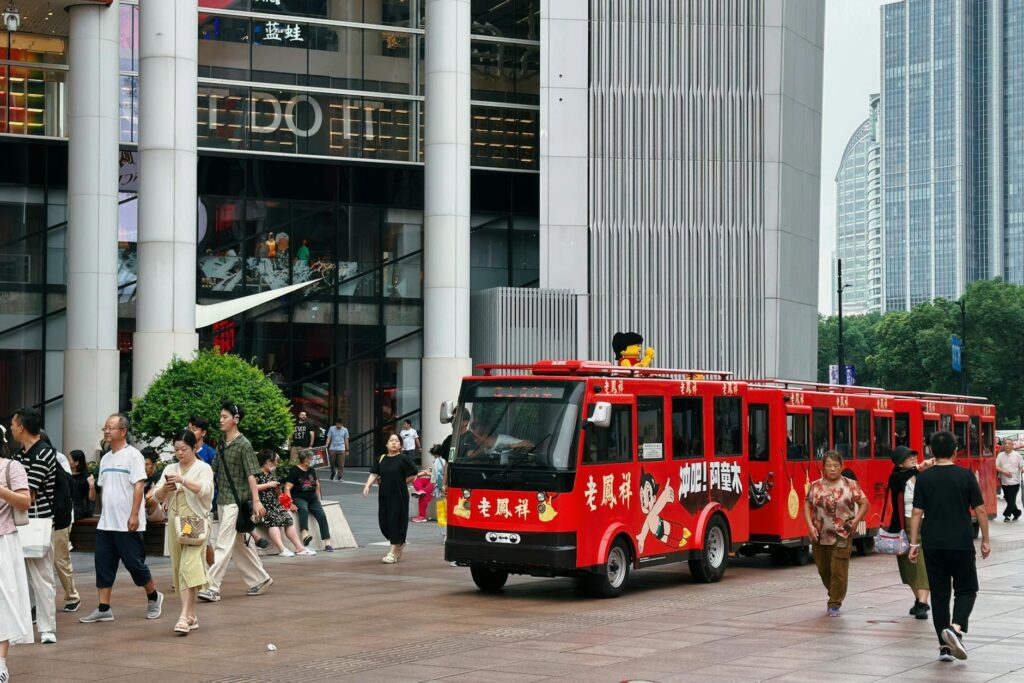
The little open-sided trolley that runs along the East Nanjing Road pedestrian street is the Dangdang tram (铛铛车). It is part transport, part novelty: when your feet are done, it carries you along the promenade so you can watch the old and new storefronts slide past.
It moves slowly and costs a few yuan a ride. It is the most painless way to cover the street at the end of a long walking day, and cheap enough that there is no reason not to try it once.
Where to Eat on Nanjing Road
The street feeds every budget, from a cheap snack-shop lunch to mall fine dining. A working shortlist:
Old-name food halls. Several are destinations in their own right. The No.1 Food Store gathers local snacks and traditional cakes under one roof; Shen Da Cheng does glutinous-rice cakes; Zhen Lao Da Fang (真老大房), 536 East Nanjing Road, is known above all for fresh-meat mooncakes; Shao Wan Sheng (邵万生) is the name for wine-cured crab and mud snails; and Wangjiasha (王家沙) does wontons and festival snacks. All double as gift shops, though the meat and seafood are for eating here rather than packing.
Butterfly pastries. Shanghai’s favourite biscuit is a French palmier the city adopted as its own. The Park Hotel (国际饭店), 170 West Nanjing Road, sells the best-known version at about ¥30 a bag (08:00–22:00), and queueing for it is part of the ritual. Harbin Food Factory (哈尔滨食品厂), 536 East Nanjing Road, makes a rival on the city’s intangible heritage list at about ¥50 a bag (09:00–18:00). Shanghai’s official city site keeps a guide to the main butterfly-pastry bakeries.
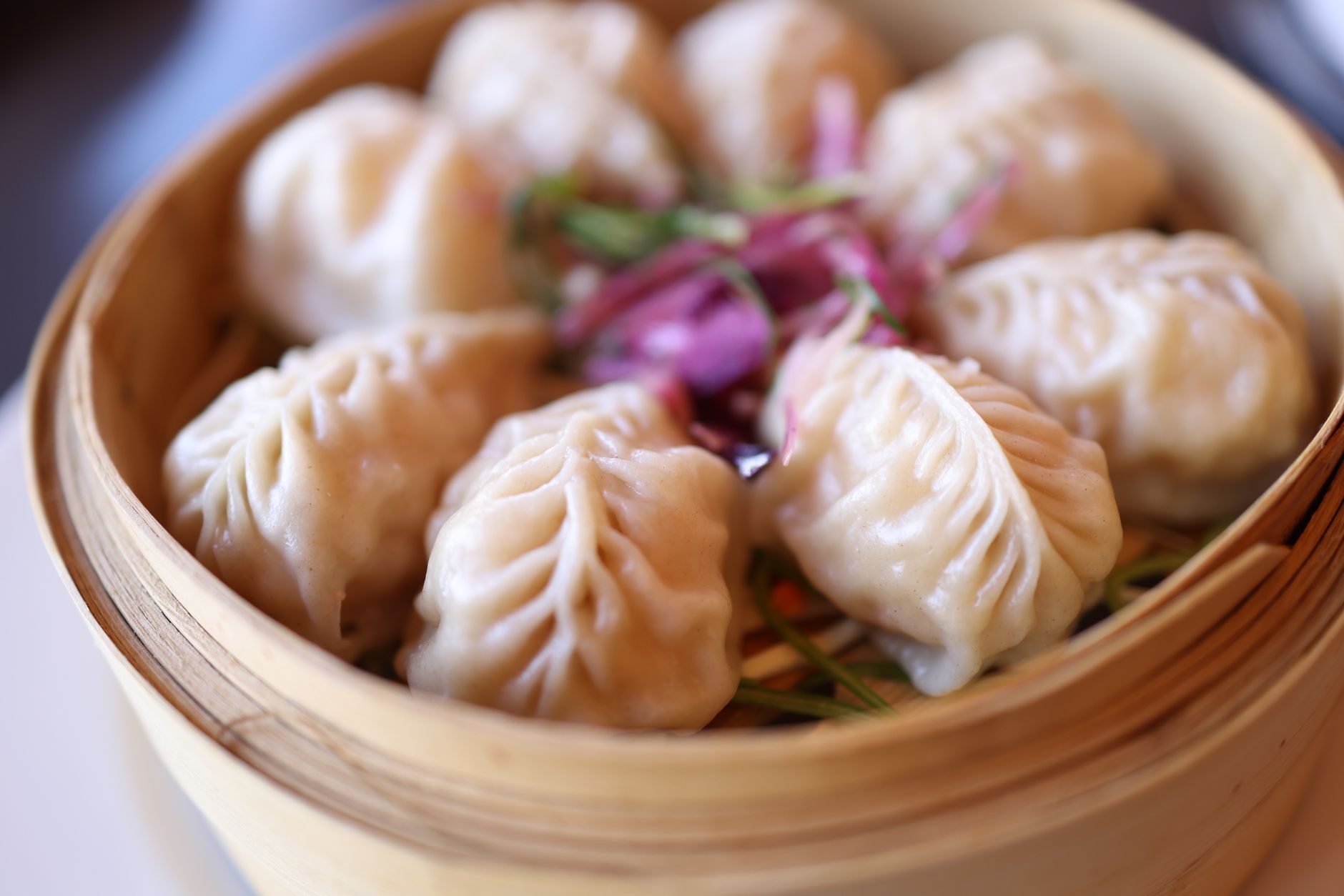
Yang’s Fry-Dumpling (小杨生煎). The best-known shengjianbao (pan-fried soup dumpling) chain, with branches around People’s Square including one on Huanghe Road. Cheap, fast and reliably good.
Huanghe Road (黄河路). The old restaurant row running north from West Nanjing Road at People’s Square, back in fashion since it starred in Wong Kar-wai’s TV series Blossoms Shanghai (繁花). Jia Jia Tang Bao (佳家汤包), 127 Huanghe Road, is many locals’ pick for xiaolongbao.
Wujiang Road (吴江路). The pedestrianised food street just south of West Nanjing Road, near West Nanjing Road station. Redeveloped into mostly chain restaurants, it is cheap and reliable rather than atmospheric.
Mall dining. On the West side, the restaurants in HKRI Taikoo Hui and the upper floors of Plaza 66 are the natural lunch stop on a luxury-shopping day.
For a wider survey of where and what to eat across the city, see our Shanghai food guide.
A Suggested Walking Route
The standard way to do Nanjing Road is east to west, ending at People’s Square or carrying on to the West side by metro.
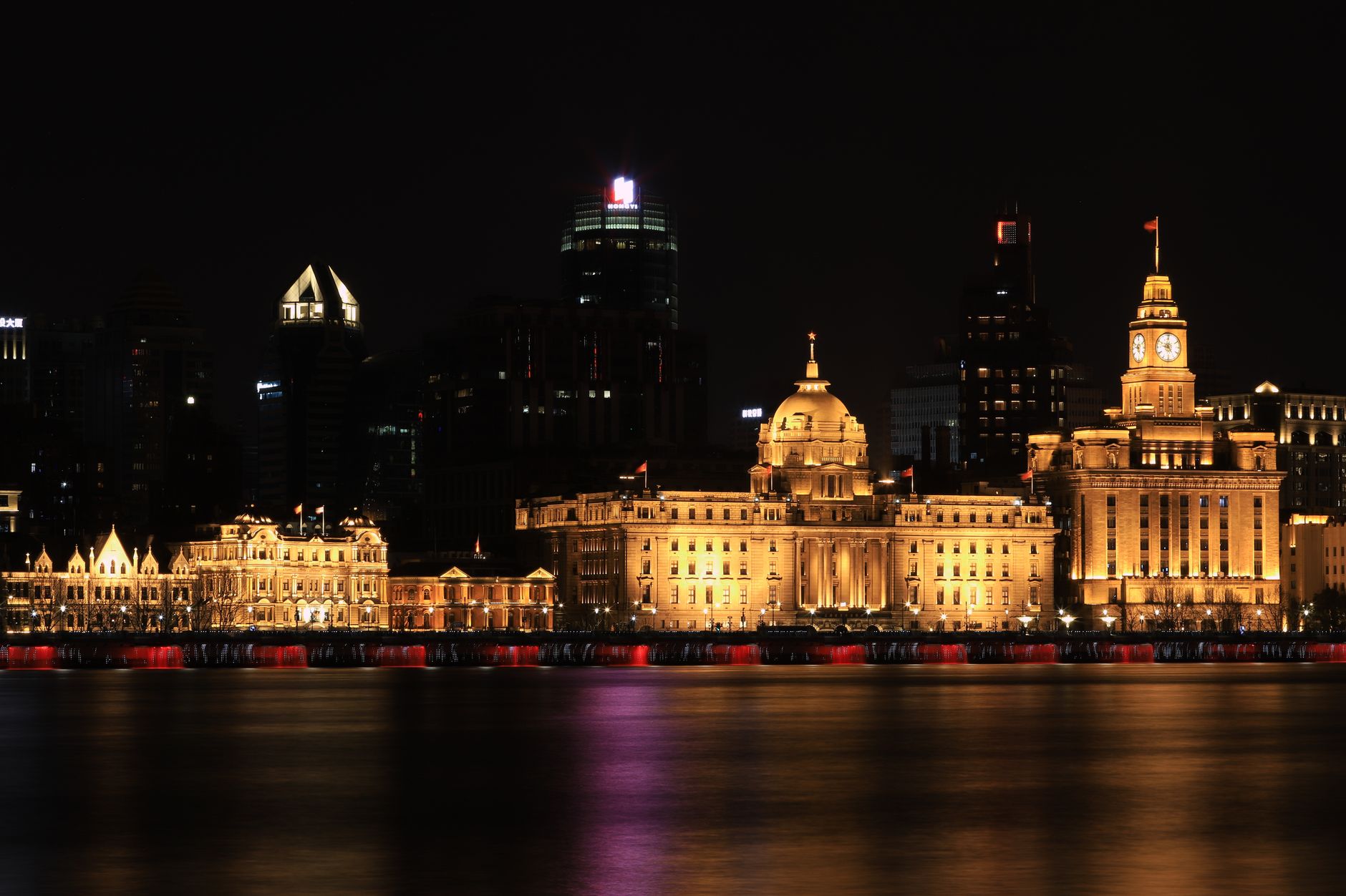
- Start at the Bund. Take your riverfront photos first (our guide to the Bund covers what to look for), then turn your back to the water by the Peace Hotel and walk west. Since 2020 the pedestrian street starts right there.
- Walk the pedestrian street to People’s Square. Take it slowly. The White Rabbit Store comes first, then Duoyunxuan and Lao Feng Xiang in the 400s, the food halls in the 500s to 700s, and the No.1 Department Store at Xizang Road. Allow 60 to 90 minutes for unhurried browsing.
- Break for lunch. Detour north up Huanghe Road for xiaolongbao and shengjianbao, or pick up butterfly pastries at the Park Hotel and keep going.
- Metro to West Nanjing Road. One stop on Line 2 from People’s Square. Plaza 66 is the benchmark for luxury, HKRI Taikoo Hui is the more pleasant mall to linger in (and has the Roastery), and Zhang Yuan is a short walk away.
- Finish at Jing’an Temple. The far western end is anchored by the gilded Jing’an Temple, which charges for entry and keeps daytime hours, a calm, contrasting place to end a shopping day. The famous view of its gold roofs against the towers is free from the pavement.
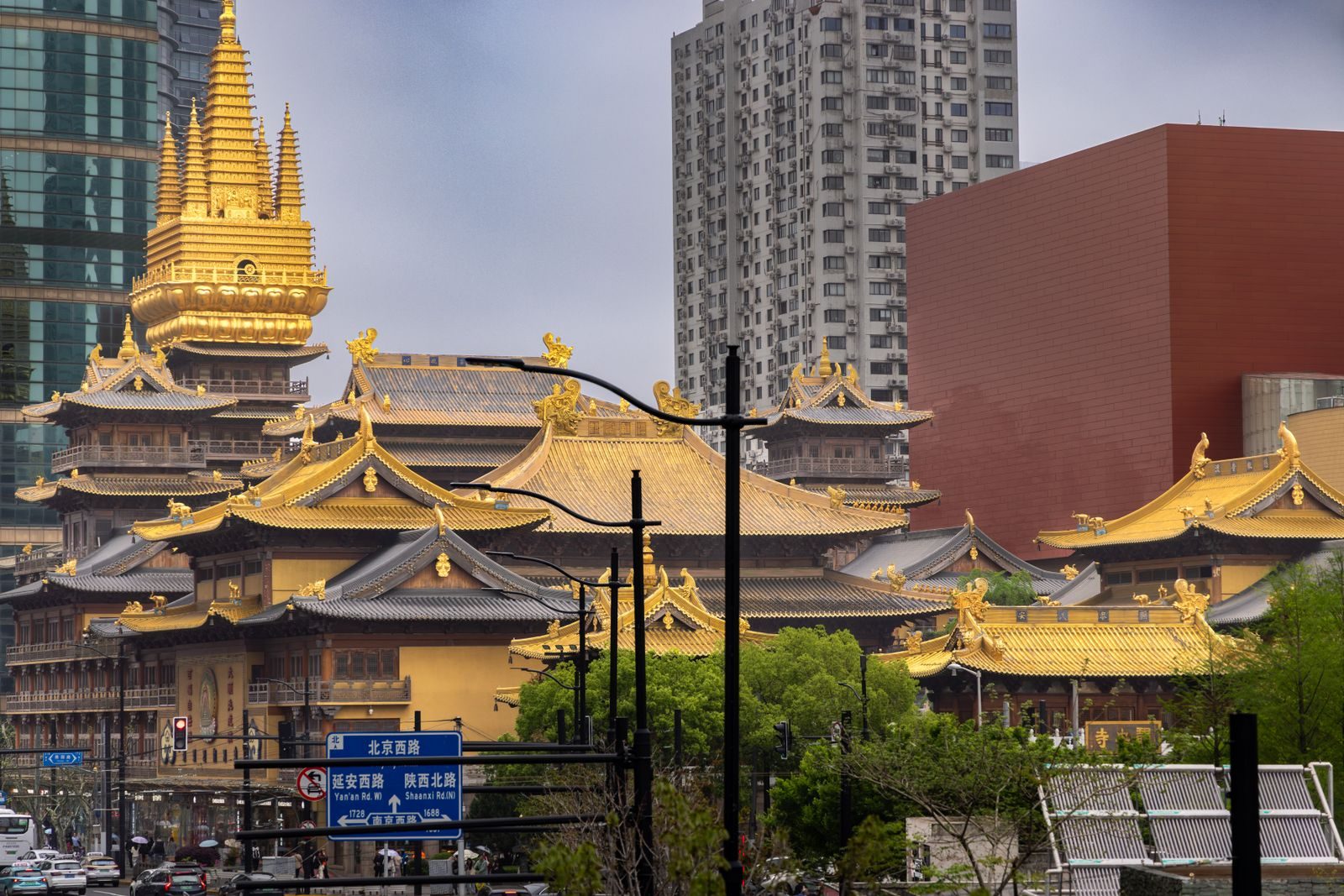
Plan on three to four hours including stops. You can cut it short by skipping the West side entirely if luxury malls are not your thing.
Getting There by Metro
Nanjing Road is easy to reach by metro, with Line 2 following its length and several stations along it.
East Nanjing Road station (Lines 2, 10). The nearest stop to the Bund end. Follow the signs for the pedestrian street and you come up near the Middle Henan Road junction; the Bund is about 500 metres east.
People’s Square (Lines 1, 2, 8). The western end of the pedestrian street and one of the busiest interchanges in Shanghai. Follow the signs for Nanjing Road East to walk into the pedestrian street.
West Nanjing Road station (Lines 2, 12, 13). The stop for Plaza 66, HKRI Taikoo Hui, Zhang Yuan and Wujiang Road.
Jing’an Temple (Lines 2, 7, 14). The western end of the shopping stretch; the exits come up at the temple walls.
On big holidays. During National Day week and other major festivals, East Nanjing Road station is closed at peak times and trains run through without stopping, and the pedestrian street is managed as a moving corridor rather than a place to stop and browse. On those evenings, use People’s Square, or come in the morning instead.
A common approach is to ride to East Nanjing Road station, walk the pedestrian street to People’s Square, then take the metro on to the West side rather than walking the whole 5.5 kilometres.
Scams to Avoid on Nanjing Road
Nanjing Road is safe, but the East section’s tourist traffic attracts a couple of long-running cons. Knowing them is most of the defence.
The tea house scam. This is the one to watch. Friendly strangers—often presenting as students who want to “practise their English” or are “doing a university project”—strike up a conversation and then suggest a nearby tea house for a “traditional tea ceremony.” The tea house is in on it, the menu has no visible prices, and the bill at the end runs to the equivalent of hundreds or even thousands of US dollars. Real students do not work the pavement on Nanjing Road looking for foreigners to take to a second-floor tea parlour. The clean rule is simple: do not accept tea, food, or “ceremony” invitations from strangers, full stop. If you are already inside and being pressured, stay calm, do not hand over your card or phone, and dial 110 for the police visibly—illegal operators usually back down when the police are mentioned.
The “art student” gallery scam. A variation where “art students” invite you to see an exhibition of their work, then apply heavy pressure to buy mass-produced paintings at inflated prices. Same defence: decline the invitation.
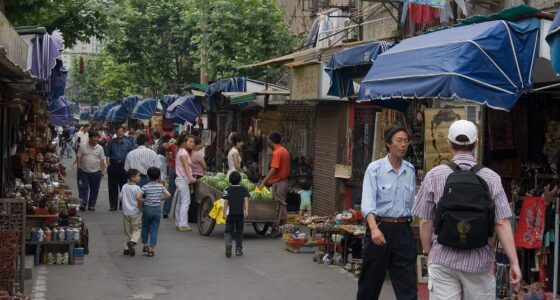
Fake silk and pearl pitches. Vendors who pull you off the street with low “silk” or “pearl” prices are usually selling blended fabric or low-grade product. Buy from established shops instead.
“Bag, watch” touts. Men murmuring “bag, watch, copy” have long worked this street, offering to walk you to a back room or upstairs flat full of counterfeits. Do not follow anyone off the street. You lose the protection a real shop gives you, and in many countries customs can seize counterfeit goods, sometimes with a fine on top.
None of this should put you off the street—it is genuinely safe, the main everyday risk is simple pickpocketing in the crush—but it pays to know the scripts. For the full citywide rundown, see our guide to Shanghai scams to avoid.
Practical Tips and Common Mistakes
Skip the big public holidays if you want room to move. On the biggest public holidays the street is managed for crowds, and East Nanjing Road station can close at times. An early weekday start gives you more space to walk, though most shops do not open until around 10:00.
Wear comfortable shoes. The pedestrian street alone is 1.5 kilometres of hard paving, before you even reach the West side.
Set up mobile payments before you go. Big stores take foreign credit cards, but smaller shops and street food often run on WeChat Pay or Alipay only. Both now let foreign visitors link an overseas card. Carry a little cash as backup.
Use the Dangdang tram for tired feet. It costs pocket change and is the easy way to cover the pedestrian street late in the day.
Bring your passport for tax-free shopping. Designated stores refund VAT to international visitors who spend at least ¥200 in a single store on the same day. After a 2% handling fee you get back 9% of the invoice value on most goods (6% on some), and stores set up for refund-upon-purchase can pay it at the till against a card pre-authorisation. Either way the goods and paperwork are checked at the airport when you leave, so keep receipts and packaging intact. Our guide to tax refund shopping in Shanghai walks through both routes.
Treat specific shop names as a snapshot. Retail turns over. Flagships move, malls re-tenant, and even century-old names pull back from the street, as Laou Kai Fook has. The big anchors are stable, but if you are making a special trip for one shop, check that it is still there first.
Mind store hours. Most retail runs roughly 10:00 to 22:00, but each shop sets its own. Some traditional shops close earlier (Harbin Food Factory shuts at 18:00), and restaurants often run later.
Bargaining and Pricing
Short version: on Nanjing Road you do not bargain. Every department store, mall, chain and heritage shop on the street uses price tags, including Lao Feng Xiang, Duoyunxuan and the food halls, and asking for a discount just causes confusion. The one thing to check is gold, which is priced by weight at the day’s rate plus a making charge.
The pavement touts selling “silk”, “pearls” or copy bags and watches will happily haggle, and the right response to them is to keep walking. If you want the bargaining experience, save it for the markets, such as the Yuyuan bazaar, AP Plaza and the South Bund Fabric Market, which our markets and haggling guide covers in detail.
For broader shopping strategy across the whole city, including where to go for boutiques, markets and luxury and how the districts compare, see our pillar guide to shopping in Shanghai.
Frequently Asked Questions
Is Nanjing Road worth visiting?
Yes, especially on a first trip. The East Nanjing Road pedestrian street is a well-known shopping street and an interesting walk even if you never buy a thing. It also links the Bund to People’s Square, so most visitors cross it anyway.
How long is Nanjing Road?
About 5.5 kilometres from the Bund to its western end near Jing’an Temple. Since its extension to the Bund in 2020, the car-free pedestrian street covers the whole of Nanjing Road East, about 1.5 kilometres from the Bund to Middle Xizang Road.
What is the difference between East and West Nanjing Road?
East Nanjing Road is the historic, mid-priced pedestrian street next to the Bund, with heritage shops, food halls and the tram. West Nanjing Road is the luxury district from People’s Square towards Jing’an, home to Plaza 66, HKRI Taikoo Hui and Zhang Yuan. They split at Middle Xizang Road.
What should I buy on Nanjing Road?
For souvenirs with provenance: gold and jade at Lao Feng Xiang, calligraphy supplies at Duoyunxuan, and edible gifts such as White Rabbit sweets and butterfly pastries from the No.1 Food Store and the White Rabbit Store. The West side malls are for luxury brands. Avoid roadside silk and pearl sellers.
What is the Dangdang tram?
A slow, open-sided sightseeing trolley that runs along the East Nanjing Road pedestrian street. A ride costs a few yuan.
How do I get to Nanjing Road by metro?
East Nanjing Road station (Lines 2, 10), Exit 2, for the pedestrian street; People’s Square (Lines 1, 2, 8) for its western end; West Nanjing Road (Lines 2, 12, 13) for the luxury malls; Jing’an Temple (Lines 2, 7, 14) for the far western end.
Are there scams on Nanjing Road?
Yes. The main one is the tea house scam, where “students” invite tourists to a tea ceremony that ends in a huge bill. There is a similar “art student” gallery scam, and touts who lead people to back rooms full of counterfeit bags and watches. Decline invitations from strangers, and dial 110 if you are pressured.
Can I find authentic Chinese silk on Nanjing Road?
Yes, though the famous old silk houses have largely left the street. Buy from fixed-price shops and look for 桑蚕丝 (mulberry silk) on the fibre label rather than trusting a roadside vendor’s low price. For made-to-measure silk, the South Bund Fabric Market is the better bet.
Is Nanjing Road open on Sundays and holidays?
Yes. Most shops trade every day, public holidays included. On National Day and other peak evenings the street is under crowd control, with East Nanjing Road station closed at times.
Do I need cash on Nanjing Road?
Useful as backup, but most places take WeChat Pay, Alipay or foreign cards. Street food and small shops are the most likely to want cash or mobile pay.
What time is best to visit Nanjing Road?
Mornings, once the shops open at around 10:00, and after dark for the neon. The big public holidays are the ones to avoid if crowds bother you.
Should I shop on Nanjing Road or elsewhere in Shanghai?
Nanjing Road is best for variety and convenience in one walk. For boutiques and design, the former French Concession is stronger; for souvenirs, Tianzifang and the Yuyuan bazaar; for luxury, Plaza 66 here or IFC Mall in Pudong.
Plan Your Shopping Day
The full loop from the Bund to Jing’an Temple is a comfortable half-day, or a full day if you shop seriously.
For the bigger picture, our pillar guide to shopping in Shanghai sets Nanjing Road against the city’s other shopping districts, the Shanghai souvenirs guide covers what is actually worth bringing home, and the markets and haggling guide handles the art of the negotiation.
For more background, see Nanjing Road on Wikipedia.