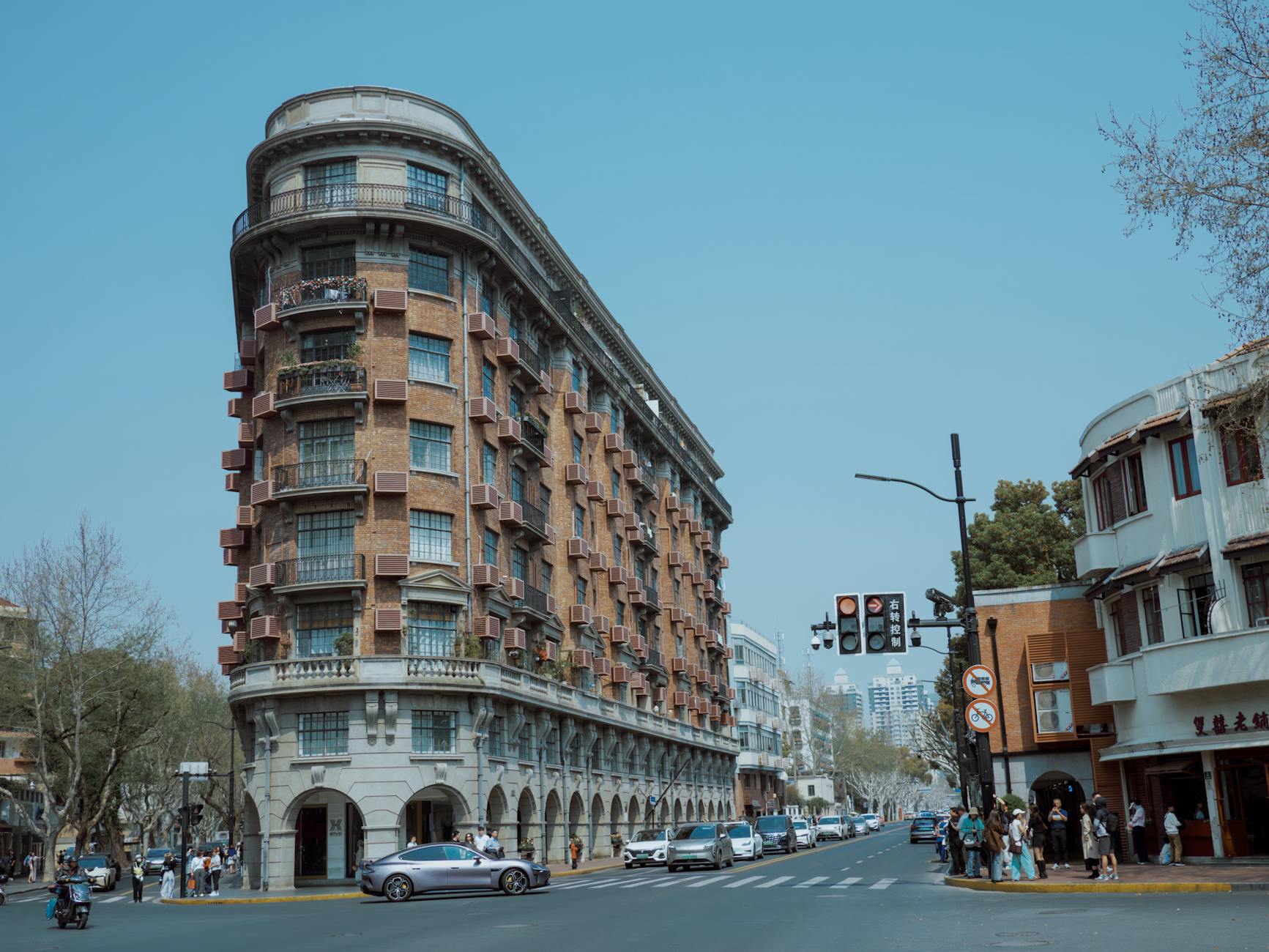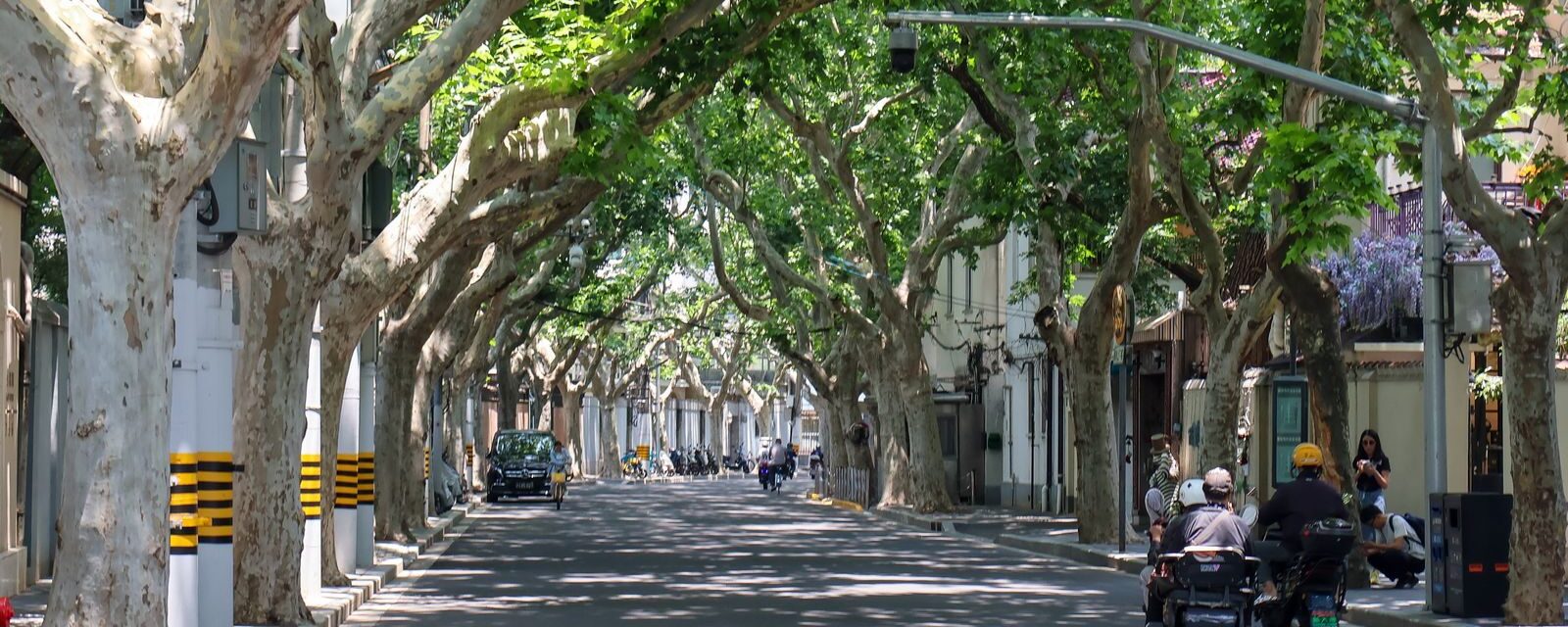
Type Wukang Road Shanghai into any photo app and you get ten thousand versions of the same picture: a wedge-shaped 1924 apartment block pushing into a five-way junction like a ship’s bow, plane trees on either side, no overhead wires anywhere. The building is Wukang Mansion, and on a Saturday afternoon roughly four hundred people are standing on the opposite pavement taking that photograph. The street running south from it is 1,183 metres of plane trees and 1920s villas, and it is the most photographed residential street in China.
The interesting thing is that it deserves the attention and rewards it badly if you only do the photograph. Fifty-odd protected heritage buildings sit along this one road — French Renaissance, Spanish colonial, English country villa, Art Deco — and most of them are still lived in, which is why the street feels like a neighbourhood rather than a set. This guide walks it properly, from the mansion down to Anfu Road, with the numbers, the hours, the prices and the honest verdict on which stops are worth your time.
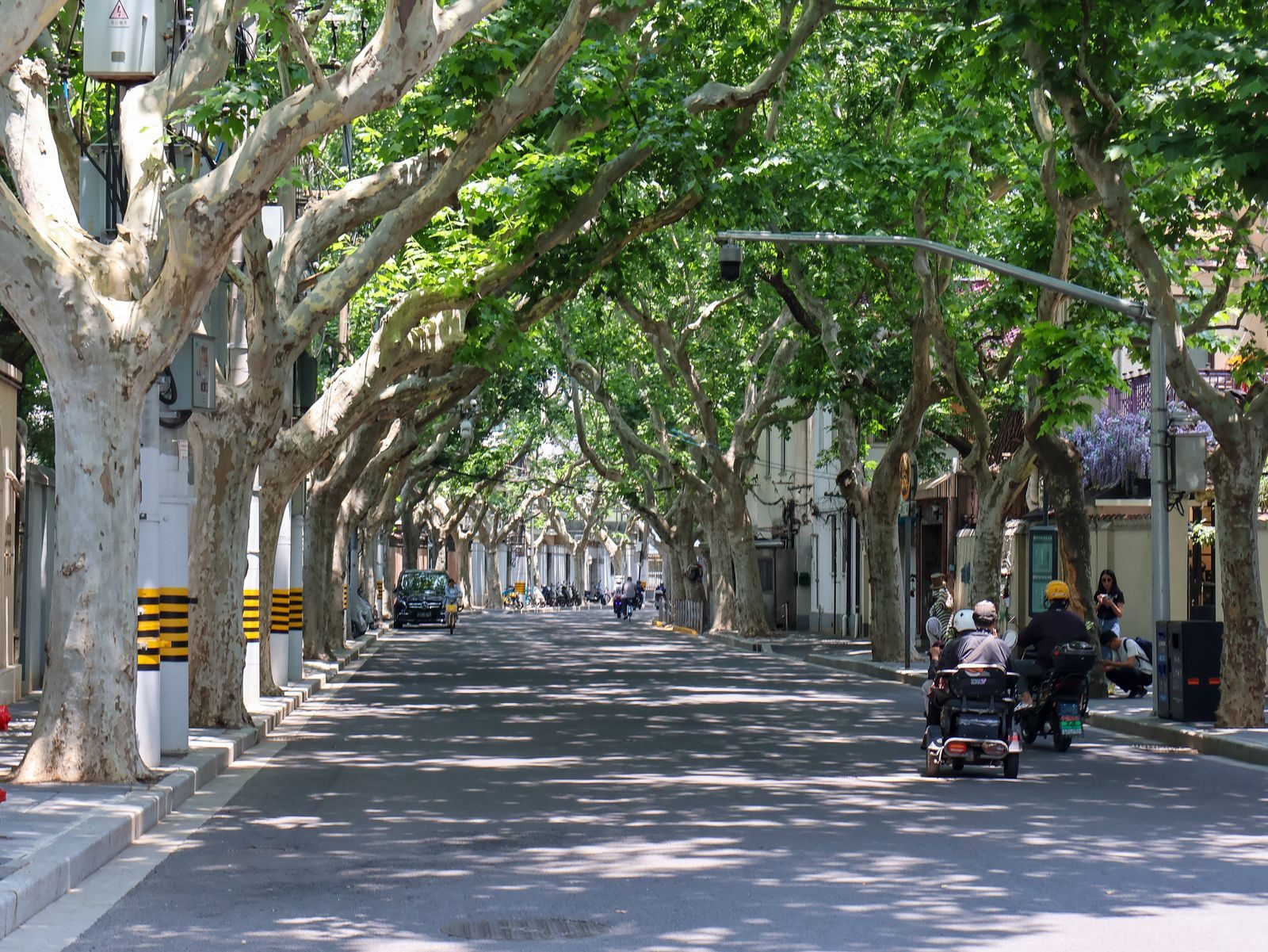
Table of Contents
- Why Wukang Road became the most photographed street in Shanghai
- Wukang Mansion, the building everyone comes for
- The walk, stop by stop
- The heritage villas worth slowing down for
- Ferguson Lane and where to stop for coffee
- Anfu Road, the shopping half
- Photographing Wukang Road without the crowd in the frame
- When to go
- Practicalities: getting there, hours, prices
- Extending the walk
- Wukang Road or somewhere else?
- What people get wrong
- Frequently Asked Questions
- Where to go next
Why Wukang Road became the most photographed street in Shanghai
Until about 2019 this was a good street that people who lived nearby knew about. Then two things happened. Xuhui District finished a restoration programme that buried the overhead cables — the tangle of black wire that had cut across every photograph of Wukang Mansion for eighty years simply vanished. And Chinese social media discovered the result. The building had always been photogenic; without the wires it became a clean graphic shape against sky, and the platforms did the rest.
The road itself was laid out in 1907 as Route Ferguson, named after John Calvin Ferguson, an American academic who ran Nanyang College and pushed for the road to be built. It sat inside the French Concession, which is why the architecture is what it is: this was where Shanghai’s professional and diplomatic classes built houses in the 1920s and 1930s, in whatever style their architect fancied that year. Ferguson Lane still carries the old name. The rest of the road was renamed Wukang in 1943, after a county in Zhejiang.
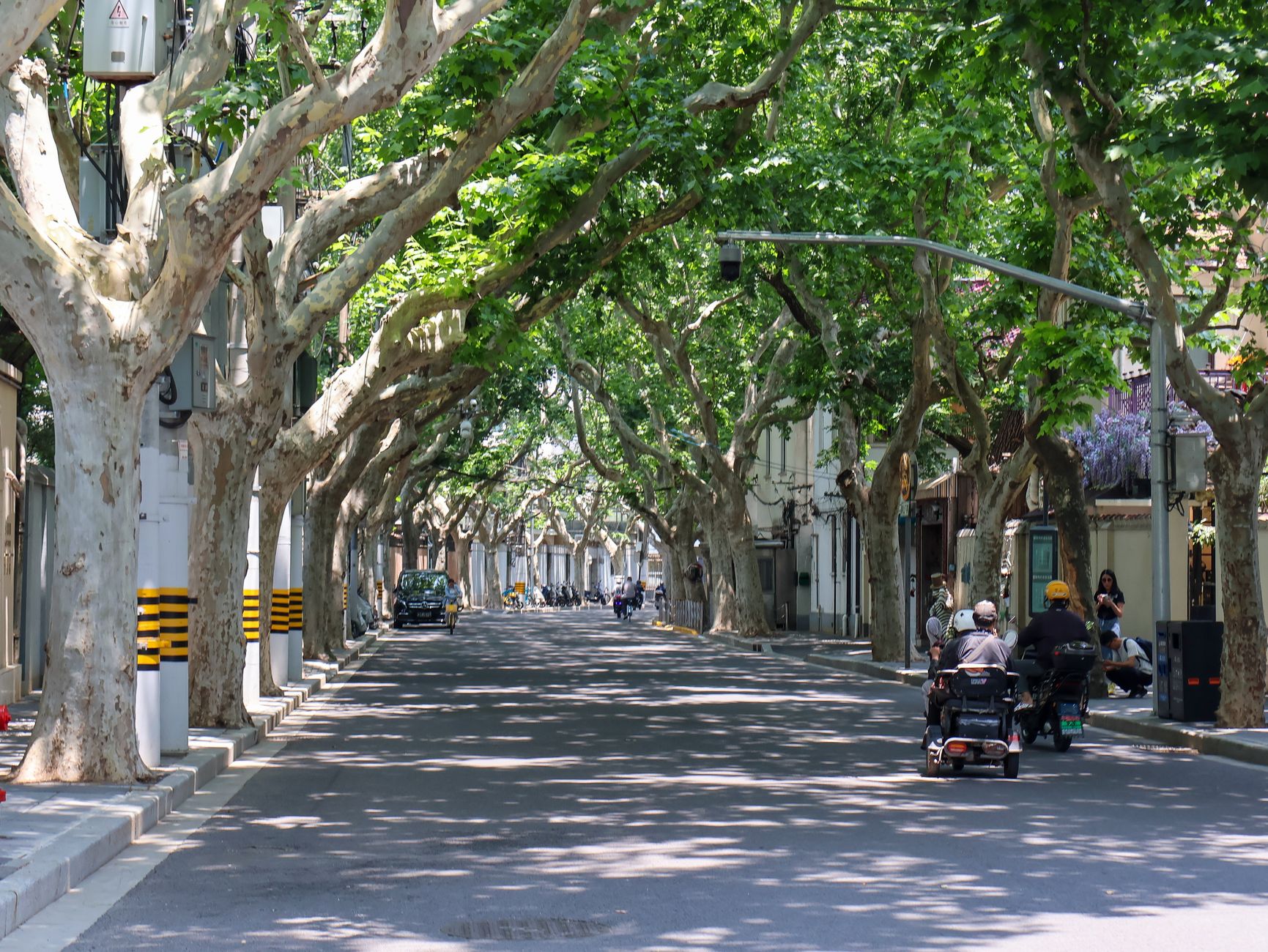
What survives is unusually intact. Shanghai demolished an enormous amount in the 1990s and 2000s; this pocket of Xuhui did not get demolished, and by the time the city started protecting things seriously it was still all there. Fifty-plus buildings on the street carry heritage designation. The plane trees — Shanghai calls them French planes, and they are the single most French thing left in the former Concession — form a closed canopy from May to October.
Wukang Mansion, the building everyone comes for
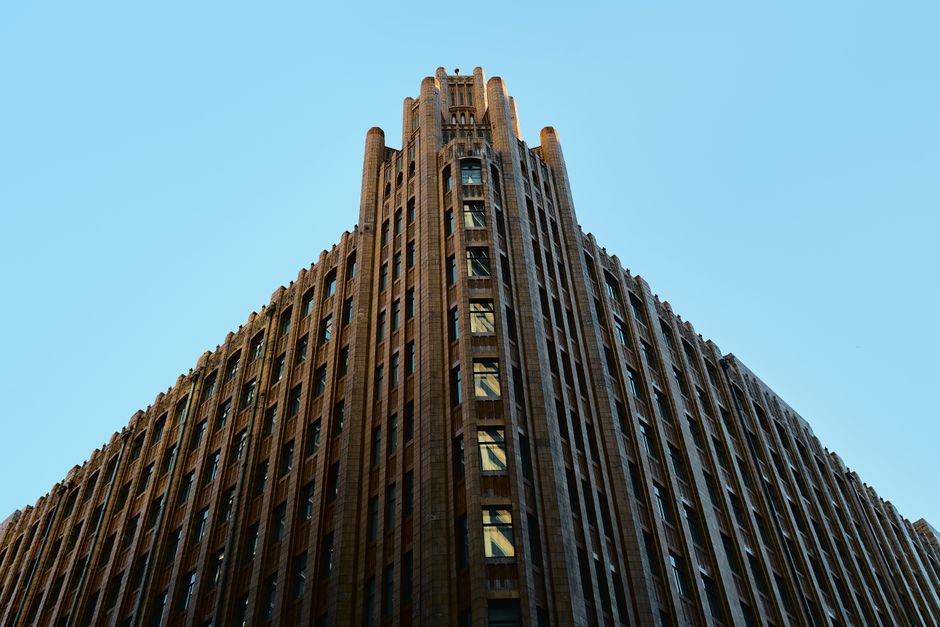
Wukang Mansion stands at 1836–1858 Middle Huaihai Road, on the acute corner where Wukang Road meets Middle Huaihai Road — the old Route Ferguson meeting the old Avenue Joffre. Six streets feed the junction, and the building fills the sharpest of the resulting wedges, which is why every description reaches for the same metaphor: a ship’s bow pushing through the intersection.
It opened in 1924 as the Normandie Apartments, built for the International Savings Society and designed by László Hudec, the Hungarian-Slovak architect who did more than anyone to give Shanghai the skyline it had before 1949 — the Park Hotel, the Grand Theatre, the Green House on Tongren Road. Eight storeys, French Renaissance detailing over a steel frame, arcaded ground floor, and what is generally called Shanghai’s oldest veranda-style apartment building.
The tenant list reads like a film archive. Sun Daolin lived here for thirty years until his death in 2007. Zhao Dan, Wang Renmei, Qin Yi, Wu Yin and Wang Wenjuan all had flats. In 1942 the building was bought by Kung Ling-wei, daughter of the banker H. H. Kung. It was renamed Wukang Mansion in 1953 and, briefly and absurdly, “Anti-Revisionist Tower” during the Cultural Revolution. Xuhui District restored it in 2008 and again, more visibly, around 2019.
It is still a residential building. People live in those flats, come home with shopping, and step out of their front door into a crowd photographing it. There is no lobby to visit, no observation floor, nothing to buy a ticket for. The ground-floor arcade holds a small exhibition space and a shop; the rest is somebody’s home. Treat it accordingly.
The walk, stop by stop
Roughly 2.5 km end to end if you take in Anfu Road, and three to four hours if you stop for coffee and go into the two house museums. Two hours if you walk it briskly and photograph as you go. It is flat, entirely paved, and shaded for most of the year.
Start at the mansion and walk south. Wukang Road runs downhill in interest as you go — the northern third is the dense heritage section — so if you have less time, do the first four hundred metres properly and skip the rest.
- Wukang Mansion, 1836–1858 Middle Huaihai Road. Photograph it from the far pavement at the Wukang/Huaihai corner. Five minutes, or twenty-five if it is Saturday and you are waiting for a gap.
- Soong Ching-ling’s Former Residence, 1843 Middle Huaihai Road, ¥20, closed Mondays. A 1920s garden house lived in by Sun Yat-sen’s widow from 1948 until 1963, kept largely as she left it, with her car still in the garage. Book on WeChat. Forty-five minutes.
- Ba Jin’s Former Residence, 113 Wukang Road, free, closed Mondays. The novelist lived here from 1955 until his death in 2005, and wrote Random Thoughts in the garden study. Small, quiet, occasionally shut for maintenance without notice. Thirty minutes.
- Romeo’s Balcony, 210 Wukang Road. A Spanish-Mediterranean apartment building with a wrought-iron balcony that gets its nickname for obvious reasons. Two minutes and a photograph; you cannot go in.
- Ferguson Lane, 374–376 Wukang Road. A courtyard of cafés, galleries and small shops set back off the street. Coffee stop. Forty minutes.
- Turn east onto Anfu Road for the shops, the bakery and the theatre. An hour, more if you browse.
The two house museums both close on Mondays, which catches a lot of people out. If Monday is your only day, the walk still works — you just do it as an architecture walk rather than a museum one.
The heritage villas worth slowing down for
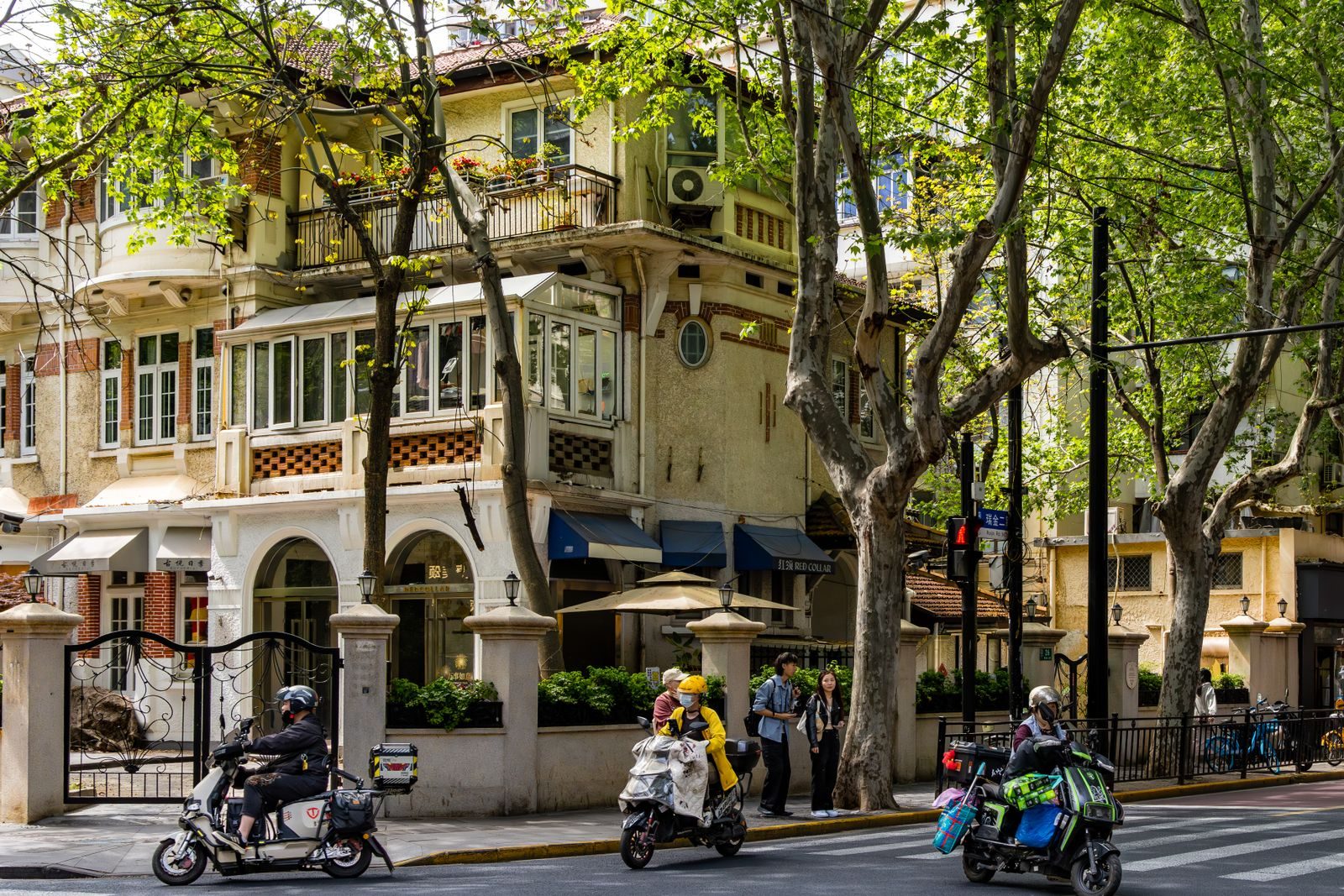
Wukang Road carries small enamelled plaques on protected buildings, usually bilingual, giving the date, the original owner and the architect. Reading them as you go is the actual pleasure of the street, and it is free. A few worth stopping for:
No. 40, the Morriss Estate. A large Spanish-style compound behind a wall, built for the family that owned the North China Daily News. Now part of a hotel complex; you can see the roofline and not much else, which is a fair summary of Wukang Road generally.
No. 99, the Norman Villa. English country house transplanted, with half-timbering, built in 1928. Occupied and not open, but visible from the gate.
No. 107 and No. 115. A pair of 1930s modernist blocks, flat-roofed and stripped back, sitting a hundred metres from a mock-Tudor villa. That collision is the street’s real signature — nobody was co-ordinating any of this.
No. 240, the Kaiser Villa. German Renaissance revival with a steep roof and a corner turret. One of the more theatrical facades on the road.
No. 390, the Italian Consulate villa. Behind a gate, but the garden wall and the tree line tell you what the scale of these plots originally was.
The point is not to tick off individual buildings — most are closed and always will be — but to notice the density. Fifty protected structures in 1.2 kilometres is a concentration you will not find elsewhere in Shanghai — the municipal heritage-protection lists published by the Shanghai municipal government run to several hundred buildings in this district alone — and it explains why the city’s Art Deco architecture conversation always circles back to this district.
Ferguson Lane and where to stop for coffee
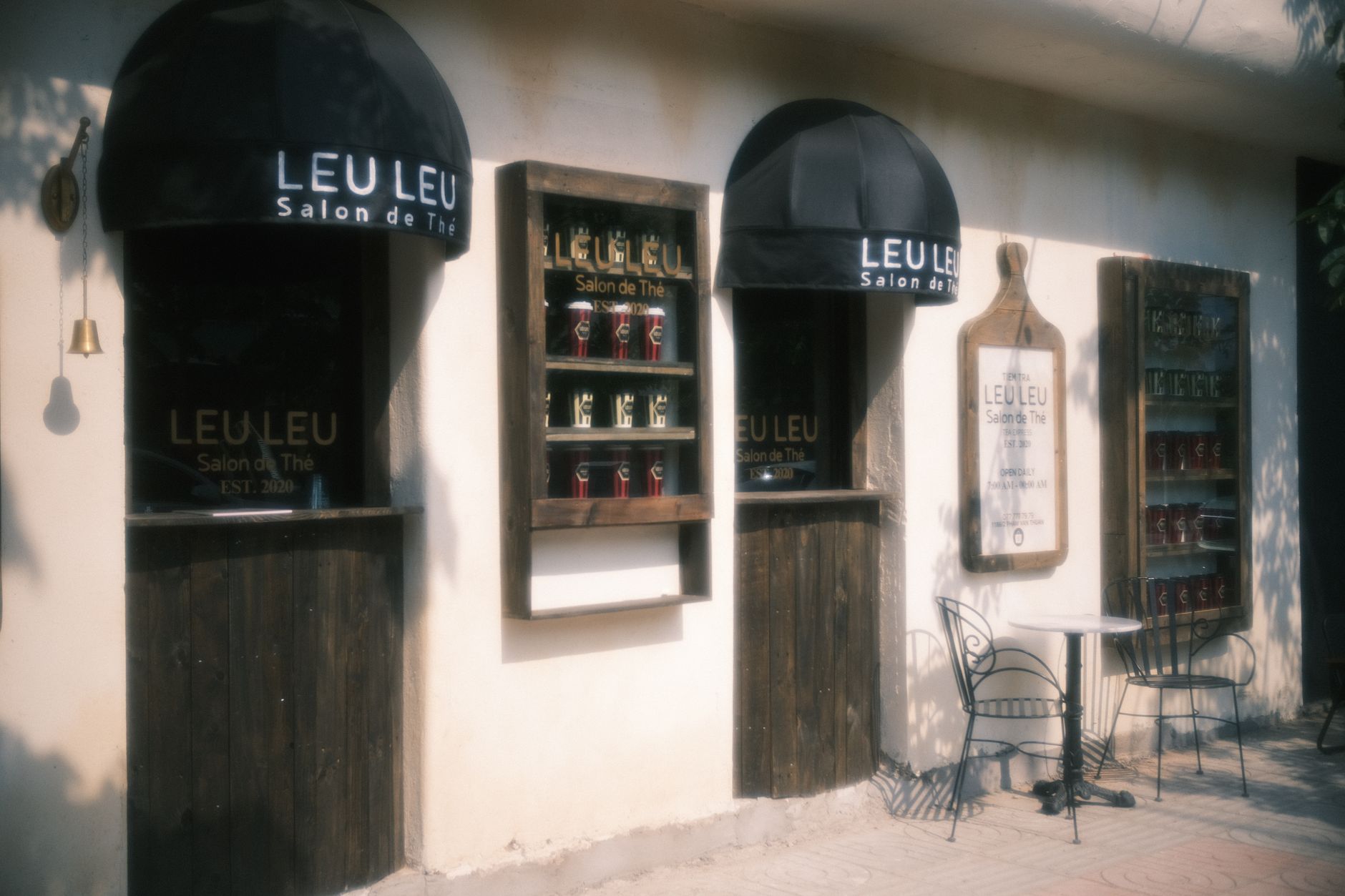
Ferguson Lane at 374–376 Wukang Road is a small courtyard development set back behind a gate, holding a handful of cafés, a gallery or two and some design shops around a paved yard with trees. It is pleasant, it is not large, and it takes about forty minutes including a coffee. Coffee Tree here is the long-standing anchor and does a decent flat white for ¥35–45.
Elsewhere on the walk:
- %Arabica at Wukang Court — white-tiled, minimal, permanently photographed. Coffee is good, queues are long at weekends, seating is minimal. ¥32–48.
- Old Mill Cafe — down an alley, vintage fittings, the opposite aesthetic and usually the emptier room.
- Sunflour, 308 Anfu Road, 08:00–21:00 — a bakery that has been a neighbourhood fixture for years. The signature sun bread and a coffee is the standard Anfu Road breakfast. ¥40–60 for both.
Shanghai has more cafés than any other city on earth, and this square kilometre is a large part of the reason. Prices sit at ¥30–50 for filter or espresso drinks, most places take Alipay and WeChat Pay only, and English menus are near-universal here even where the staff’s spoken English is limited.
Anfu Road, the shopping half
Anfu Road runs east from Wukang Road and is the commercial counterpart: fewer heritage plaques, far more shops, and a younger crowd. It is where Shanghai’s design and fashion scene physically lives, and a five-minute walk connects the two streets.
The useful addresses, all roughly 10:00–22:00:
- Harmay, 308 Anfu Road — the beauty retailer that made industrial-warehouse shopfitting a national style. Worth seeing as retail design even if you buy nothing.
- 13DE MARZO, 322 Anfu Road — fashion, with a very large teddy bear that functions as a landmark.
- Duo Zhua Yu (多抓鱼), 300 Anfu Road — second-hand books and vintage clothing, meticulously organised. Genuinely good browsing.
- Shanghai Dramatic Arts Centre, 288 Anfu Road — the city’s main producing theatre, operating on this site since 1950. Chinese-language productions, occasional surtitles, tickets from around ¥80.
Anfu Road is where you eat if the walk runs into the evening. It is denser with restaurants than Wukang Road and everything from Yunnanese to natural-wine bars is within two blocks.
Photographing Wukang Road without the crowd in the frame
The canonical shot is the mansion’s prow, taken from the pavement on the far side of the Wukang Road/Middle Huaihai Road corner, with the plane trees framing the left edge. That specific spot is where everyone stands, and at weekends there is an orderly informal queue for it with police occasionally managing the pavement.
What actually works:
- Weekday afternoons, roughly 14:00 to 18:00. The light comes round onto the western face and the crowd is a tenth of the weekend’s.
- Before 08:00 any day. Empty, soft light, shops shut. The best version of the street, if you can get up.
- Shoot from further back with a longer lens to compress the trees against the facade — it is a better photograph than the wide-angle everyone else is taking, and it puts fewer heads in frame.
- Rain is good here. Wet tarmac, reflections, umbrellas, and about a third of the usual crowd.
- Winter strips the plane trees bare and reveals the whole facade — a completely different and arguably better building photograph.
Down the road, the villa gates, the tree tunnels and the doorways are the more interesting subjects and nobody is competing for them. Our guide to photographing Shanghai covers the wider question of where the city photographs well and when.
One point of etiquette: people live here. Standing in a private doorway, walking into a residential lane for a better angle, or photographing through a ground-floor window is not acceptable, and residents will say so.
When to go
Weekday, afternoon, outside a public holiday. That is the whole answer, and the difference between that and a Saturday at three is genuinely the difference between enjoying the street and queuing on it.
Seasonally: April to May and late September to November are the best months, with October giving the clearest air of the year. Summer is hot and humid but the plane-tree canopy makes this one of the few Shanghai walks that stays tolerable in July. Winter is cold and clear, the trees are bare, and the street is at its quietest.
Avoid the National Day Golden Week in early October entirely, when the crowd at the junction becomes genuinely difficult, and expect similar around Chinese New Year and the May holiday.
Practicalities: getting there, hours, prices
| Stop | Address | Hours | Price | Worth it? |
|---|---|---|---|---|
| Wukang Mansion | 1836–1858 Middle Huaihai Rd | Exterior, always | Free | Yes — but five minutes, not fifty |
| Soong Ching-ling’s Former Residence | 1843 Middle Huaihai Rd | Closed Mondays | ¥20 | Yes, the best interior on the walk |
| Ba Jin’s Former Residence | 113 Wukang Rd | Closed Mondays | Free | Yes if you read Chinese literature; skip otherwise |
| Romeo’s Balcony | 210 Wukang Rd | Exterior only | Free | In passing |
| Ferguson Lane | 374–376 Wukang Rd | Cafés from ~09:00 | Coffee ¥35–45 | Yes, as the coffee stop |
| Sunflour bakery | 308 Anfu Rd | 08:00–21:00 | ¥40–60 | Yes |
| Anfu Road shops | 288–330 Anfu Rd | 10:00–22:00 | Free to browse | Yes if you like retail design |
| Shanghai Dramatic Arts Centre | 288 Anfu Rd | Evening shows | From ~¥80 | Only with Chinese |
Getting there. Metro Line 10 or Line 11 to Jiaotong University station, Exit 7, then five minutes on foot south-west to the junction. Alternatives that work almost as well: Line 10 to Shanghai Library, ten minutes; Line 1 to Hengshan Road, twelve to fifteen minutes through pleasant streets. A taxi from the Bund is ¥45–60 and twenty-five minutes in normal traffic, or use DiDi.
Money. Nothing here takes cash comfortably. Alipay or WeChat Pay covers the cafés, shops and the ¥20 museum ticket. The Soong Ching-ling residence books through a WeChat mini-programme, which is worth setting up before you arrive.
Toilets. Public facilities are thin. Ferguson Lane’s cafés and the Anfu Road shops are the practical answer.
Accessibility. Flat throughout, wide pavements on Wukang Road, narrower on Anfu. The metro station has lifts. The house museums have steps and are not step-free.
Extending the walk
Wukang Road is the northern end of a much longer walkable network, and stopping at Anfu Road wastes the geography. Three natural continuations:
North-east into the rest of the former Concession. Wuyuan Road, Yongfu Road and Fuxing West Road all run off this cluster and are quieter versions of the same thing. Our French Concession walking tour sets out a longer route through them.
South-west to Hengshan Road and Xujiahui. Twenty minutes on foot brings you to the 1930s International Church at 53 Hengshan Road and, further on, the Xujiahui Cathedral and the old Jesuit observatory — a completely different layer of Shanghai’s history.
East along Middle Huaihai Road towards Sinan Mansions, a restored compound of fifty-one garden houses, and from there into the older lanes around Fuxing Park. About forty minutes at a walking pace with distractions.
Wukang Road or somewhere else?
Shanghai has four or five places that get recommended for the same reason — old buildings, walkable, photogenic — and they are not interchangeable.
| Where | What it actually is | Crowds | Best for |
|---|---|---|---|
| Wukang Road | A living residential street with 50+ protected villas | Heavy at the junction, light 300 m south | Architecture, photographs, coffee |
| Tianzifang | A shikumen lane block converted wholesale to shops and bars | Very heavy, all of it | Souvenir shopping, evening drinks |
| Xintiandi | Shikumen facades rebuilt around a high-end retail development | Heavy but spacious | Restaurants, the 1921 congress site |
| The Bund | 1920s banking architecture on the waterfront | Extreme, especially at night | The skyline, grand interiors |
| Duolun Road | 1930s literary quarter in Hongkou, largely unrestored | Almost none | Atmosphere without the audience |
If you have one afternoon for the former Concession, Wukang Road is the right choice — it is the most architecturally serious of them and the only one where the buildings are still doing what they were built for. If you have two, add Duolun Road for contrast, or work through the neighbourhood-by-neighbourhood breakdown to pick your second.
What people get wrong
Coming on a Saturday afternoon. The single biggest error. The junction becomes a managed crowd and the experience inverts.
Photographing the mansion and leaving. A remarkable number of visitors travel across the city, spend eleven minutes at the corner and go. The street south of the junction is the actual attraction.
Expecting to go inside things. Two house museums aside, everything here is private. There is no Wukang Mansion tour, no roof terrace, no lobby to see.
Arriving on a Monday and being surprised. Both museums shut.
Treating a residential lane as public space. The alleys off Wukang Road are people’s front gardens.
Underestimating the heat. The canopy helps, but July and August here are 33–36°C with high humidity. Go early or go late.
Trying to drive. Parking is effectively impossible and the junction is congested. Metro or DiDi.
Frequently Asked Questions
Can you go inside Wukang Mansion?
No. It is a working residential building with private flats. There is a small exhibition space and shop in the ground-floor arcade, but no tour, no observation floor and no access to the upper storeys.
How do I get to Wukang Road on the metro?
Line 10 or Line 11 to Jiaotong University station, Exit 7, then about five minutes on foot. Line 10 to Shanghai Library or Line 1 to Hengshan Road both leave you a ten to fifteen minute walk away through good streets.
How long does the Wukang Road walk take?
Two hours at a steady pace with photographs, or three to four if you include both house museums, a coffee at Ferguson Lane and the Anfu Road shops. The full route including Anfu Road is about 2.5 km.
Is there an entrance fee?
The street is free. Soong Ching-ling’s Former Residence is ¥20; Ba Jin’s Former Residence is free. Both close on Mondays.
What is the best time of day to photograph Wukang Mansion?
Weekday afternoons between about 14:00 and 18:00, when the light reaches the western face and the crowd is manageable. Before 08:00 on any day gives you an empty street. Rainy days and winter, when the plane trees are bare, both produce better photographs than a bright Saturday.
Who designed Wukang Mansion?
László Hudec, the Hungarian-Slovak architect responsible for a large share of pre-war Shanghai including the Park Hotel and the Grand Theatre. It was completed in 1924 as the Normandie Apartments, for the International Savings Society.
Why is Wukang Road so famous?
A 2019 Xuhui District restoration removed the overhead cables that had crossed every view of the building for decades. The clean sightline made it a social-media subject almost overnight, and the crowds followed. The heritage density was always there.
Is Wukang Road worth visiting if I only have two days in Shanghai?
Yes, as a half-day paired with something else nearby — it sits naturally with Hengshan Road, Sinan Mansions or a longer former-Concession walk. It is a walking and looking destination rather than a sightseeing one, so it works best as the slow part of a day that has the Bund or a museum in it as well.
What is Ferguson Lane?
A small courtyard development at 374–376 Wukang Road holding cafés, galleries and design shops, named after the road’s original name, Route Ferguson. It takes about forty minutes and is the natural coffee stop on the walk.
Is Wukang Road good for children?
It is safe and flat, but it is an architecture walk with no playground and nothing interactive. Younger children will manage the coffee stop and little else. Anfu Road’s shops hold slightly more interest.
Do I need cash on Wukang Road?
No, and cash is actively awkward here. Alipay or WeChat Pay covers everything including the ¥20 museum ticket, and the Soong Ching-ling residence books through a WeChat mini-programme.
Is Anfu Road worth adding to the walk?
Yes, if you have the time and any interest in shops. It is five minutes from Wukang Road, denser with cafés, bakeries and restaurants, and it is where you would eat if the walk runs towards evening.

Where to go next
Wukang Road is best understood as one chapter of a much larger story, and the surrounding streets carry the rest of it. Read the districts guide for how Xuhui fits against the other fifteen, or the history of Shanghai for why a Hungarian architect was building French Renaissance apartments on an American-named road in a Chinese city in the first place. If the architecture is the draw, the Bund architecture guide covers the grander, more public half of the same period. And if you want to sleep inside all this rather than visit it, the former Concession hotels put you a ten-minute walk from the junction.