Shanghai is one of the great food cities of the world, and this Shanghai food guide will prove it to you bite by bite. The city’s culinary identity — known locally as benbang cai (本帮菜) or “local cuisine” — is built on a philosophy of balancing sweet, savory, and umami flavors through techniques like red-braising, slow-stewing, and precise wok work. But modern Shanghai has evolved far beyond its traditional roots. Today the city is a collision point for every regional Chinese cuisine, a rising force in the global fine dining scene, and home to one of Asia’s most exciting street food cultures.
Whether you’re chasing the perfect xiaolongbao, hunting for a Michelin-starred tasting menu, or simply want to know where locals eat their morning scallion oil noodles, this Shanghai food guide covers everything you need to eat extraordinarily well in China’s largest city. We’ve organized the guide by dish category, included Chinese characters so you can order like a local, and mapped out the best food streets and neighborhoods for every appetite and budget.
Shanghai Food Guide: Understanding Shanghainese Cuisine (Benbang Cai)
Before diving into specific dishes, it helps to understand what makes Shanghai’s local cuisine distinct. Shanghainese cuisine (benbang cai) belongs to the broader family of Jiangsu-Zhejiang cooking traditions, but it has developed its own recognizable personality over centuries. The hallmarks are a pronounced sweetness from rock sugar and Shaoxing wine, a deep soy-sauce richness, and an emphasis on seasonal ingredients — particularly freshwater fish, river shrimp, and the legendary hairy crabs of autumn.
Unlike the fiery heat of Sichuan food or the delicate steaming of Cantonese dim sum, Shanghai cooking tends toward slow-braised dishes with complex, layered sauces. Portions are generous, presentation is unfussy, and the cooking aims to coax maximum flavor from premium ingredients rather than mask them with spice. This approach makes Shanghainese food immediately approachable for international visitors — the flavors are rich but never aggressive.
Xiaolongbao (小笼包): Shanghai’s Most Famous Dish
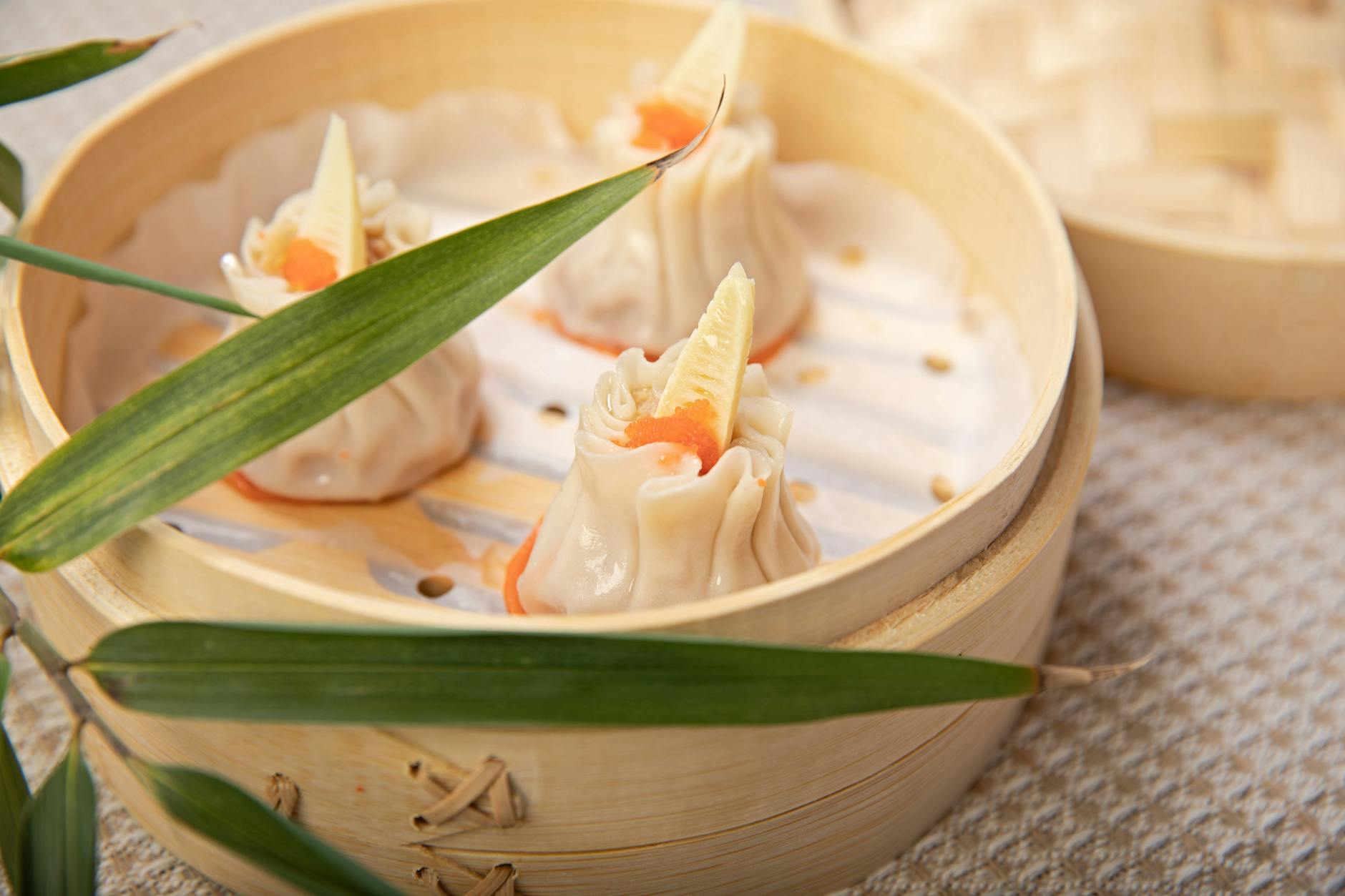
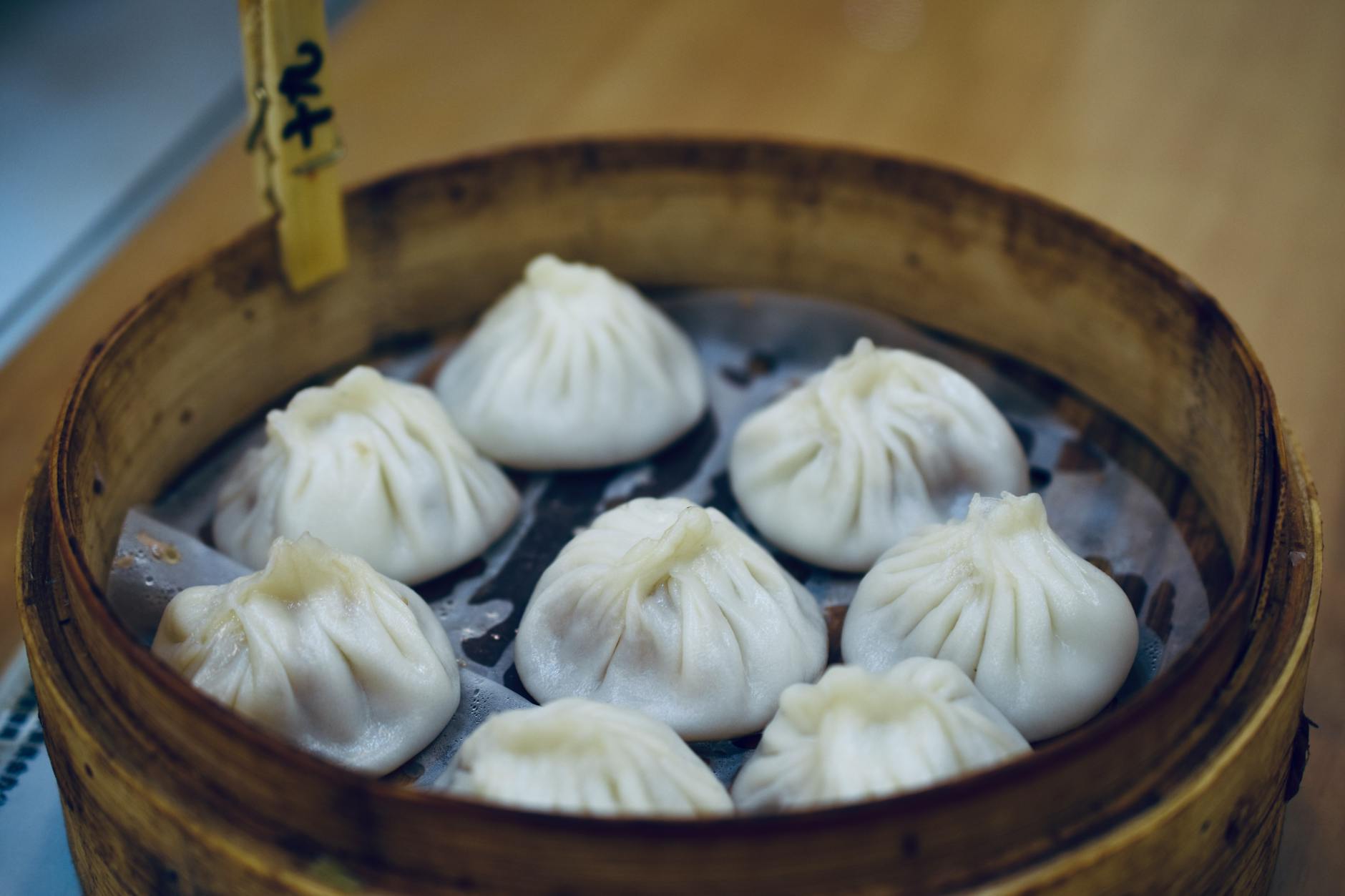
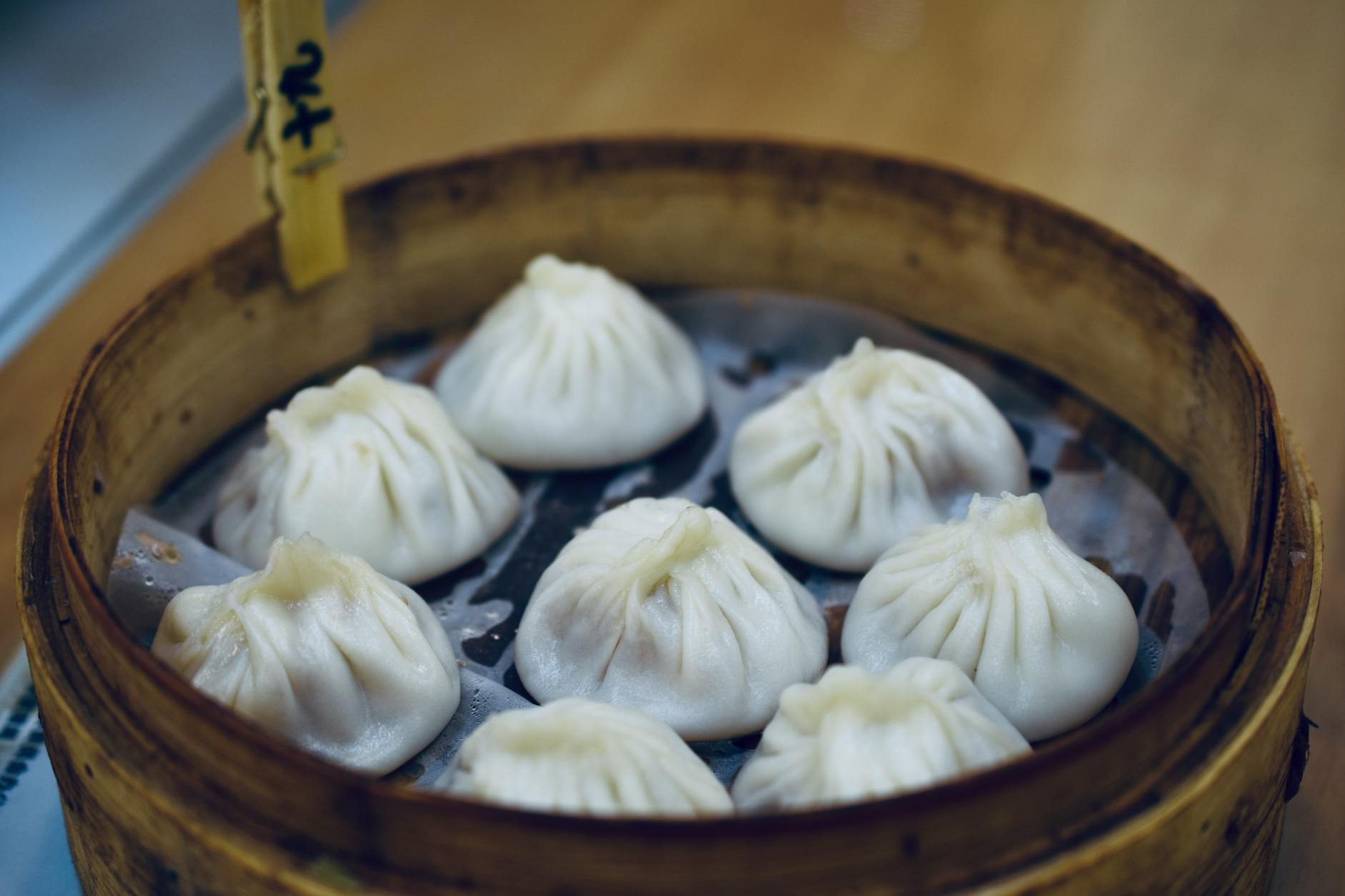
No Shanghai food guide would be complete without starting here. Xiaolongbao — delicate soup dumplings filled with seasoned pork and a burst of hot, savory broth — are Shanghai’s single most famous culinary contribution to the world. The concept is deceptively simple: a thin wheat wrapper encases a filling of minced pork mixed with solidified pork gelatin. When steamed in bamboo baskets, the gelatin melts into liquid soup, creating that signature burst of flavor when you bite in.
The art of xiaolongbao lies in the wrapper. Master dumpling makers aim for exactly 18 folds per dumpling — thin enough to be nearly translucent, yet strong enough to hold the soup without tearing. The best versions have skin so delicate you can see the liquid sloshing inside before you eat them.
How to eat them properly: Pick up a dumpling carefully with chopsticks (never pierce the skin), place it on a Chinese soup spoon, nibble a small hole in the side, sip the soup first, then eat the dumpling. Dip in a mixture of Zhenjiang black vinegar with shredded fresh ginger — this is the traditional Shanghai accompaniment that cuts through the richness of the pork.
Where to try them: Jia Jia Tang Bao (佳家汤包) near People’s Square is consistently rated among the best in the city — a tiny, no-frills shop with queues out the door. For the classic tourist-friendly experience, Din Tai Fung operates several Shanghai locations with reliable quality. Nanxiang Steamed Bun Restaurant in Yu Garden is the most famous historical location, though quality has become inconsistent with the tourist crowds. For crab-meat xiaolongbao, try Lai Lai Xiao Long near Nanjing Road.
Shengjianbao (生煎包): Shanghai’s Other Legendary Dumpling
If xiaolongbao is Shanghai’s refined aristocrat, shengjianbao is its street-smart cousin — and many locals will tell you they prefer the latter. These pan-fried pork buns are larger and heartier than xiaolongbao, with a thicker dough that’s cooked in a flat-bottomed pan until the base turns golden and crispy while the top steams to fluffy softness. They’re filled with the same pork-and-soup combination, topped with sesame seeds and chopped scallion, and served four to a plate at breakfast joints across the city.
The textural contrast is what makes shengjianbao addictive — crunchy bottom, soft top, soupy center. They’re traditionally a breakfast food, and the best shops sell out by mid-morning. This is essential eating in any comprehensive Shanghai food guide.
Where to try them: Da Hu Chun (大壶春) is a century-old institution for the classic version. Xiaoyang Shengjianbao (小杨生煎) on Wujiang Road has the most famous modern rendition, with branches across the city. Dong Tai Xiang, which holds intangible cultural heritage status, operates a 24/7 flagship that’s perfect for late-night cravings.
Shanghai Food Guide: Essential Noodle Dishes
Shanghai’s noodle culture runs deep, and understanding it is key to any proper Shanghai food guide. Locals eat noodles at all hours — for breakfast, as a quick lunch, or as a late-night snack — and the city’s noodle shops range from ancient institutions to modern interpretations.
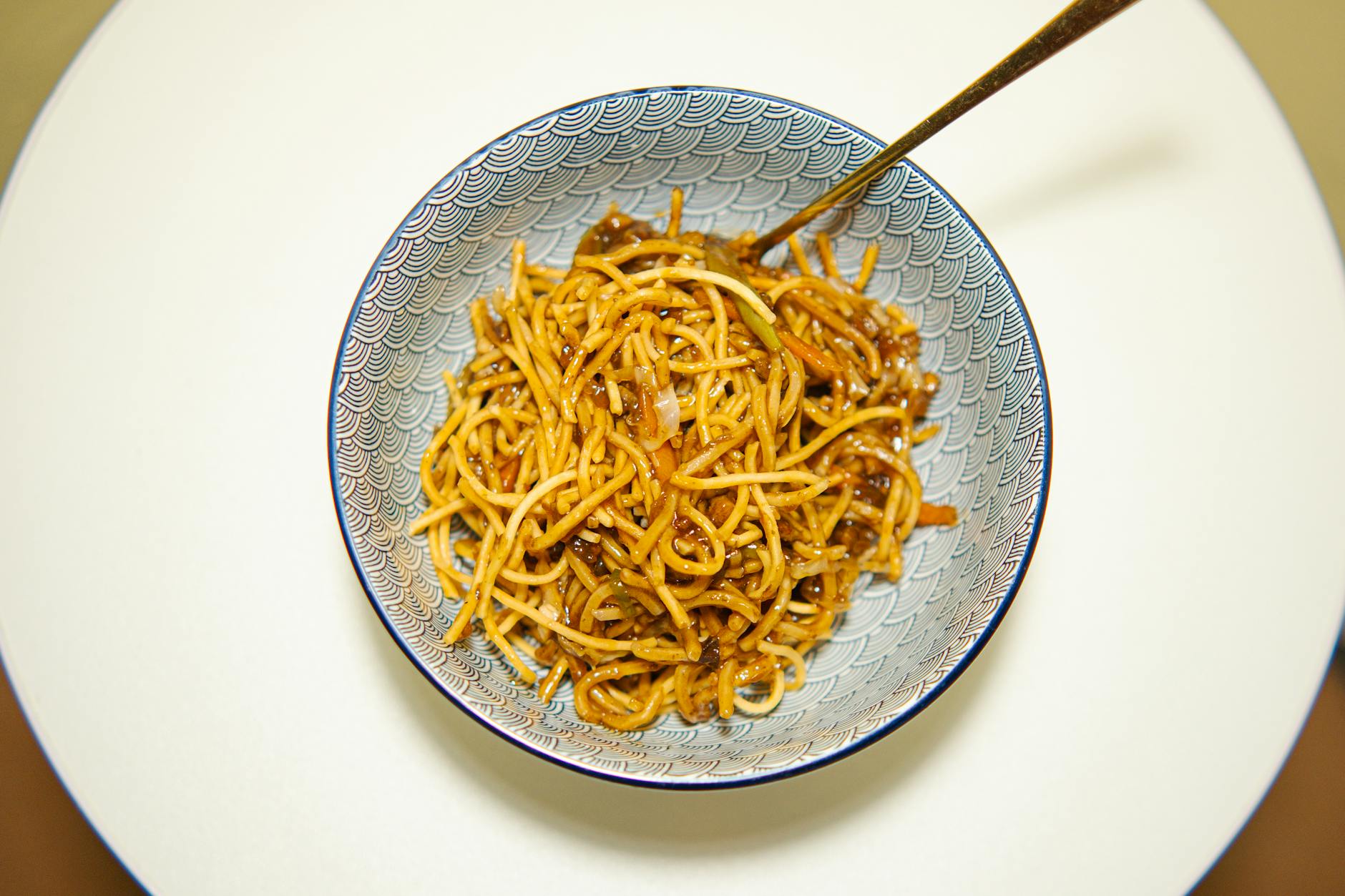
Cong You Ban Mian (葱油拌面) — Scallion Oil Noodles: The simplest and perhaps most satisfying of all Shanghai noodle dishes. Thin wheat noodles are tossed with slow-fried shallots and scallions rendered in oil until deeply caramelized, then seasoned with soy sauce. The result is smoky, sweet, and umami-rich — proof that great food doesn’t require complexity. Available at virtually every neighborhood noodle shop for around ¥10–15 ($1.50–$2).
Huang Yu Mian (黄鱼面) — Yellow Croaker Noodles: A bowl of silky noodles in a milky, collagen-rich fish broth made from yellow croaker, topped with flaky pieces of the fish itself. This is Shanghai comfort food at its finest — subtle, clean-flavored, and deeply satisfying. The broth takes hours to prepare properly, which is why the best shops sell out early.
La Mian (拉面) and Regional Noodles: While not native to Shanghai, hand-pulled Lanzhou beef noodles and Chongqing-style spicy noodles are everywhere in the city. Shanghai has become a melting pot for China’s regional noodle traditions, and some of the best bowls of Sichuan dan dan mian or Xinjiang laghman outside their home provinces can be found here.
Classic Shanghai Main Dishes You Must Try
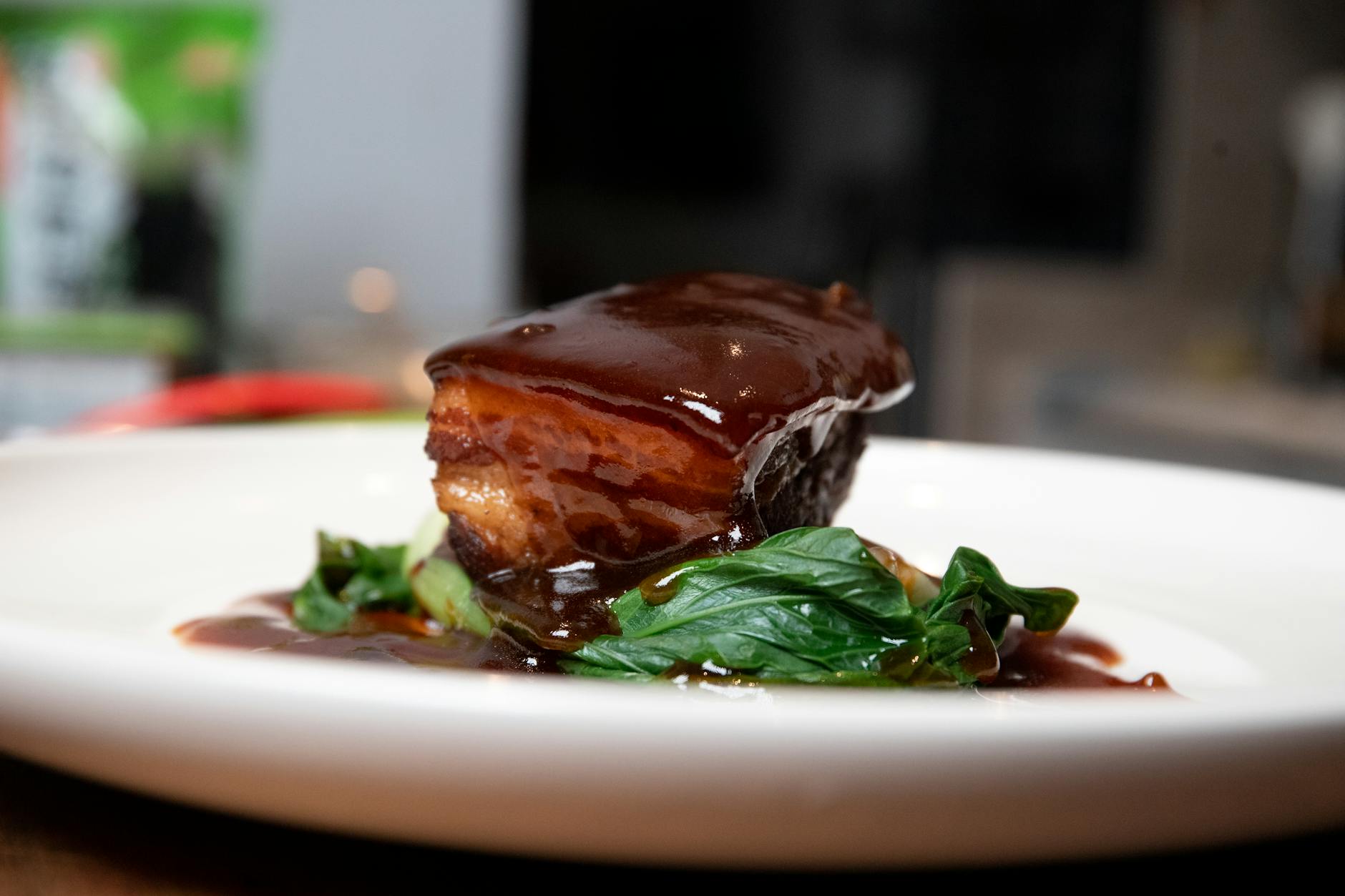
The sit-down restaurant dishes of Shanghai are where the full depth of benbang cai reveals itself. These are the dishes you’ll find at proper Shanghainese restaurants, often served family-style around a shared table. Any serious Shanghai food guide must give these their due:
Hong Shao Rou (红烧肉) — Red-Braised Pork Belly: The undisputed king of Shanghainese home cooking. Cubes of fatty pork belly are braised for hours in a sauce of soy sauce, Shaoxing wine, rock sugar, and star anise until the fat renders to a trembling, melt-on-the-tongue texture and the lean meat falls apart at the touch of chopsticks. The sauce is thick, glossy, and deeply sweet-savory — the quintessential Shanghai flavor profile. This was reportedly Mao Zedong’s favorite dish.
Song Shu Gui Yu (松鼠桂鱼) — Squirrel-Shaped Mandarin Fish: A showpiece dish where a whole mandarin fish is scored in a crosshatch pattern, deep-fried until the flesh fans out like a squirrel’s tail, then drenched in a sweet-and-sour sauce with pine nuts. Crunchy, sweet, tangy, and theatrical — it’s often the centerpiece of banquet meals.
You Men Sun (油焖笋) — Braised Spring Bamboo Shoots: When bamboo shoots are in season (March through May), this simple dish of fresh shoots braised in soy sauce and sugar becomes an obsession in Shanghai. The shoots are tender, slightly sweet, and deeply savory — a reminder that Shanghainese cuisine’s real genius lies in treating vegetables with the same reverence as meat.
Zui Ji (醉鸡) — Drunken Chicken: Cold poached chicken marinated in Shaoxing wine until the flesh absorbs its fragrant, slightly boozy flavor. Served chilled as an appetizer, it’s a study in restrained elegance — the chicken is clean and silky, the wine perfume subtle but persistent. This is one of the most distinctive cold dishes in any Shanghai food guide.
Xun Yu (熏鱼) — Shanghai Smoked Fish: Despite the name, this dish involves no actual smoking. Thick slices of carp or grass fish are deep-fried until crisp, then immediately soaked in a soy-sugar-spice marinade that penetrates the hot, porous surface. Served cold, the result is sweet, savory, and addictively crunchy — a staple at family gatherings and restaurant appetizer courses.
Hairy Crab Season: Shanghai’s Annual Culinary Obsession
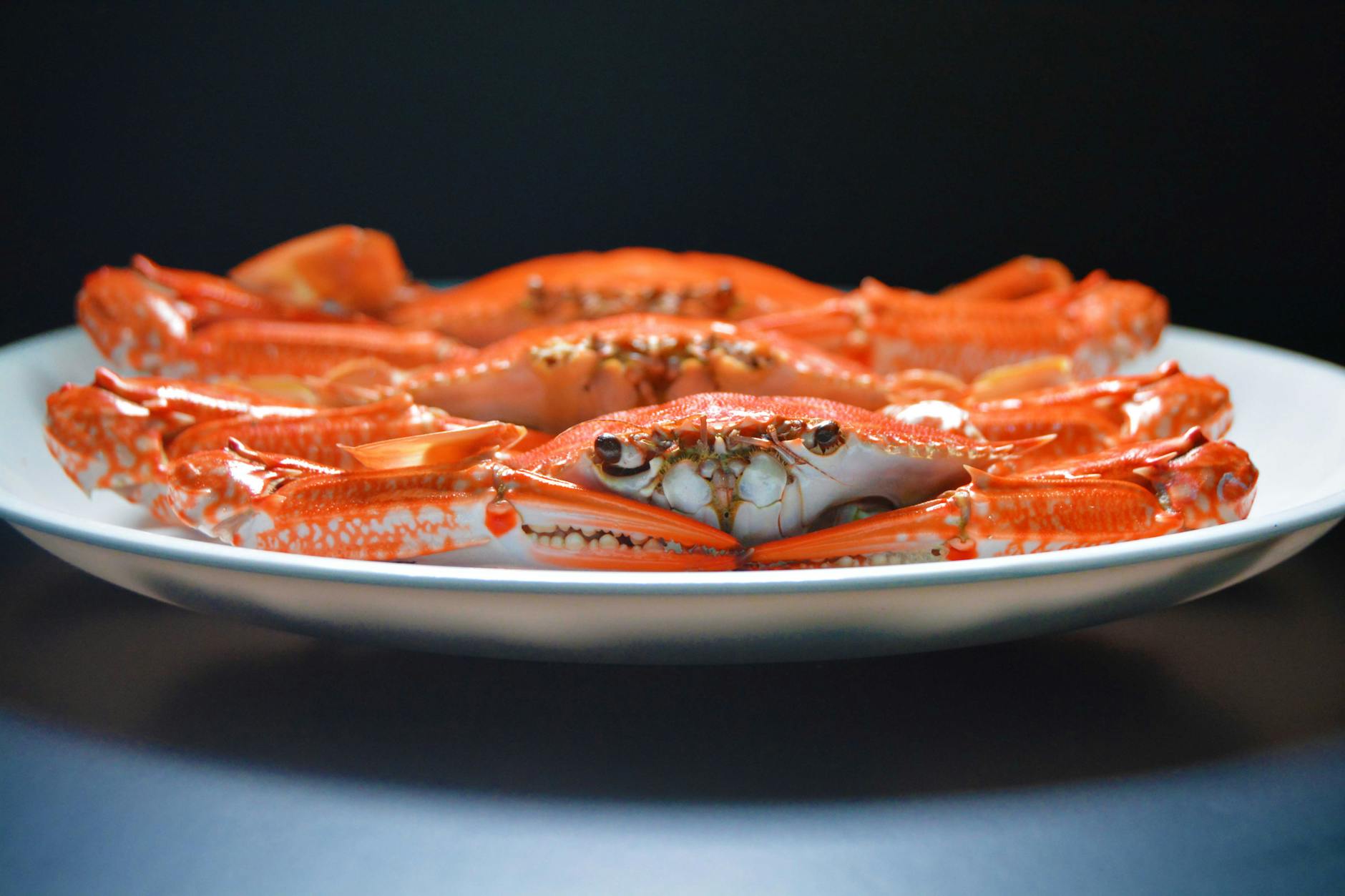
If you visit Shanghai between October and December, you’ll witness a citywide obsession that borders on mania. Chinese mitten crabs — known as hairy crabs (大闸蟹, dazha xie) for the fur-like hair on their claws — arrive from Yangcheng Lake and other Jiangsu waterways, and the entire city restructures its menus around them.
The crabs are small — roughly palm-sized — but their rich, golden roe (found in female crabs) and dense, sweet meat make them one of China’s most prized delicacies. They’re traditionally steamed whole and eaten with a dipping sauce of vinegar and ginger, accompanied by warm Shaoxing wine to counteract the crab’s “cooling” properties in Chinese food philosophy.
During peak season, restaurants offer hairy crab set menus featuring the roe in every possible form — mixed into xiaolongbao, tossed with noodles, stuffed into tofu, or simply served on its own as a precious golden paste. A good hairy crab dinner is not cheap (expect ¥300–800+ per person at quality restaurants), but it’s one of Shanghai’s most distinctive seasonal food experiences and a highlight of any autumn-focused Shanghai food guide.
Shanghai Street Food and Snacks
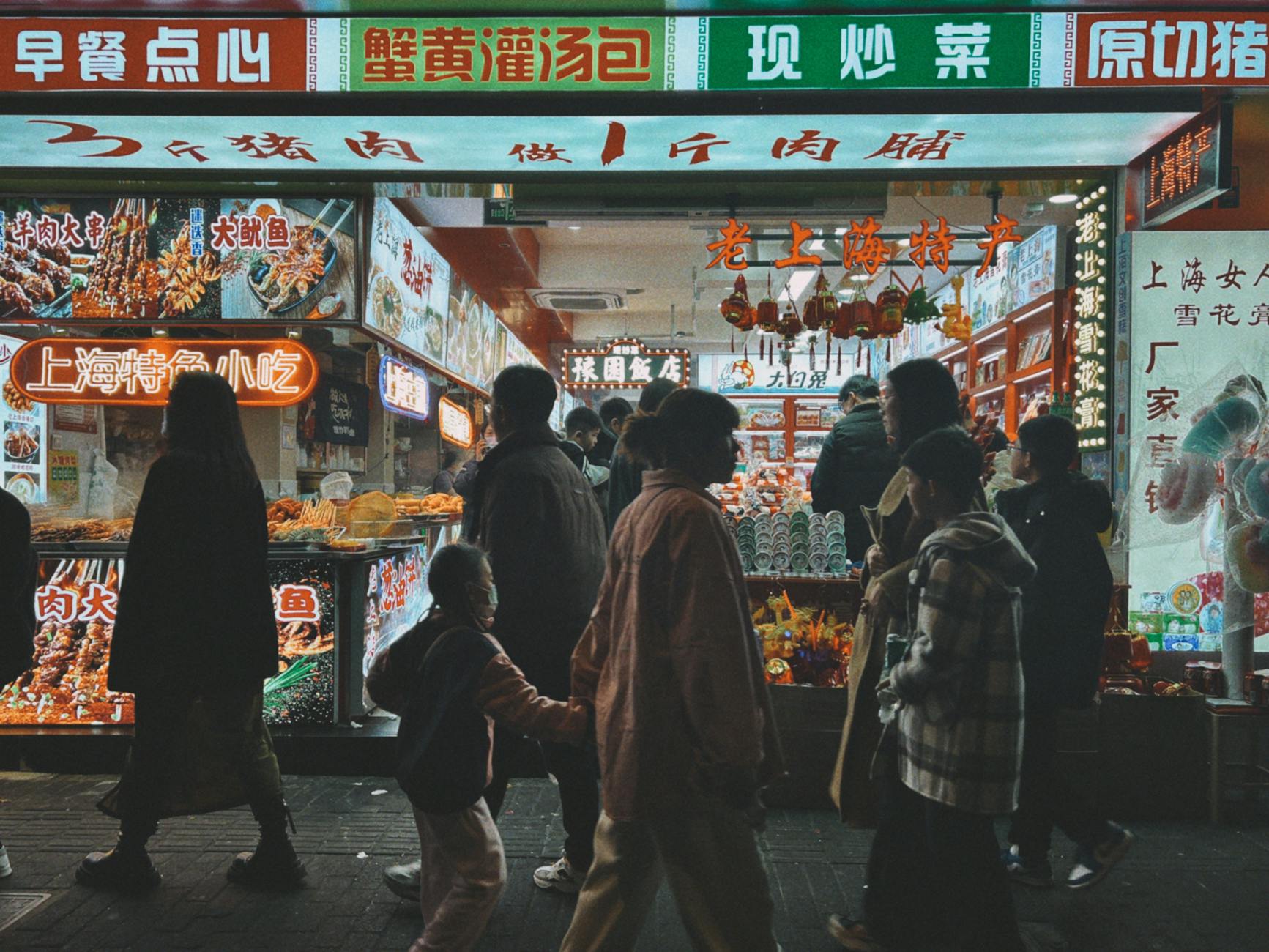
Shanghai’s street food scene is vast and varied, offering some of the most exciting and affordable eating in the city. This section of our Shanghai food guide covers the snacks and small bites you’ll encounter walking the city’s lanes and food streets:
Cong You Bing (葱油饼) — Scallion Pancakes: Layers of dough studded with chopped scallions, pan-fried until shatteringly crispy and golden. The best versions have a flaky, almost pastry-like quality. They cost ¥3–5 from street vendors and are perfect for eating on the move. A Fei Ge Scallion Pancake (阿飞哥葱油饼) regularly draws hour-long queues in the French Concession for what many consider the city’s finest version.
Chou Doufu (臭豆腐) — Stinky Tofu: The smell may be challenging, but the taste converts skeptics. Deep-fried until the exterior is crispy while the interior stays creamy, stinky tofu is served with chili sauce and pickled vegetables. It’s a beloved late-night snack across Shanghai’s food streets.
Ci Fan (糍饭) — Sticky Rice Rolls: A traditional Shanghai breakfast where a sheet of warm, sticky glutinous rice is wrapped around a fried dough stick (you tiao), pickled mustard greens, and pork floss, then rolled into a portable cylinder. It’s the Shanghai equivalent of a breakfast burrito — carby, savory, and deeply satisfying for ¥5–8.
Chuan Chuan Xiang (串串香) — Skewered Street Snacks: Choose your own skewers from a display of meats, vegetables, tofu, and mushrooms, then have them cooked in a bubbling spiced broth or deep-fried. Price is typically calculated by the stick (¥1–5 each), making it easy to assemble a customized street meal.
Tangchao Lizi (糖炒栗子) — Sugar-Roasted Chestnuts: A cold-weather street food staple, chestnuts are roasted in giant woks with black sand and sugar until their shells crack open to reveal sweet, starchy flesh. The aroma of roasting chestnuts is one of Shanghai’s defining autumn scents.
Best Food Streets and Neighborhoods in Shanghai
Knowing which neighborhoods to target is just as important as knowing what to eat. This Shanghai food guide maps out the city’s most productive dining zones:
Yunnan Road (云南路): Often called Shanghai’s best food street, this stretch near People’s Square is packed with old-school Shanghai restaurants and street food vendors. It’s particularly strong for traditional benbang cai and breakfast foods. Prices are local-friendly, and the atmosphere is authentically buzzy rather than tourist-polished.
Huanghe Road (黄河路): Another legendary food street near People’s Square, Huanghe Road is famous for Shanghainese restaurant cooking — think whole braised fish, river shrimp, and multi-course family meals. The road experienced a revival after being featured in the 2024 Chinese TV series Fanhua (Blossoms Shanghai).
French Concession: The French Concession is Shanghai’s most diverse dining neighborhood, spanning everything from Michelin-starred fine dining to hidden dumpling windows. The area around Yongkang Road, Wulumuqi Road, and Julu Road is particularly dense with excellent restaurants. This is also the center of Shanghai’s international dining scene — Japanese, Italian, Mexican, and Southeast Asian restaurants are all well-represented.
Jing’an (Wuding Road / Kangding Road): Shanghai’s hottest emerging food corridor, where young chefs are pushing boundaries with creative takes on Chinese and international cuisine. This area has a higher concentration of reservation-only restaurants and natural wine bars than anywhere else in the city.
Zhoupu and Nanxiang: For dedicated food explorers, these suburban areas offer access to the original sources — Nanxiang is where xiaolongbao were invented, and its local restaurants serve versions with a distinctly different character than their downtown descendants.
Shanghai’s Fine Dining and Modern Restaurant Scene
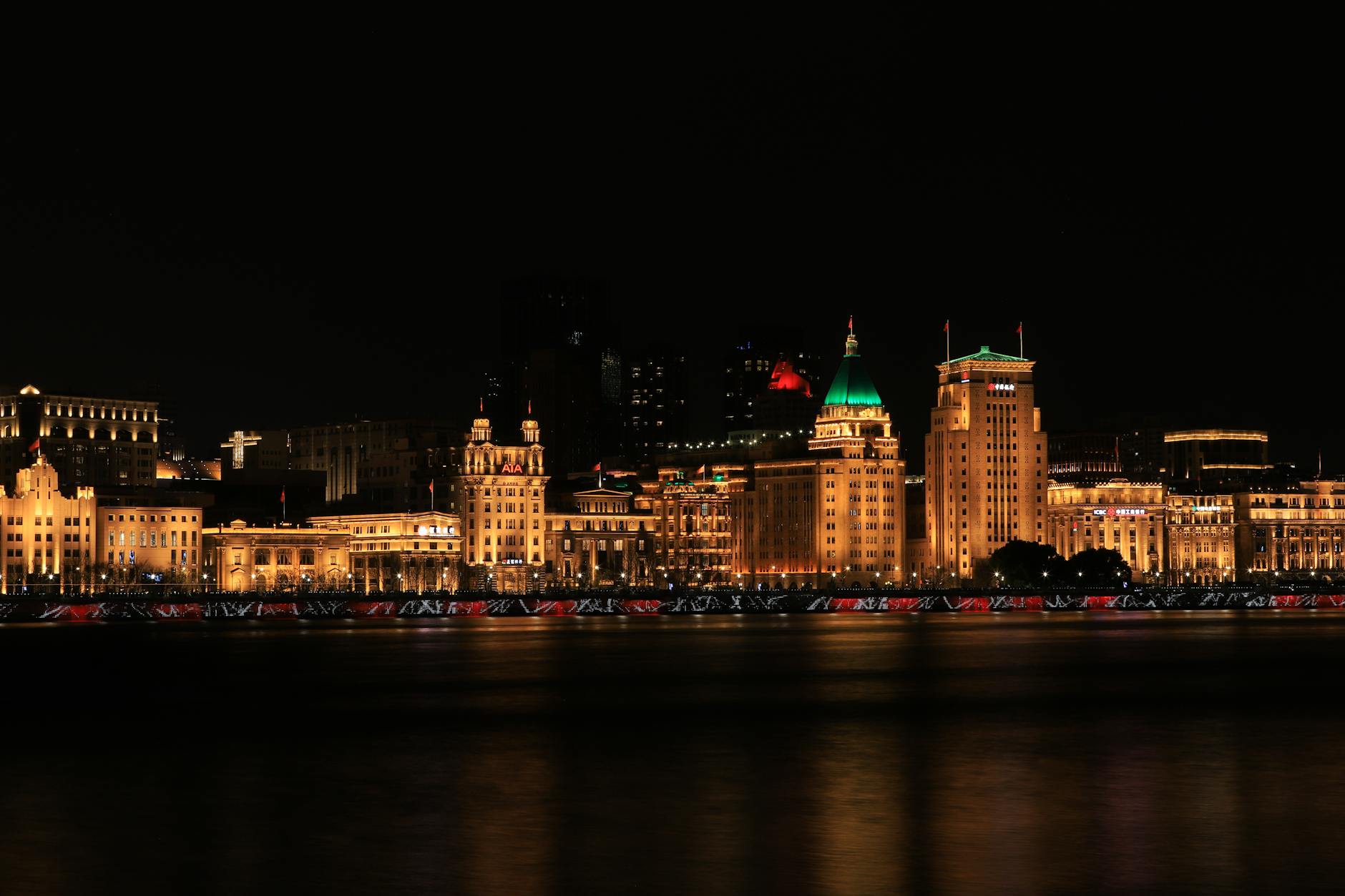
Shanghai has rapidly ascended the global fine dining ranks, earning a growing collection of Michelin stars and a reputation as Asia’s most dynamic restaurant city. The Shanghai food guide for serious gastronomes must acknowledge this layer of the city’s culinary world:
Ultraviolet by Paul Pairet: The most talked-about dining experience in China — a single table for 10 guests in a multisensory space where every course is accompanied by synchronized lighting, sound, projections, and even scent. Three Michelin stars and regularly ranked among the world’s best restaurants. Booking requires planning months in advance.
Fu He Hui: A Michelin-starred vegetarian restaurant that elevates Buddhist-inspired Chinese vegetarian cooking to fine dining heights. The tasting menus are inventive and visually stunning, proving that Shanghai’s food culture extends far beyond meat and dumplings.
Old Jesse (老吉士): Widely considered Shanghai’s definitive benbang cai restaurant since 2004. No pretension, no fusion — just masterfully executed Shanghainese home cooking in a bustling, noisy setting. The red-braised pork, smoked fish, and river shrimp here set the standard against which all others are measured. Reservations are essential.
The Bund Dining: The Bund waterfront hosts a concentration of upscale restaurants with spectacular views. Mr & Mrs Bund, Hakkasan, and 8½ Otto e Mezzo Bombana (the only Italian restaurant outside Italy to hold three Michelin stars) all operate from this strip.
Shanghai Hotpot and Communal Dining
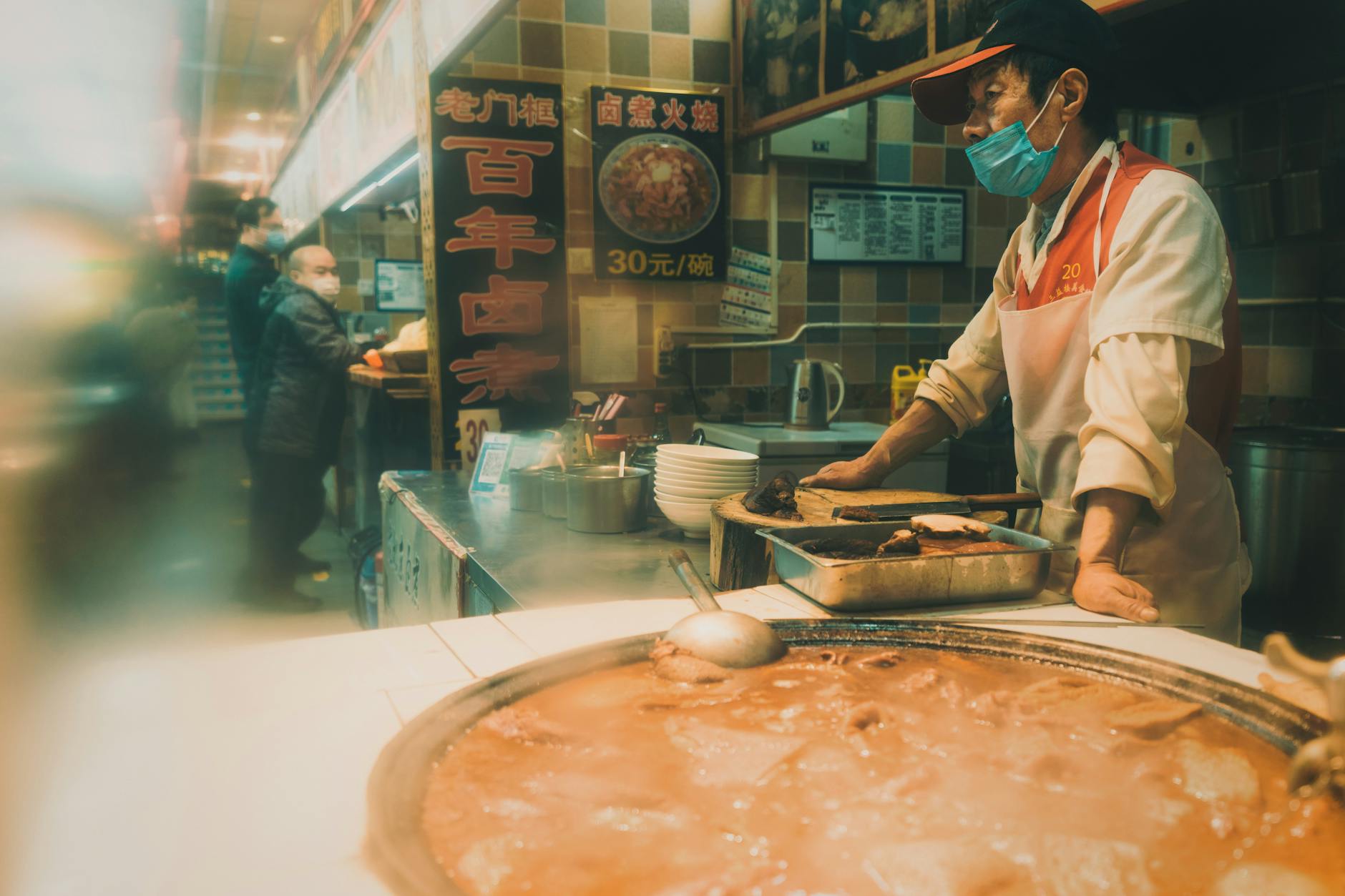
Hotpot deserves its own section in this Shanghai food guide because it’s not just a meal — it’s a social event. Diners sit around a bubbling pot of seasoned broth and cook their own ingredients: thinly sliced meats, seafood, vegetables, tofu, and noodles. Shanghai offers every regional hotpot style, from Sichuan’s tongue-numbing mala spice to the milder, mushroom-based broths of Yunnan.
Haidilao, China’s most famous hotpot chain, operates numerous Shanghai locations and is famous for its over-the-top service (including hand massages while you wait and noodle-dancing performances). For a more authentic experience, seek out the Chongqing-style hotpot restaurants in the Changning and Putuo districts, where the spice levels and ingredient quality cater to local tastes rather than tourist palates.
Budget for ¥80–200 per person for a full hotpot experience, depending on your choice of ingredients and restaurant tier.
Shanghai Drinks: Tea, Craft Beer, and Cocktails
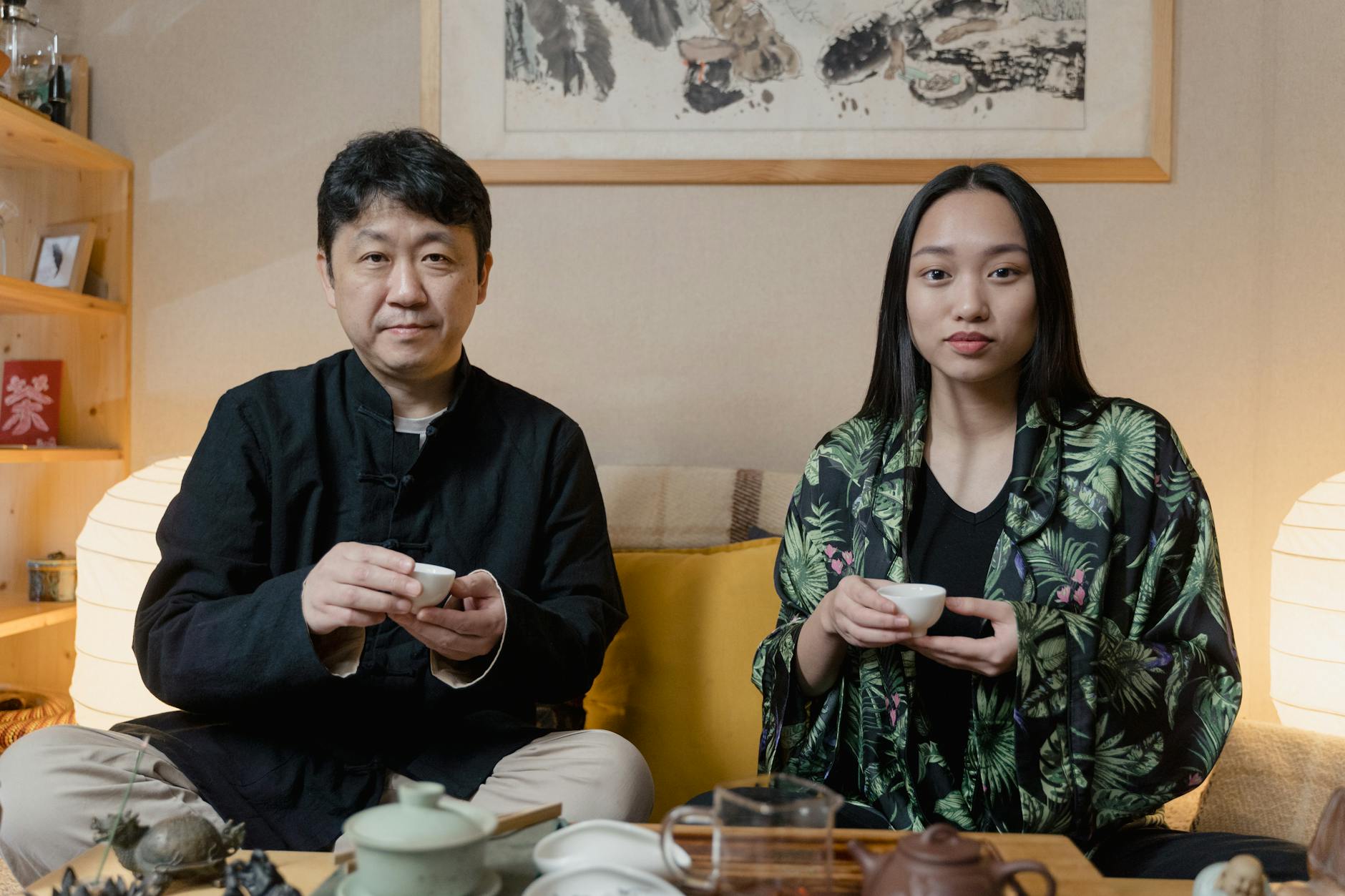
No Shanghai food guide is truly complete without covering what to drink. The city’s beverage scene is as layered and dynamic as its food:
Tea: Shanghai sits at the heart of China’s tea culture, with Longjing (Dragon Well) green tea from nearby Hangzhou being the most prized local variety. Traditional teahouses like Huxinting Tea House (perched on a zigzag bridge in Yu Garden) offer a serene antidote to the city’s pace. The modern tea revolution has also hit Shanghai hard — brands like HeyTea, Nayuki, and Chagee serve creative milk tea and fruit tea combinations that draw massive queues.
Craft Beer: Shanghai has the most developed craft beer scene in mainland China. Boxing Cat Brewery (now owned by AB InBev but still producing quality beers), Brew Bear, and Shanghai Brewing Company all operate taprooms across the city. The French Concession and Jing’an districts have the highest concentration of craft beer bars.
Cocktails: Shanghai’s cocktail scene consistently produces multiple entries on the Asia’s 50 Best Bars and World’s 50 Best Bars lists. Speak Low (a speakeasy accessed through a hidden door in a barware shop), Sober Company, and Epic are among the standouts. For more on Shanghai’s after-dark scene, see our Shanghai activities guide.
Practical Eating Tips for Visitors
These practical tips will help you navigate Shanghai’s food scene more effectively and are essential reading in this Shanghai food guide:
Payment: Many restaurants and food stalls operate on mobile payment (WeChat Pay or Alipay) almost exclusively. Some smaller vendors may not accept cash at all. International visitors can now link Visa or Mastercard to WeChat Pay for QR code payments, which we strongly recommend setting up before your trip.
Ordering: At sit-down restaurants, menus are increasingly available via QR code (scan with WeChat). Many have photo menus, and upscale restaurants typically offer English menus. At street stalls and small noodle shops, pointing and using translation apps works fine. We’ve included Chinese characters for key dishes in this Shanghai food guide to make ordering easier.
Meal times: Lunch is typically 11:00 AM–1:30 PM and dinner 5:30–8:30 PM. Many popular restaurants close between meals and reopen for dinner service. Arriving early (11:00 AM for lunch, 5:30 PM for dinner) is the best strategy to avoid queues at popular spots.
Tipping: Tipping is not customary and not expected in Shanghai restaurants, including fine dining establishments. Service charges are occasionally added at international hotel restaurants.
Dietary restrictions: Vegetarianism and veganism are increasingly understood in Shanghai, particularly at international restaurants and in the French Concession. Traditional Chinese restaurants may use animal-based stocks even in vegetable dishes. Buddhist vegetarian restaurants (素菜馆, su cai guan) are the safest option for strict vegetarians — they avoid all animal products, including garlic and onion. For a broader overview of navigating the city, see our Shanghai travel guide.
Shanghai Food Guide: Price Ranges and Budgeting
One of the great joys of eating in Shanghai is that exceptional food exists at every price point. Here’s what to expect across the spectrum:
| Category | Price Range (per person) | What You’ll Get |
|---|---|---|
| Street Food / Snacks | ¥10–30 ($1.50–$4) | Xiaolongbao, scallion pancakes, noodles, steamed buns |
| Casual Restaurants | ¥40–80 ($6–$11) | Full meals at local eateries, regional Chinese restaurants |
| Mid-Range Dining | ¥100–250 ($14–$35) | Quality Shanghainese restaurants, popular chains, hotpot |
| Upscale Dining | ¥300–600 ($42–$85) | Acclaimed restaurants, seasonal specialties, hairy crab menus |
| Fine Dining | ¥800–3,000+ ($112–$420+) | Michelin-starred restaurants, tasting menus, Ultraviolet |
A budget-conscious traveler eating at street stalls and casual restaurants can eat superbly in Shanghai for $15–$25 per day. Mid-range diners mixing casual lunches with one nice dinner should budget $40–$70 per day. And even at the top end, Shanghai’s fine dining is notably more affordable than equivalent experiences in Tokyo, New York, or London.
Frequently Asked Questions About Shanghai Food
What is the most famous food in Shanghai?
Xiaolongbao (soup dumplings) are Shanghai’s most internationally famous dish. Within China, Shanghai is equally renowned for hong shao rou (red-braised pork belly), shengjianbao (pan-fried buns), and hairy crabs in autumn. Any comprehensive Shanghai food guide will start with these four.
Is Shanghai food spicy?
Traditional Shanghainese cuisine (benbang cai) is not spicy at all — it favors sweet, savory, and umami flavors. However, Shanghai is home to restaurants serving every regional Chinese cuisine, including fiercely spicy Sichuan, Hunan, and Guizhou food. You can easily find or avoid spice depending on your preference.
Is it safe to eat street food in Shanghai?
Shanghai’s food hygiene standards are among the highest in China, and street food is generally safe for visitors. Stick to stalls with high turnover (freshly cooked food, visible queues), avoid anything that’s been sitting out for extended periods, and drink bottled water rather than tap water. Most visitors eat street food in Shanghai without any issues.
What should vegetarians eat in Shanghai?
Shanghai has a growing vegetarian-friendly dining scene. Buddhist vegetarian restaurants serve entirely plant-based menus, often recreating meat dishes with soy and mushroom-based alternatives. The French Concession has the highest concentration of international restaurants with vegetarian options. Dishes to seek out include braised bamboo shoots, stir-fried greens, vegetarian dumplings, and mapo tofu (request without meat at any Sichuan restaurant).
When is the best time to visit Shanghai for food?
Autumn (September–November) is the peak food season thanks to hairy crabs, and spring (March–May) brings fresh bamboo shoots and river shrimp. However, Shanghai’s core dishes — xiaolongbao, noodles, red-braised pork — are available year-round. For more on seasonal timing, see our complete Shanghai travel guide.
How much should I budget for food in Shanghai per day?
Budget travelers eating at street stalls and local noodle shops can eat well for $15–$25 per day. Mid-range diners should budget $40–$70, mixing casual lunches with one sit-down dinner. Foodies wanting to explore Shanghai’s acclaimed restaurant scene should plan for $80–$150+ per day.
Shanghai Breakfast: How Locals Start the Day
Breakfast in Shanghai is a cultural experience in itself and an essential chapter in any Shanghai food guide. Forget hotel buffets — the real action happens at tiny shopfront kitchens and sidewalk stalls that open before dawn and serve the city’s morning commuters. Shanghainese breakfast is fast, cheap, satisfying, and unlike anything you’ll find in Western breakfast traditions.
Si Da Jin Gang (四大金刚) — The Four Heavenly Kings: This phrase describes Shanghai’s four classic breakfast staples, and they’ve been fueling the city’s mornings for generations. They are: da bing (大饼, a sesame-topped flatbread), you tiao (油条, the iconic golden fried dough stick), ci fan (糍饭, sticky rice rolls), and dou jiang (豆浆, fresh warm soy milk — available sweet or savory). The traditional breakfast is to combine several of these: wrap a you tiao inside a da bing, or dip your you tiao into a bowl of salty soy milk topped with dried shrimp, pickled mustard, and vinegar.
Salty Soy Milk (咸豆浆, Xian Dou Jiang): While sweet soy milk is popular throughout China, Shanghai’s salty version is a revelation. Hot soy milk is curdled tableside with vinegar, then topped with dried shrimp, chopped you tiao, pickled mustard greens, and a drizzle of sesame oil and chili. The result is a rich, tangy, textured bowl that works as both drink and soup — and it costs roughly ¥5–8 ($0.70–$1).
Dan Bing (蛋饼) and Jian Bing (煎饼): These egg-based crepes are morning staples across Shanghai. Dan bing wraps a thin egg omelet around fillings like ham, corn, or cheese. Jian bing — originally from northern China but now ubiquitous — uses a mung bean batter spread on a round griddle, topped with egg, cilantro, scallion, crispy cracker, and savory sauces. Both cost ¥8–15 and make for ideal walking breakfasts.
Where to find breakfast: The best breakfast stalls cluster near residential neighborhoods and metro stations rather than tourist areas. The streets around Jing’an Temple, the lanes behind Dapuqiao metro station, and the side streets off Huaihai Road in the French Concession are reliable hunting grounds. Most stalls operate from roughly 6:00 AM to 10:00 AM — arrive by 7:30 for the best selection before popular items sell out.