One of the most useful things to happen to Shanghai tourism in the last decade is China’s expanded transit visa-free policy, which now lets passport holders from fifty-five countries stay in Shanghai and several surrounding provinces for up to ten days without a tourist visa. The headline number is right there in the policy’s name: 240 hours. This guide covers everything a traveler should know about the China 240 hour visa free transit Shanghai policy in 2026, including who qualifies, how the policy works at the airport, where you can travel during the ten days, what the entry stamp looks like, and the common mistakes that trip up first-time users.
The short version: if you hold a passport from one of the fifty-five eligible countries and have an onward ticket to a third country (i.e. not back to where you came from), you can enter Shanghai for up to ten days without a tourist visa, travel freely within Shanghai, Jiangsu, Zhejiang, Anhui, and several other named regions, and exit through any qualified port. For most short-term Shanghai visitors, this policy completely removes the need to apply for a Chinese visa.
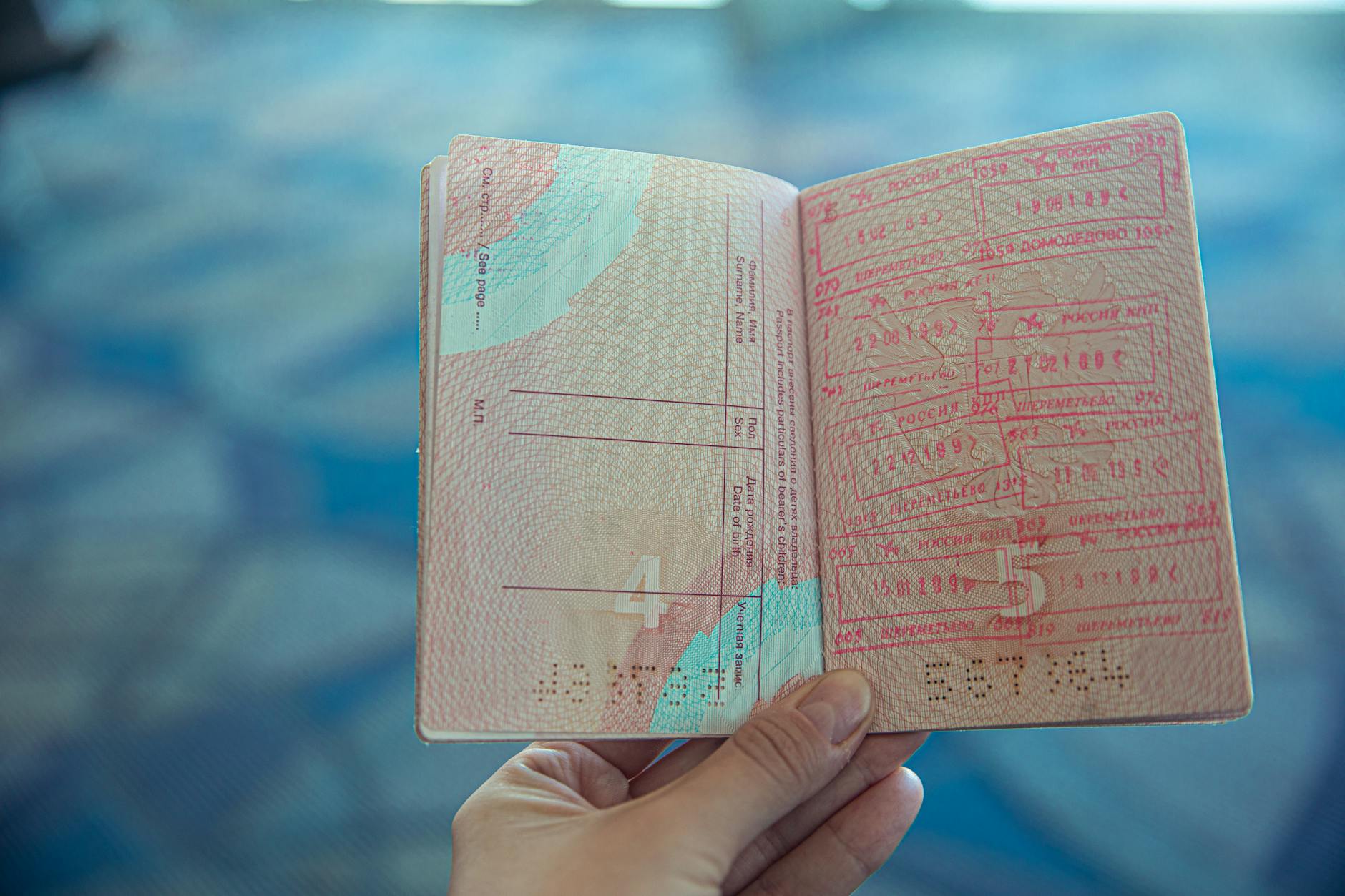
Table of Contents
- What Is the 240-Hour Visa-Free Transit?
- Eligible Countries (Full List)
- Requirements at a Glance
- Where You Can Travel
- Eligible Entry and Exit Ports in Shanghai
- How the Process Works at the Airport
- Documents You Need
- What the Entry Stamp Looks Like
- Common Mistakes and How to Avoid Them
- Can You Extend the 240 Hours?
- 240-Hour Transit vs. Tourist Visa: Which Should You Choose?
- Smart Ways to Use the 240-Hour Policy
- Frequently Asked Questions
What Is the 240-Hour Visa-Free Transit?
The policy, formally known as the 240-hour transit visa-free entry, allows eligible foreign nationals to enter China without a visa for up to 240 hours (ten days) provided they are transiting to a third country. The policy was extended from its earlier 144-hour version in late 2024 and continues to apply in 2026 with regular updates to the country list.
“Transit to a third country” is the core requirement. You must enter China en route to somewhere other than where you started. A New Yorker flying NYC → Shanghai → Tokyo qualifies; a New Yorker flying NYC → Shanghai → NYC does not. There are limited exceptions for certain itineraries.
The 240 hours start counting at midnight after your arrival day. So if you land at 3 PM on Monday, your 240 hours begin at midnight Monday-into-Tuesday and end ten days later at midnight. You have up to ten full calendar days plus arrival-day partial.
Eligible Countries (Full List)
As of 2026, fifty-five countries are eligible. The list expanded in late 2024 with the addition of Indonesia, and may continue to expand. Always verify the current list with the National Immigration Administration of China before traveling.
Europe (40 countries): Albania, Austria, Belarus, Belgium, Bosnia and Herzegovina, Bulgaria, Croatia, Cyprus, Czech Republic, Denmark, Estonia, Finland, France, Germany, Greece, Hungary, Iceland, Ireland, Italy, Latvia, Lithuania, Luxembourg, Malta, Monaco, Montenegro, Netherlands, North Macedonia, Norway, Poland, Portugal, Romania, Russia, Serbia, Slovakia, Slovenia, Spain, Sweden, Switzerland, Ukraine, United Kingdom.
Americas (6 countries): Argentina, Brazil, Canada, Chile, Mexico, United States.
Asia-Pacific (8 countries): Australia, Brunei, Indonesia, Japan, New Zealand, Qatar, Singapore, South Korea.
Middle East (1 country): United Arab Emirates.
If your nationality is not on this list, you will need a tourist visa or another visa-free entry agreement. See our Shanghai Visa & Entry Requirements guide for full visa options.
Note: Some countries have other bilateral visa-free agreements with China that provide longer or more flexible entry. For example, Singapore, Thailand, and several others have separate fifteen-day or thirty-day mutual visa-free arrangements. If you are eligible under multiple programs, you can choose the most favorable one at the entry gate.
Requirements at a Glance
To qualify for the 240-hour visa-free entry, you must meet all of the following:
1. Eligible passport. Your passport must be from one of the fifty-five listed countries with at least three months of remaining validity (some staff request six months; bring a passport with as much remaining validity as you can).
2. Confirmed onward ticket to a third country or region. Your next flight after Shanghai must be to a country (or special administrative region — Hong Kong, Macau, and Taiwan count as third regions for this purpose) that is not the country where your incoming flight originated. The ticket must have a confirmed seat and date within 240 hours of your scheduled arrival.
3. Entry through one of the eligible ports. See the next section.
4. Travel only within the policy regions. See the regions section below.
5. Compliance with standard health and customs rules. No vaccinations are currently required for entry from most countries. Standard customs rules apply.
Where You Can Travel
The 240-hour policy is a transit policy, not a full visa. It permits travel only within specific designated regions. As of 2026, these are:
Shanghai, Jiangsu Province, Zhejiang Province, Anhui Province, Beijing, Tianjin, Hebei, Liaoning, Shandong, Shanxi, Henan, Hubei, Hunan, Jiangxi, Fujian, Guangdong, Guangxi, Hainan, Sichuan, Yunnan, Chongqing, Guizhou, and several others as the program continues to expand.
For Shanghai-based visitors, the practically important regions are:
- Shanghai itself.
- Jiangsu (including Suzhou, Nanjing, and most of the Yangtze Delta).
- Zhejiang (including Hangzhou, Wuzhen, and other classic day trips).
- Anhui (including Huangshan if you have time for a longer trip).
You can take the high-speed train to Suzhou or Hangzhou with no extra paperwork during your ten days. You cannot fly to Beijing or Chengdu unless they are also covered (which they are in 2026, though policy details continue to evolve), and you must always exit through one of the policy’s qualified ports.
Domestic flights and high-speed trains within the eligible regions accept your visa-free entry stamp as sufficient ID; passport plus stamp is all you need.
Eligible Entry and Exit Ports in Shanghai
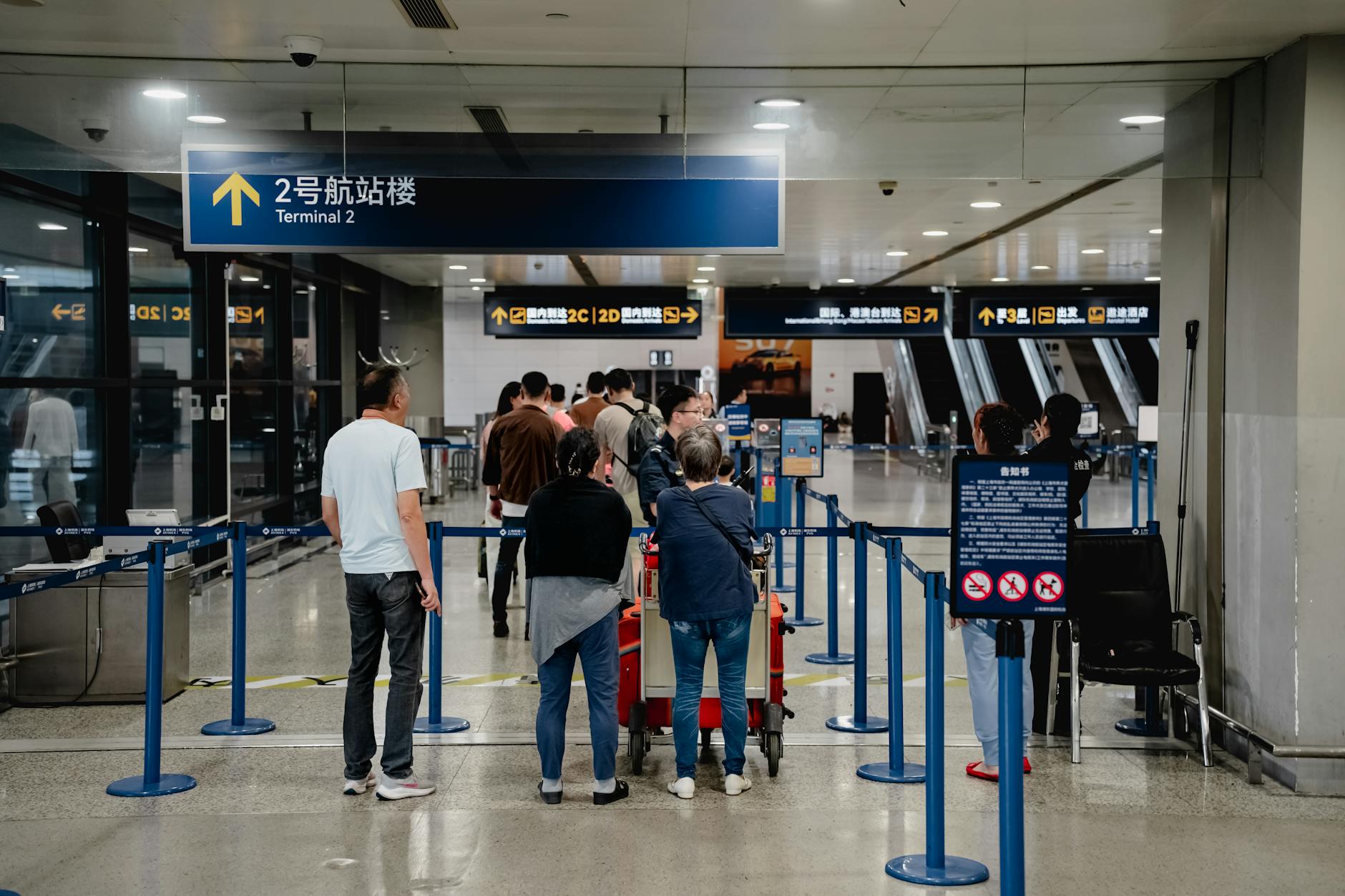
The Shanghai-region eligible ports are:
- Shanghai Pudong International Airport (PVG). The most common entry point.
- Shanghai Hongqiao International Airport (SHA). Less common but accepted.
- Shanghai Port International Cruise Terminal. For cruise arrivals.
You can also exit through any qualified port in the broader policy regions. For example, you can fly out of Hangzhou, Beijing, or Guangzhou as long as those airports are listed for the policy. Always check the National Immigration Administration website for the current port list before booking your itinerary.
How the Process Works at the Airport
The process is simple but does require some preparation. Here is the typical experience.
1. Check in for your inbound flight. The airline staff in your departure city will ask whether you have a Chinese visa. If you do not, tell them you are using the 240-hour visa-free transit policy. They will ask to see your onward ticket. If satisfied, they issue your boarding pass without further question.
2. Land in Shanghai. Follow the regular signs to immigration. Look for the dedicated lane labeled “144/240-Hour Visa-Free Transit” or similar. The signs are bilingual.
3. Fill in the Arrival Card. Available in English on the back of the form. Standard fields: name, passport number, flight number, address in China, length of stay. Your hotel name and address (in English is acceptable) goes in the address field.
4. Approach the immigration officer. Hand over your passport, arrival card, and printed onward ticket. The officer reviews, asks one or two questions (typically about your hotel and onward destination), and stamps your passport.
5. Continue through customs. Standard customs check. Most travelers walk through without inspection.
Total time from gate to taxi: typically 30–45 minutes at peak times, less at off-peak.
Documents You Need
Have these ready when you reach the immigration officer.
- Passport. Valid for at least three months (six months recommended).
- Onward ticket. Printed confirmation of your flight to a third country, with confirmed seat and date within 240 hours of arrival.
- Hotel reservation. Printed confirmation showing your address in Shanghai or wherever you are staying.
- Arrival Card. Filled in on the plane or at the airport.
- Health declaration. Filled in via WeChat mini-program before arrival or at the immigration desk.
Bring printed copies of your onward ticket and hotel confirmation. Officers occasionally accept screenshots, but printed paper is faster and avoids questions.
What the Entry Stamp Looks Like
The visa-free transit stamp is a rectangular ink stamp in your passport with the word “144/240” or similar designation, the entry date, and a duration code. Below the stamp, a smaller line indicates your last permitted day of stay (calculated as 240 hours from the start of the calendar day after your arrival).
Always check the stamp carefully when you receive it. The officer’s hand-written date or duration is what governs your stay. If anything looks wrong, raise it immediately at the same desk before walking away. Corrections are easy at the moment but require a separate visit to immigration if you only notice later.
Common Mistakes and How to Avoid Them
Several preventable mistakes routinely cause problems for visa-free transit users.
1. Not having an onward ticket to a third country. The most common reason for refusal. If your itinerary is round-trip from your home country (e.g., New York → Shanghai → New York), you do not qualify. The onward leg must be to a different country or to one of the qualifying special regions (Hong Kong, Macau, Taiwan).
2. Booking an open-jaw flight that does not qualify. Some travelers book Shanghai → Hong Kong → London thinking the Hong Kong segment satisfies the third-country requirement. Hong Kong does count, but the policy requires that your incoming flight not have come from Hong Kong. Read the rules carefully if your itinerary involves a Greater China region.
3. Overstaying. The 240 hours start counting at midnight after arrival, and exiting late is a serious immigration violation. Some travelers misread the start time and overstay by several hours. Build in a buffer of at least 24 hours when planning your departure.
4. Traveling outside the eligible regions. Several travelers have flown to a destination not covered by the policy and faced immigration consequences. Always verify your destination is on the eligible list.
5. Forgetting to register with police. Foreign visitors must register with the local public security bureau within 24 hours of arrival. International hotels do this automatically; if you are staying with a friend or in a non-registered apartment, you must register yourself.
6. Confusing the policy with a tourist visa. The 240-hour visa-free transit is a transit policy, not a tourist visa. You cannot use it to enter China for the explicit purpose of long tourism. The transit purpose is what makes the policy possible.
Can You Extend the 240 Hours?
No. The 240-hour visa-free transit is a fixed maximum. You cannot extend it on the ground. If your travel plans change and you need to stay longer than ten days, your options are:
- Apply for a tourist visa at a Chinese consulate before traveling, which gives you up to thirty days (extendable).
- Use a separate bilateral visa-free agreement if your country has one (Singapore, Thailand, etc.).
- Exit and re-enter through a third country, restarting the 240-hour clock. This is legal but cumbersome.
If your plans extend during your visit, contact the local public security bureau immediately and seek their guidance. Do not overstay.
240-Hour Transit vs. Tourist Visa: Which Should You Choose?
For most short-term Shanghai visitors, the 240-hour policy is the right choice because it requires no advance paperwork, no consulate visit, and no fee. A tourist visa is the right choice if any of these apply:
- Your stay is longer than ten days.
- You do not have an onward ticket to a third country.
- You will travel outside the policy’s eligible regions.
- You are not from one of the fifty-five eligible countries.
- You want flexibility to extend your stay later.
The tourist visa (L visa) is usually granted for thirty days, with a fee of about $140 USD for US passport holders (varies by country). Application requires submitting your passport to a Chinese embassy or consulate, with processing typically taking four to ten business days. Some travelers use third-party visa services to streamline this.
Smart Ways to Use the 240-Hour Policy
Here are common itinerary structures that take advantage of the policy.
Long layover into proper trip. Book your incoming flight as a layover stop on a longer journey (e.g., Los Angeles → Shanghai → Bangkok). Stay in Shanghai for the full ten days before continuing. Total cost is often lower than a direct flight to your final destination plus a separate visa application.
Round-the-world structure. If you are doing a round-the-world trip with multiple international stops, Shanghai fits naturally as one of them. The visa-free entry simplifies your paperwork.
Greater China hop. Shanghai → Hong Kong → home is a popular pattern. Hong Kong counts as a third region for the policy, and Hong Kong itself is visa-free for most travelers. You get full access to mainland China and Hong Kong without any visa applications.
Suzhou-Hangzhou itinerary base. Use Shanghai as your base and do day trips to Suzhou, Hangzhou, and the historic water towns within Jiangsu and Zhejiang. The policy region covers all of these.
Frequently Asked Questions
Is the 240-hour policy free?
Yes. There is no fee for the visa-free transit stamp.
Do I need to register at a hotel?
Yes, you need to be registered at your accommodation within twenty-four hours. International hotels do this automatically; private rentals require self-registration at the local public security bureau.
Can I work or study during the 240 hours?
No. The visa-free transit is for tourism and short business visits only, not for paid work or formal study. Working or studying requires the appropriate work or study visa.
Can I leave Shanghai and travel to other Chinese cities?
Yes, within the policy’s covered regions. Most major tourist destinations including Beijing, Suzhou, Hangzhou, Xi’an, Chengdu, and Guangzhou are covered. Always verify your specific destination.
Can I bring my children on the 240-hour visa-free transit?
Yes. Each family member needs an eligible passport and meets the same requirements. Children’s onward ticket is the same as the family’s.
What happens if my flight is delayed and I overstay?
Contact the local public security bureau and your airline immediately. Brief overstays caused by airline delays are typically excused with proper documentation. Long overstays without contact may result in fines or future entry restrictions.
Can I use this policy multiple times in a year?
Yes. There is no formal annual limit, though immigration officers may ask questions if you use the transit visa-free policy frequently in succession.
Does the 240-hour policy apply at land borders?
For Shanghai, no. Shanghai is not a land border. For some Chinese border regions, similar policies apply at land crossings; check the latest rules if you plan to enter China overland.
What is the difference between the 144-hour and 240-hour policies?
The 240-hour policy replaced the 144-hour policy in late 2024 for the eligible countries listed above. The 144-hour version was previously the standard. For all current eligible passports, the 240-hour version applies.
Can I apply for the 240-hour visa-free transit in advance?
No. The visa-free entry is granted at the airport upon arrival, not in advance. Bring your eligible passport, onward ticket, and hotel reservation.
Plan Your Visa-Free Visit
The China 240 hour visa free transit Shanghai policy is one of the most generous transit visa-free programs in the world for the tourists who qualify. Confirm your country is on the list, book an eligible onward ticket, print your hotel confirmation, and arrive in Shanghai with everything ready. The whole process at the airport takes less than an hour.
For the broader visa picture and other entry options, see our Shanghai Visa & Entry Requirements guide. For practical advice once you arrive, see our Shanghai practical tips for tourists. For day-by-day plans for your time in Shanghai, see our Shanghai itinerary planner.
For authoritative source information on current eligibility and rules, refer to the National Immigration Administration of China website, which publishes updates as policy details evolve. Verify the current rules close to your travel date.