Few foods are more associated with a single city than xiaolongbao with Shanghai. The soup-filled steamed dumpling, perfected in the Yangtze Delta in the late nineteenth century and codified in Shanghai over the following decades, is probably the city’s single most photographed and most argued-about food. Where you find the best xiaolongbao in Shanghai depends on whom you ask: a hundred-year-old shop next to Yu Garden, a no-frills neighborhood spot in Hongkou, a Taiwanese global chain with a perfectionist reputation, or a tiny stand near a metro station that locals queue twenty minutes for. This guide covers all of them, with the strengths of each, the right way to eat the dumplings, and the practical info you need to plan a meal.
Before recommending specific restaurants: a quick note on what xiaolongbao actually is. The classic version is a thin-skinned steamed dumpling, about an inch and a half across, filled with seasoned pork and a small amount of gelled aspic. When the dumpling steams, the aspic melts back into broth, leaving you with a pork-and-soup-filled package. Variants include crab roe (xiè fěn xiǎolóngbāo), pure crab (chún xiè), shrimp, vegetarian, and a handful of modern fusion fillings. The wrapper is the technical signature: it should be thin enough to be slightly translucent but strong enough to hold the soup without leaking until you bite.
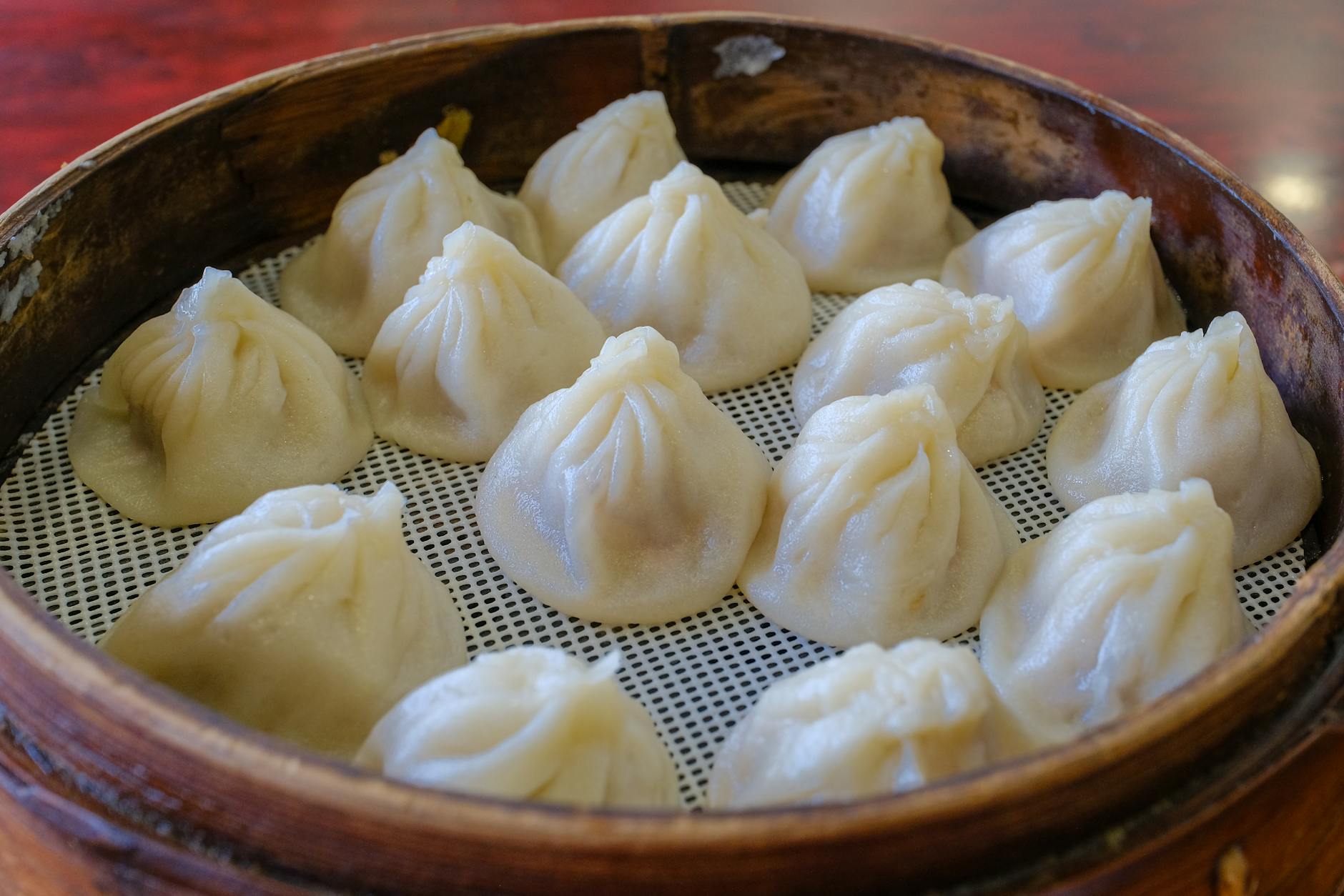
Table of Contents
- What Is Xiaolongbao?
- How to Eat Xiaolongbao
- Nanxiang Steamed Bun (Yu Garden)
- Jia Jia Tang Bao
- Din Tai Fung
- Fu Chun Xiao Long
- Wanshouzhai
- Lin Long Fang
- Yang’s Fry-Dumpling (Different but Essential)
- Modern and Fusion Xiaolongbao
- Where to Find Crab Roe Xiaolongbao
- Suggested Xiaolongbao Crawl
- Tips for Eating Xiaolongbao in Shanghai
- Frequently Asked Questions
What Is Xiaolongbao?
Xiaolongbao (literally “small basket bun”) originated in Nanxiang, a town now within Shanghai’s Jiading District, in the 1870s. The dumpling was developed by a baker named Huang Mingxian, who took the existing tradition of soup-filled buns (tang bao) and refined the wrapper to be thinner and the filling to use solid aspic that melts during steaming. By 1900 the technique had migrated into central Shanghai, where the Nanxiang Steamed Bun Restaurant — still operating today next to Yu Garden — opened in 1900 and became the most famous early purveyor.
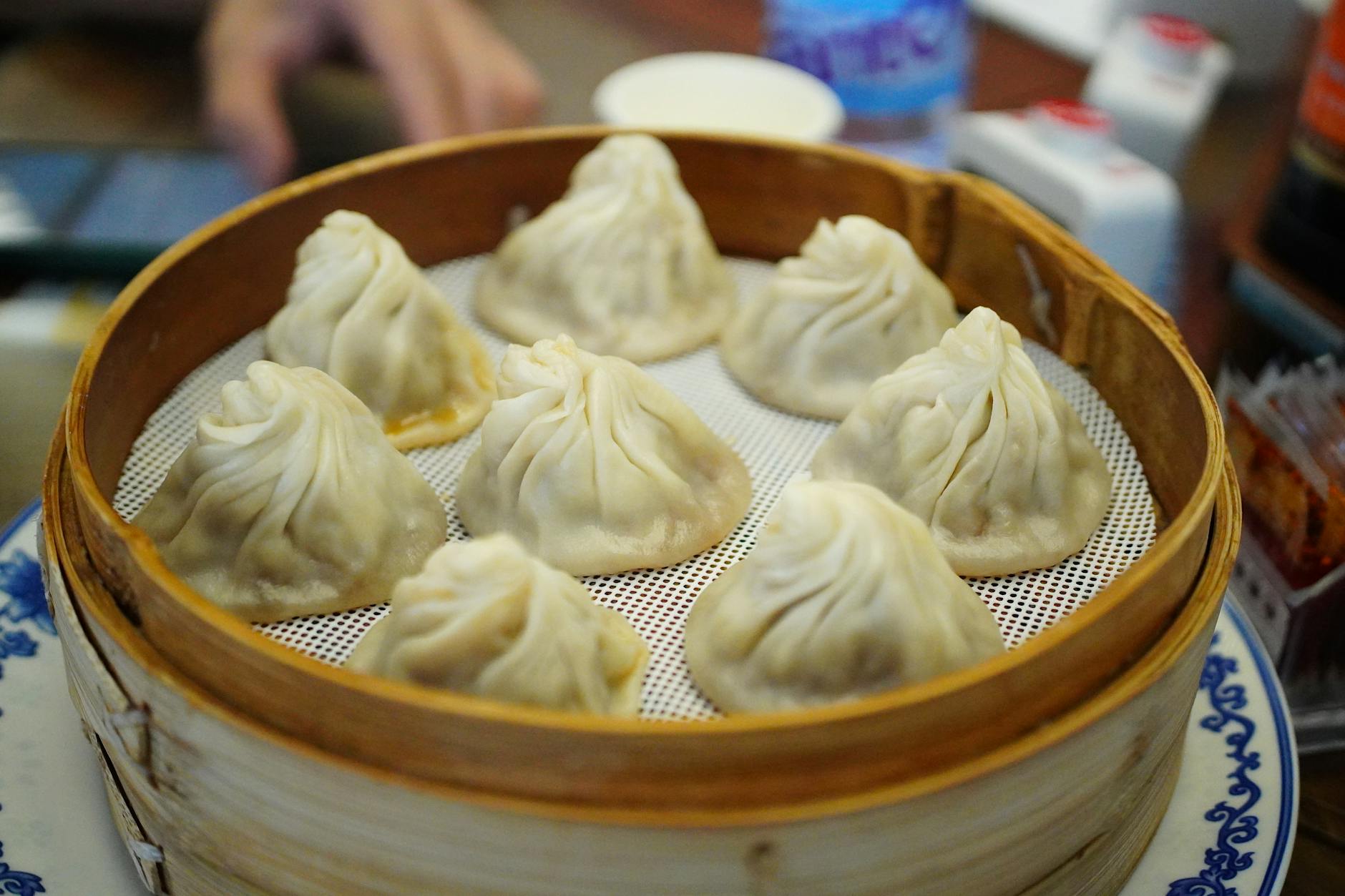
The classic Shanghai xiaolongbao has eighteen pleats at the top (a common purist’s claim, though the count varies by maker), a thin and slightly translucent wrapper, and a balanced filling that emphasizes the pork and broth without being overly seasoned. Serving is in a bamboo steamer, accompanied by black vinegar and shredded ginger.
You can also find xiaolongbao at restaurants in Hong Kong, Taiwan, and now most major global cities, but Shanghai’s version remains the gold standard. The vocabulary you will encounter on Shanghai menus:
- Xiǎolóngbāo (小笼包): the standard pork version.
- Xiè fěn xiǎolóngbāo (蟹粉小笼包): with crab roe.
- Chún xiè xiǎolóngbāo (纯蟹小笼包): pure crab, no pork. The premium version.
- Sūxiàn (素馅): vegetarian filling.
- Tang bao (汤包): bigger soup-filled buns, eaten with a straw.
How to Eat Xiaolongbao
The right technique matters because xiaolongbao is a soup container as much as a dumpling. Eating it like a regular dumpling causes the soup to leak before you taste it, defeating the dish.
Step 1. Lift the dumpling carefully with chopsticks, holding the topknot. Some diners use a flat-bottomed soup spoon held underneath the dumpling as a safety net.
Step 2. Place the dumpling in your spoon and bite a small hole in the wrapper. Wait ten seconds for the soup to cool slightly; freshly steamed dumplings are scalding.
Step 3. Sip the soup directly from the spoon or by tilting the dumpling slightly.
Step 4. Add black vinegar and ginger to taste, then eat the dumpling whole or in two bites.
Common etiquette mistakes to avoid: do not stand chopsticks vertically in any rice bowl on the table (a funeral symbol), do not bite an entire xiaolongbao in one go (the soup goes everywhere), and do not skip the vinegar and ginger (they balance the richness).
Nanxiang Steamed Bun (Yu Garden)
The historic icon. Founded in 1900, located right beside the Yu Garden bridge in Yuyuan Bazaar, Nanxiang Mantou Dian is the most famous xiaolongbao restaurant in Shanghai and probably the world. The restaurant has multiple floors with different price points, from the ground-floor takeaway window (the cheapest, with the longest line) to the upper-floor sit-down restaurant.
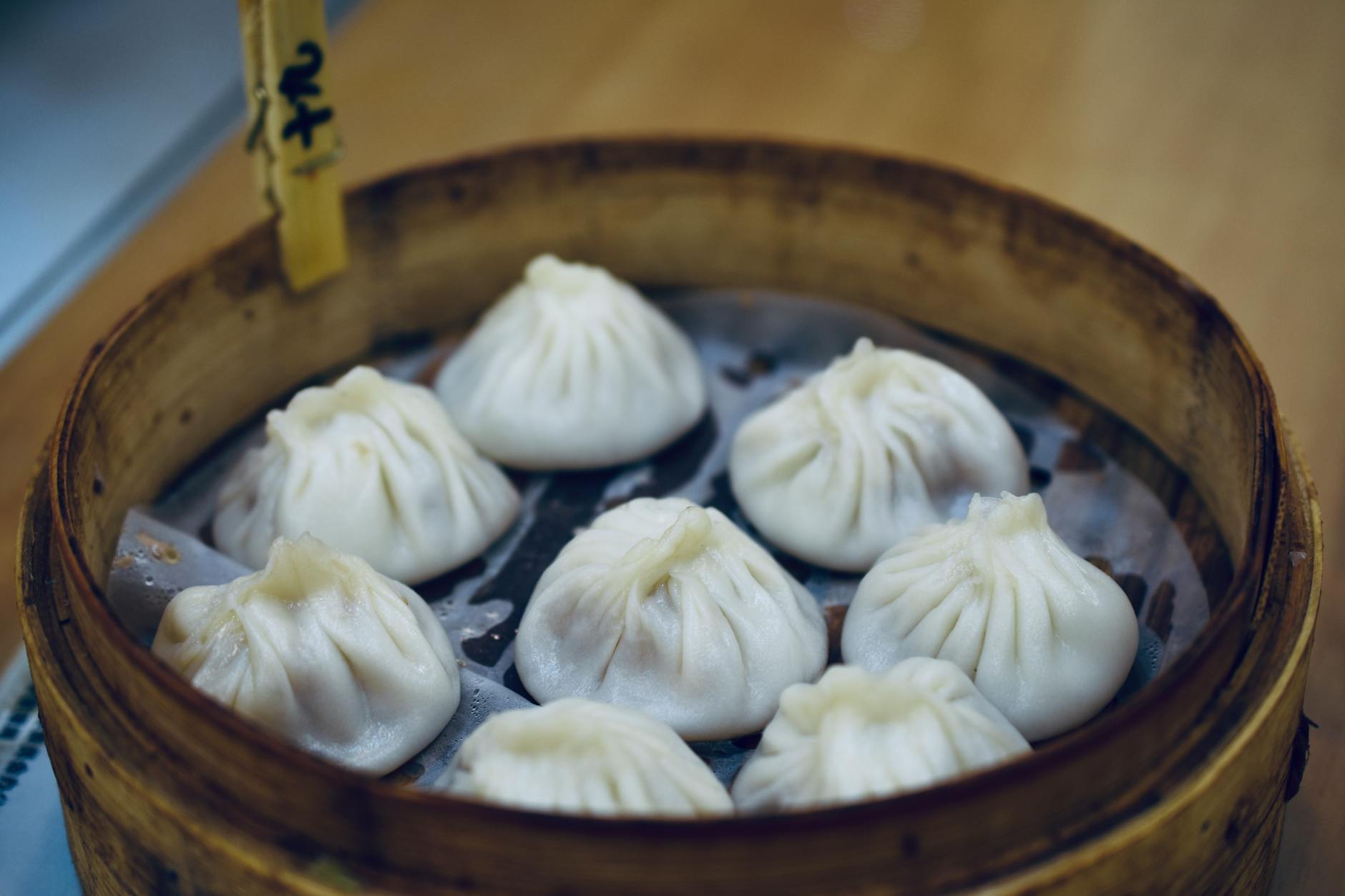
Pros: Hundred-year heritage. Tradition is intact. Setting (right beside Yu Garden) is convenient for tourists. The crab roe xiaolongbao here is excellent.
Cons: Lines on the ground floor often exceed an hour. Some longtime regulars argue the dumplings have not kept pace with the best modern shops. Tourist crowds can dilute the experience.
How to handle it: Skip the ground-floor takeaway. Go directly to the second or third floor. Sit-down service is faster and the dumplings are essentially the same. Pair with the crab roe version (RMB 60) and the standard pork (RMB 30).
Address: 85 Yuyuan Old Street, Huangpu. Open daily 9 AM–9 PM.
Jia Jia Tang Bao
The local favorite among many Shanghainese. Jia Jia Tang Bao operates several small branches around central Shanghai, but the original location near Huanghe Road is the one most often praised. The shop is small, no-frills, and serves a tightly focused menu of xiaolongbao and tang bao.
Pros: Among the best-tasting xiaolongbao in central Shanghai. Affordable (RMB 18–25 for standard pork). Multiple convenient locations. The crab roe version is widely considered superior to Nanxiang’s.
Cons: Small spaces. Often packed. Not suitable for groups larger than four. No reservations.
How to handle it: Go off-peak (3:00–5:00 PM avoids both lunch and dinner rushes). Order ten of the standard plus eight of the crab roe.
Branches include: Huanghe Road (original), Tianyaoqiao Road, Damuqiao Road. Hours roughly 7 AM–8 PM.
Din Tai Fung
Technically Taiwanese, not Shanghainese, but Din Tai Fung’s xiaolongbao have set the global benchmark for technical precision. Each dumpling is rolled, filled, and pleated under specifications that include a target weight (21 grams) and a fixed pleat count (eighteen). The Shanghai branches consistently score among Asia’s best.
Pros: The most technically perfect xiaolongbao in the city. Wrappers are uniformly thin, fillings precisely seasoned, lines are managed efficiently. Great for first-time visitors who want the Platonic ideal of the dumpling. English menus and English-speaking staff.
Cons: Not the most flavor-forward; some regulars find it slightly bland compared with the local shops. Pricier (RMB 60–80 for ten standard pork). The Shanghai chain feels somewhat corporate.
How to handle it: Reserve through their app or via the restaurant’s hotline. Visit the IFC Mall (Pudong) or the Shanghai Centre branches for the most polished service.
Fu Chun Xiao Long
The clean, refined neighborhood favorite. Fu Chun’s xiaolongbao have a slightly cleaner, more delicate broth profile than the heavier Nanxiang style, which suits diners who prefer balance over richness.
Pros: Excellent broth-to-pork ratio. Less crowded than the famous spots. Pleasant neighborhood feel. Affordable (RMB 22–30 for standard pork).
Cons: Slightly out of the way for tourists; best if you are already in the area. Limited English on the menus at some branches.
Address: 650 Yu Yuan Road and several other branches.
Wanshouzhai
One of Hongkou’s old-school dumpling shops. Wanshouzhai has been quietly serving xiaolongbao for decades and remains a favorite among locals who prize traditional flavors over trend.
Pros: Traditional balanced flavor. Affordable (RMB 18–25 for standard). Less touristy. The tang bao (larger soup buns) here are particularly good.
Cons: Off-the-tourist-track location. Limited English. Sometimes crowded with regulars.
Address: Hongkou District. Best for travelers staying north of the Bund or interested in seeing a local-favorite spot.
Lin Long Fang
A relative newcomer in the boutique xiaolongbao space. Lin Long Fang has built a strong reputation among food enthusiasts for its careful technique, single-source pork, and modern dining-room ambience.
Pros: Excellent technique. Pleasant atmosphere. Good for diners who want a sit-down xiaolongbao meal rather than a stand-and-wait counter experience.
Cons: Pricier than the traditional shops. Smaller branch network. Reservations recommended for weekend dinners.
Yang’s Fry-Dumpling (Different but Essential)
Yang’s Fry-Dumpling does not technically serve xiaolongbao; it serves shengjianbao, the pan-fried Shanghai cousin. But any honest xiaolongbao guide includes Yang’s because the two dumpling styles are inseparable in Shanghai street food.
What is shengjianbao? A pan-fried, soup-filled bun with a thicker yeasted wrapper and a crisp bottom. Larger than xiaolongbao, requires more attention to drainage when you bite. Topped with sesame seeds and scallions.
Pros: Yang’s iconic shengjianbao have set the global benchmark. Multiple branches, fast service, affordable (RMB 8 for four). The right pairing for a xiaolongbao crawl.
Cons: Different dish entirely. Lines can be long at peak times. Eat hot or the fillings cool and lose appeal.
Branches: Wujiang Road (original), Huanghe Road, multiple metro-station-adjacent locations.
Modern and Fusion Xiaolongbao
Several modern Shanghai restaurants have built xiaolongbao programs around contemporary fillings and techniques. Worth a visit if you have already done the traditional shops and want to see how the dish is evolving.
Yu Xiang Zhai serves a luxe version with truffle pork.
Lao Ji Shi serves traditional xiaolongbao alongside a full benbang menu in atmospheric Old City surroundings.
Mr & Mrs Bund occasionally features a xiaolongbao-inspired starter on its tasting menu (modern French interpretation).
Heritage by Madame Zhu’s offers a refined French Concession take with carefully sourced ingredients.
Where to Find Crab Roe Xiaolongbao
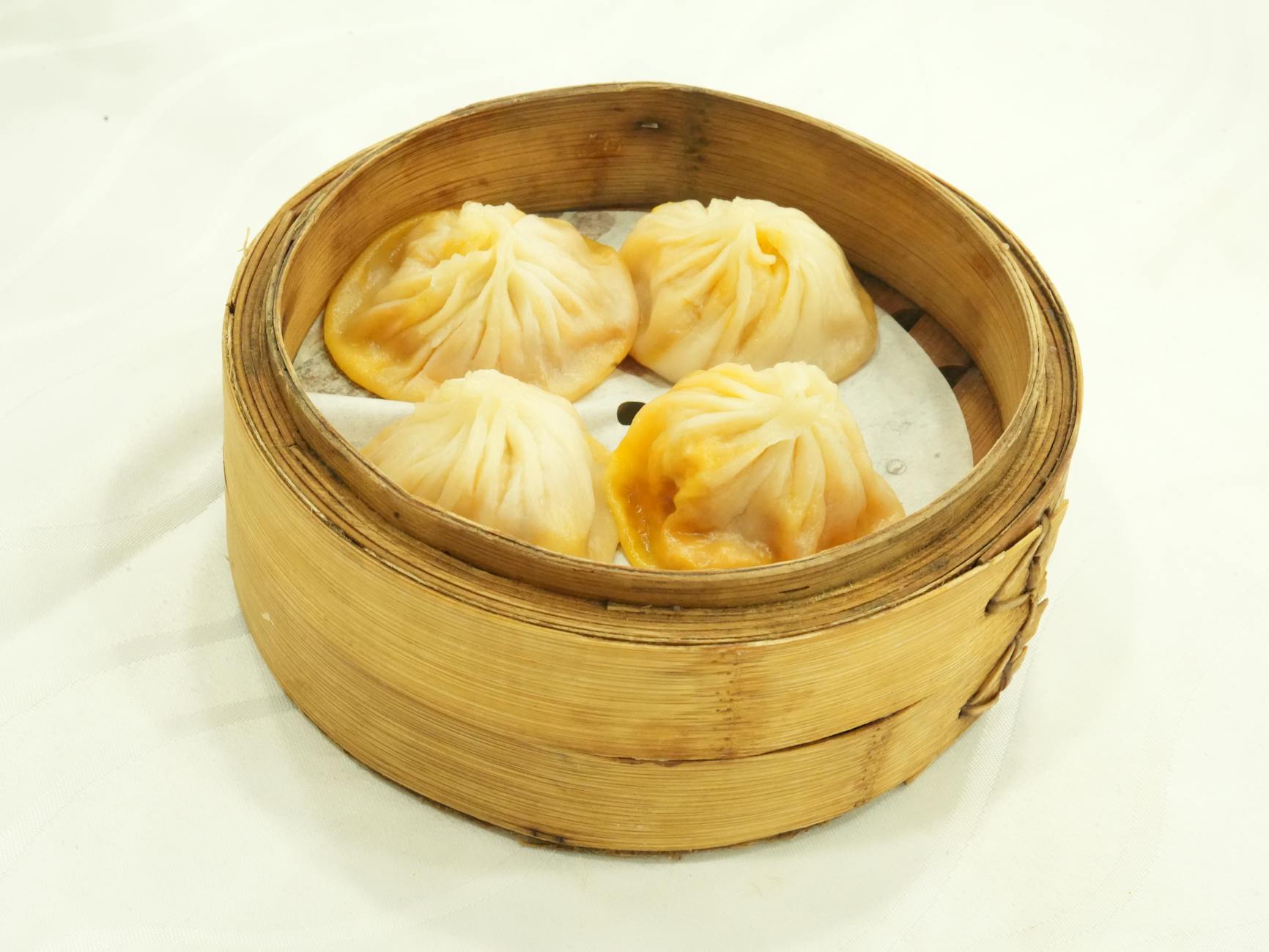
Crab roe xiaolongbao (xiè fěn xiǎolóngbāo) are a Shanghai specialty traditionally available only in autumn, when freshwater hairy crabs are in season (September–November). Modern restaurants now serve the dumpling year-round using preserved crab roe, but the autumn-fresh version is significantly better.
Best places for crab roe xiaolongbao: Nanxiang’s upper-floor versions, Jia Jia Tang Bao’s seasonal special, Yang Bo Hairy Crab restaurant (autumn only), and Fu 1015 in the former French Concession (a sit-down restaurant with refined crab dumplings).
Pure crab xiaolongbao (chún xiè) is the most premium version, with no pork at all. Expect to pay RMB 80–150 per basket of ten.
Suggested Xiaolongbao Crawl
If your time in Shanghai allows, a half-day xiaolongbao crawl is one of the most distinctive food experiences in the city.
11:30 AM: Start at Jia Jia Tang Bao for a baseline-tasting basket of standard pork. Notice the wrapper thickness, the soup volume, the pork seasoning. RMB 22.
12:30 PM: Walk or metro to Nanxiang in Yuyuan Bazaar. Order one basket each of standard pork and crab roe. Compare to your Jia Jia baseline. RMB 75.
1:30 PM: Walk through Yu Garden for atmosphere and digestion (free admission to the bazaar; small entry fee for the garden proper).
2:30 PM: Cross to Yang’s Fry-Dumpling at Wujiang Road for shengjianbao. The pan-fried cousin gives the contrasting texture lesson. RMB 8.
4:00 PM: Optional finale at Din Tai Fung (IFC Mall) for the technically perfect version. Reserve in advance. RMB 65.
Total cost roughly RMB 175 (about $25 USD). You will be full. You will also know which Shanghai xiaolongbao style you prefer, which is the actual point of the exercise.
Tips for Eating Xiaolongbao in Shanghai
Eat them fresh. Xiaolongbao must be eaten within a few minutes of being steamed. Soup absorbs into the wrapper as it sits. If your dumplings have been waiting more than three minutes when they arrive, send them back politely.
Time your visits to off-peak. 11:30 AM and 5:30 PM both pre-empt the rush; 2:00–4:30 PM is the calmest window at most shops.
Order multiple varieties. Standard pork plus crab roe is the canonical pairing. Trying both in one meal lets you appreciate the differences.
Skip the soy sauce. Black vinegar and ginger are the canonical condiments. Soy sauce overwhelms the delicate broth.
Pay attention to the wrapper. Properly made xiaolongbao wrappers should be slightly translucent at the bottom (where they sit on the steamer) and thin enough to see broth movement when handled. Thick or doughy wrappers indicate inferior technique.
Avoid high-tourist hours at Nanxiang. Weekend lunches see waits of an hour or more. Weekday afternoons, even at this most famous shop, are usually walk-in friendly.
Bring cash and apps. Most xiaolongbao shops accept WeChat Pay or Alipay; some smaller ones accept cash only. Few accept foreign credit cards.
Frequently Asked Questions
What is the difference between xiaolongbao and shengjianbao?
Xiaolongbao are smaller, thin-skinned, steamed in bamboo baskets. Shengjianbao are larger, with thicker yeasted dough, pan-fried until the bottom is crisp, and topped with sesame and scallions. Both are soup-filled. Both are essential Shanghai dumplings.
Is Din Tai Fung “real” xiaolongbao?
Yes. Din Tai Fung is Taiwanese, not Shanghainese, but the technique and tradition are the same. The Shanghai branches consistently rank among the top in the city, especially for first-time visitors who want consistent quality.
What is the best season for xiaolongbao?
Standard pork xiaolongbao are good year-round. Crab roe xiaolongbao are best in autumn (September–November) when fresh hairy crabs are in season. Many Shanghainese consider this autumn season the high point of the local food year.
How much do xiaolongbao cost in Shanghai?
Standard pork xiaolongbao at neighborhood shops cost RMB 18–30 per basket of ten. Crab roe versions cost RMB 40–80. Premium pure-crab versions cost RMB 80–150. Din Tai Fung is at the higher end of these ranges.
Can vegetarians eat xiaolongbao?
Yes, increasingly. Many Shanghai shops offer a vegetarian version (sūxiàn xiǎolóngbāo) with mushroom and bamboo shoot fillings. The broth is replaced with vegetable aspic. Confirm with the restaurant; not all locations stock the vegetarian version daily.
Are xiaolongbao halal?
Standard xiaolongbao contain pork and are not halal. Beef-filled xiaolongbao are uncommon but available at some halal restaurants in Shanghai’s Muslim quarters (around the Huxi Mosque).
How many xiaolongbao should I order?
A typical order is one basket of ten per person as a snack, two baskets per person as a meal. Mix varieties to compare flavors.
Do xiaolongbao freeze well?
Frozen xiaolongbao are sold in supermarkets and reheat reasonably well, but the experience is not comparable to fresh. The whole point of the dumpling is the moment of biting and tasting fresh-melted broth.
Are there cooking classes for xiaolongbao in Shanghai?
Yes. Several culinary tour operators offer xiaolongbao-making classes for tourists, typically two to three hours and RMB 300–700. The Chinese Cooking Workshop in the former French Concession is a popular option.
Can I bring xiaolongbao home?
Yes, frozen versions are sold at supermarkets and can be carried in checked baggage. Some restaurants (Din Tai Fung notably) sell take-home boxes designed for travel.
Plan Your Xiaolongbao Visit
The best xiaolongbao in Shanghai is the one you eat at the right shop, at the right time of day, with the right technique. Start with Jia Jia or Nanxiang, add Din Tai Fung for the modern benchmark, finish with Yang’s for the pan-fried contrast. By the end of a thoughtful crawl, you will know which style you prefer and why.
For broader food guidance, see our Shanghai Food Guide. For practical dining etiquette and tipping, see Shanghai practical tips for tourists. For where to base yourself for easy access to the major xiaolongbao shops, see Where to Stay in Shanghai.
Shanghai’s relationship with xiaolongbao is older than most countries’ relationships with their national dishes, and it shows in every steamer that comes out of a Shanghai kitchen. Eat slowly. Compare. Argue with your friends about which shop did it best. That is exactly how locals do it.
For more background, see Xiaolongbao on Wikipedia.