If Shanghai had a single address, it would be the Bund. Half a mile of early-twentieth-century international architecture facing across the Huangpu River at the most famous skyline in China, the Bund is the photograph everyone takes home and one of the few places in any major city where the past and the present line up so cleanly that you can see the whole story in one frame. This The Bund Shanghai guide is everything you need to plan a visit: history, the buildings worth knowing by name, the best times of day, where to eat and drink, how to get there, what to skip, and how to integrate the Bund into a longer Shanghai itinerary.
The Bund (waitan in Mandarin, literally “outer beach”) was the financial heart of Asia in the 1920s and 1930s, a row of banks, trading houses, and consulates that earned the nickname “the museum of buildings” for the variety of styles packed into a single stretch of waterfront. Today the row has been restored, the riverfront has been transformed into a wide pedestrian promenade, and across the river, Pudong’s skyline has grown into one of the most photographed in the world. The visit takes anywhere from twenty minutes to a full day depending on how much you want to do.
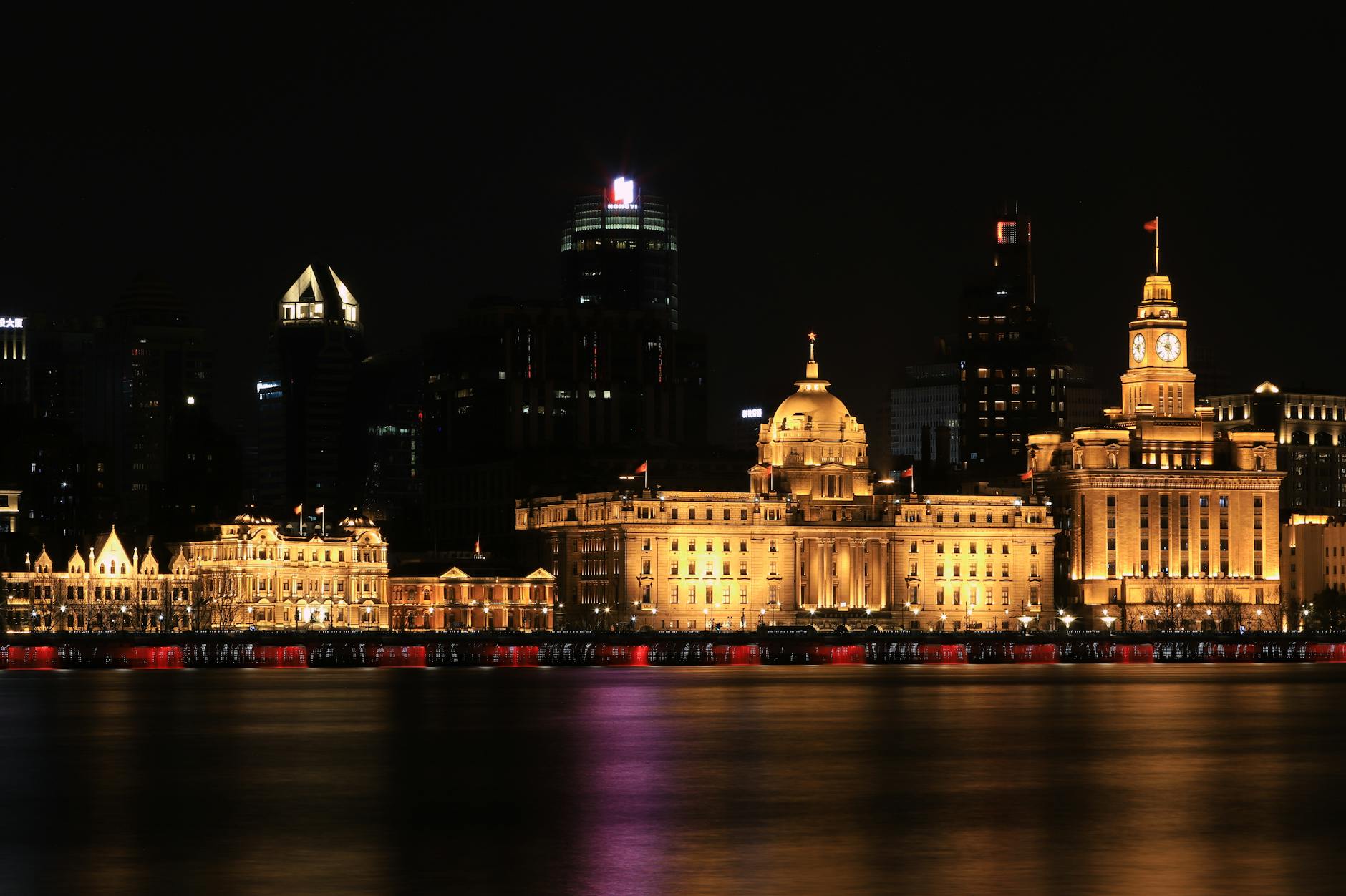
Table of Contents
- What Is the Bund?
- A Quick History of the Bund
- The 13 Buildings Worth Knowing
- The Bund Bull and Other Symbols
- Best Time to Visit the Bund
- How Long to Spend
- Suggested Walking Route
- Huangpu River Cruise: Worth It?
- Where to Eat and Drink on the Bund
- Best Bund Skyline Views (Free and Paid)
- Getting to the Bund
- Visitor Tips and Common Mistakes
- What to Combine with a Bund Visit
- Frequently Asked Questions
What Is the Bund?
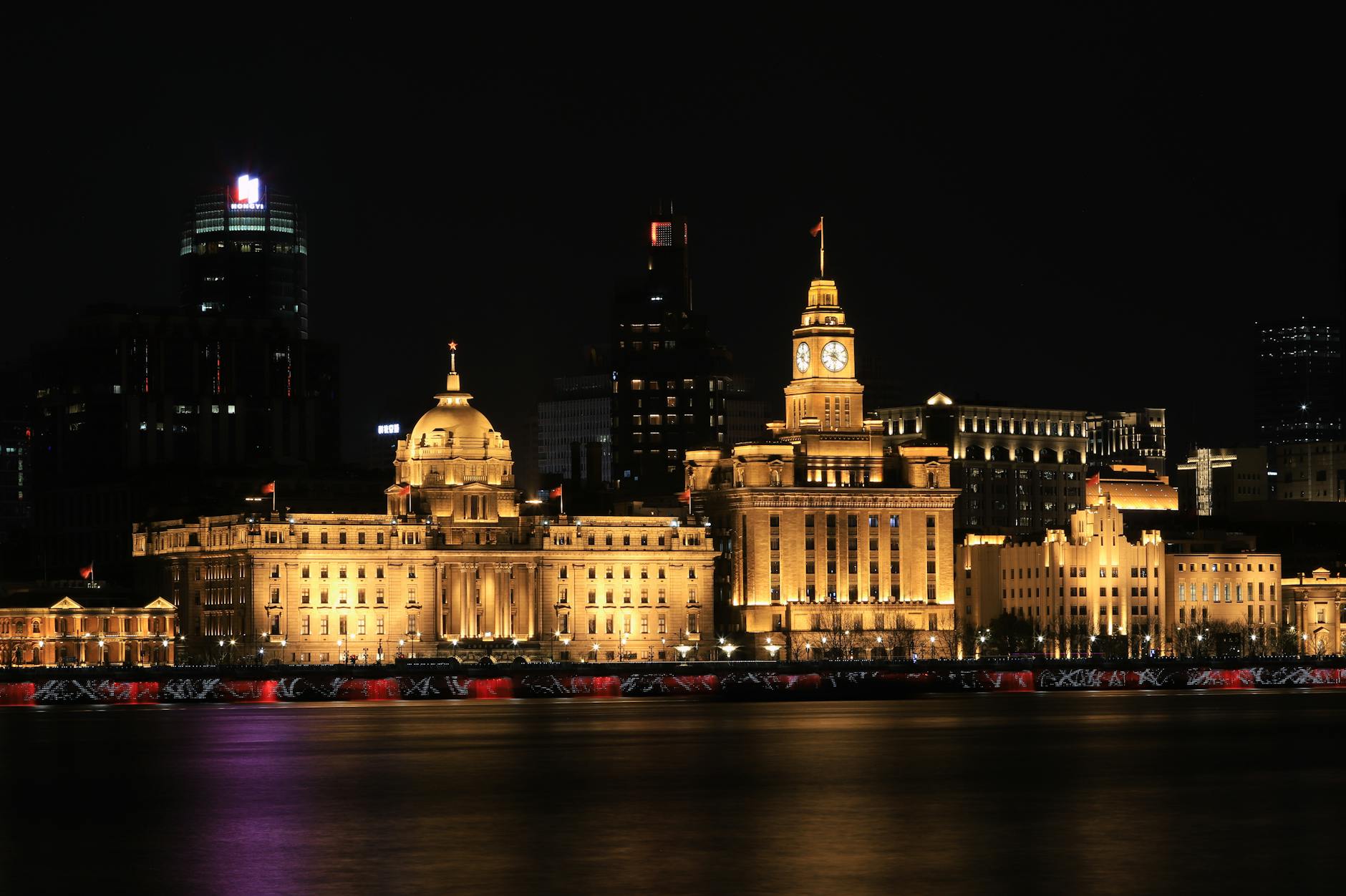
The Bund is a 1.5-kilometer (about one mile) elevated waterfront promenade running along the western bank of the Huangpu River, between Yan’an East Road in the south and Suzhou Creek in the north. To the west of the promenade stand fifty-two early-twentieth-century buildings in Gothic, neoclassical, Renaissance Revival, Art Deco, and early modernist styles. To the east, across the river, is the modern Pudong skyline, anchored by the Oriental Pearl Tower (1994), Jin Mao Tower (1999), Shanghai World Financial Center (2008), and Shanghai Tower (2015). The juxtaposition of pre-war Western architecture against twenty-first-century Chinese skyscrapers is the visual signature of contemporary Shanghai.
Visiting is free and the promenade is open twenty-four hours. The Bund is consistently ranked among Shanghai’s top three attractions, alongside Yu Garden and the Shanghai Tower observation deck. Most first-time visitors include the Bund on Day One of any itinerary.
A Quick History of the Bund
Until the early 1840s, this stretch of riverbank was an unremarkable mudflat used for towing barges. The transformation began in 1843, when the Treaty of Nanking opened Shanghai as a treaty port and granted Britain the right to lease land north of the Old City. The British settlement, established along this stretch of the Huangpu, became the heart of foreign Shanghai. The American settlement was established at Hongkou in 1848, and the two merged in 1863 to form the Shanghai International Settlement. The French Concession, established in 1849, remained separate to the southwest.
The earliest Bund buildings were modest two- and three-story trading houses. As Shanghai’s commercial importance grew, these were replaced by progressively grander structures. The boom decade was the 1920s, when banking and insurance companies built the great neoclassical and Art Deco buildings that define the Bund today. The HSBC Building (1923), Customs House (1927), Sassoon House (1929), and Bank of China Building (1937) are the canonical examples.
The treaty-port era ended formally in 1943, when the foreign concessions were abolished. After 1949, the buildings became state-owned and many were repurposed; the HSBC Building, for example, served as the Shanghai municipal government headquarters until 1995. Restoration work in the 1990s and 2000s returned most facades to their original appearance, and the elevated promenade was rebuilt in 2010 in time for Expo 2010 Shanghai. Today the buildings house luxury hotels, fine-dining restaurants, banks, and museums; the Bund’s commercial life has come back, though in a different key.
For broader cultural and historical context, see our Shanghai Culture and History Guide.
The 13 Buildings Worth Knowing
The Bund has fifty-two buildings, but a focused walk highlighting thirteen will give you a strong understanding of the row. The buildings are numbered from south to north, starting at Yan’an East Road and ending at Suzhou Creek.
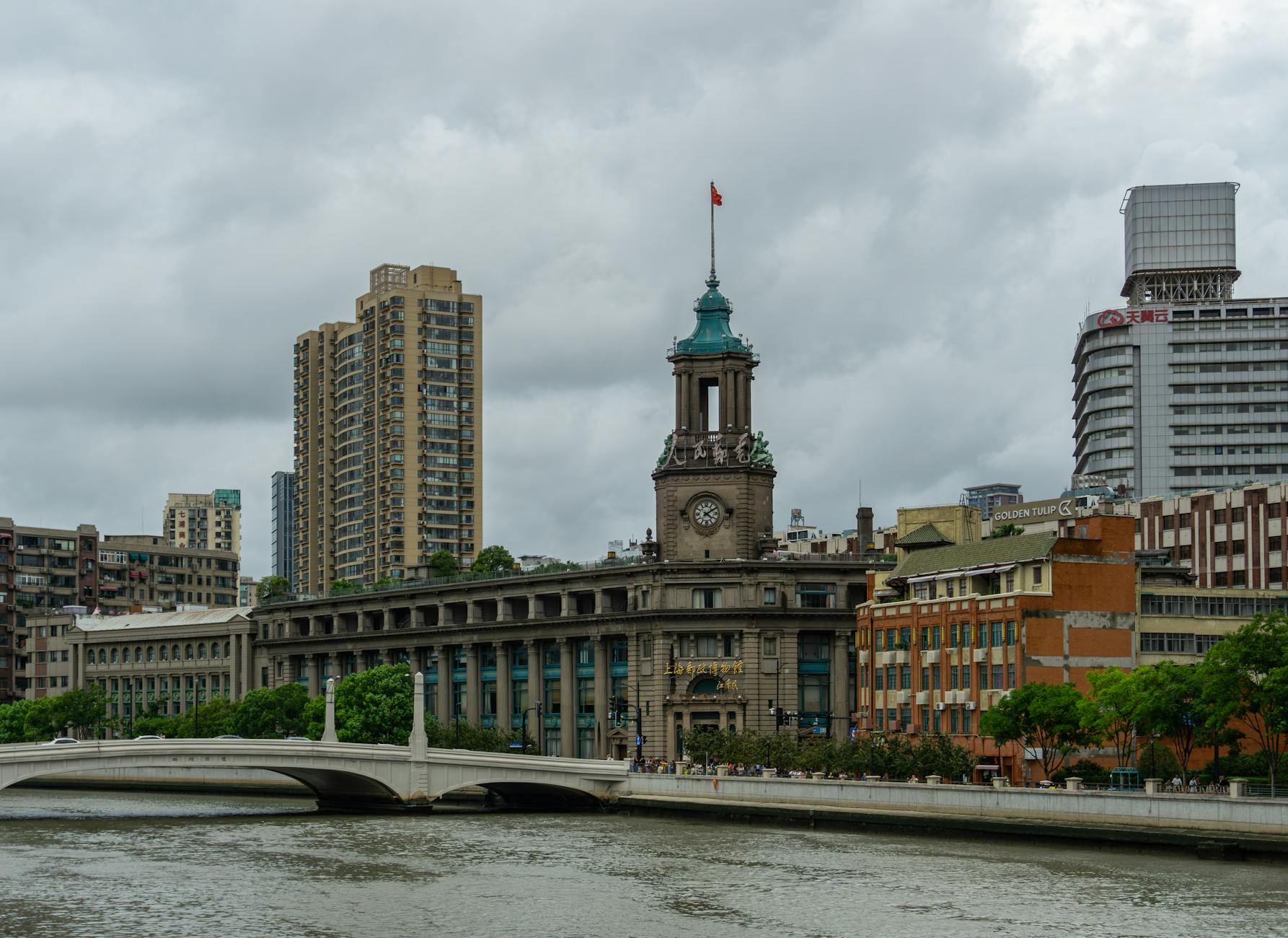
No. 2 (Shanghai Club, 1911), now the Waldorf Astoria. Six-story Renaissance Revival, home to the longest bar in the world during the early twentieth century. The Long Bar inside has been faithfully restored and is one of the city’s best places for a cocktail.
No. 3 (Three on the Bund, 1916), now a luxury dining and gallery destination. Originally the Union Insurance Building. Houses Jean-Georges, Mercato, and several other notable restaurants, plus the Shanghai Gallery of Art.
No. 6 (China Merchants Group Building, 1897). The oldest surviving Bund building, in red brick. Easy to miss; look for the Tudor-style turret.
No. 12 (HSBC Building, 1923). The largest and most iconic Bund building, six stories of neoclassical grandeur. The interior octagonal lobby features a famous mosaic ceiling depicting the eight HSBC office cities of the early twentieth century. Now occupied by Shanghai Pudong Development Bank, but the lobby is open to visitors during business hours.
No. 13 (Customs House, 1927). Distinguished by its tall clock tower (the “Big Ching” of Shanghai). The building still functions as part of the Customs Bureau.
No. 14 (Bank of Communications Building, 1948). Late Art Deco, the last major Bund building completed before the 1949 transition.
No. 18 (Russell & Company Building, 1923), now Bund 18. Beaux-Arts façade housing some of the most exclusive dining and shopping on the Bund, including Cartier and Patek Philippe boutiques.
No. 19 (Palace Hotel, 1908), now part of the Fairmont Peace Hotel. Combined with No. 20 to form one of the most famous hotels in Asia.
No. 20 (Sassoon House, 1929), now the Fairmont Peace Hotel main building. The Art Deco masterpiece of Shanghai. Built by Victor Sassoon, the hotel famously hosted Charlie Chaplin and Noel Coward in the 1930s. The Old Jazz Bar inside has been performing 1930s standards continuously since 1980.
No. 23 (Bank of China Building, 1937). Late Art Deco with Chinese roof flourishes; one of the most distinctively transitional buildings on the Bund.
No. 26 (Yangtze Insurance Building, 1920). Early Renaissance Revival, now occupied by the Agricultural Bank of China.
No. 27 (Jardine Matheson Building, 1922). Beaux-Arts. Long the headquarters of the great British trading house. Now the headquarters of the Foreign Trade Bureau.
No. 33 (Former British Consulate, 1873). The oldest standing structure on the Bund, in Anglo-Indian style. Now a public museum and event space; the gardens are open to the public.
Many of the Bund’s buildings have small bronze plaques on the facade with bilingual historical descriptions. Look for them as you walk; the ten minutes you spend reading them transform the visit.
The Bund Bull and Other Symbols
The Bund Bull, sculpted by Italian-American artist Arturo Di Modica (the same sculptor responsible for the Wall Street Charging Bull), was unveiled at the southern end of the Bund in 2010. The piece weighs over two tons and faces north, symbolizing the bullish energy of the Chinese economy. It is the most photographed sculpture on the Bund.
The Monument to the People’s Heroes, at the northern end of the Bund near Suzhou Creek, is a thirty-meter-tall stone obelisk completed in 1993. It commemorates revolutionary figures from the 1840s onward. Less photographed than the Bund Bull but equally a fixture of the promenade.
The Gutzlaff Signal Tower, at the southern end, is a thirty-six-meter Art Deco-style tower originally built in 1907 (rebuilt 1993) to broadcast weather forecasts and typhoon warnings. The first floor now houses a small museum about Bund history; the second floor is a cafe with views over the promenade.
Best Time to Visit the Bund
The single best time to visit the Bund is the hour before sunset, with the goal of staying through the lighting transition. The architecture is at its most photogenic in the warm evening light, and the skyline lights flip on around 7 PM in spring and autumn (slightly later in summer, slightly earlier in winter).
Early morning (6:30–8:00 AM) is the second-best time, particularly for photographers and runners. The promenade is nearly empty, the air is cool, and you can see the buildings clearly without crowds. Sunrise from the promenade in spring and autumn is excellent.
Mid-day (11 AM–3 PM) is the most crowded and photographically the harshest, with overhead light flattening the architecture. Avoid if possible.
Late evening after 9 PM has thinner crowds, the lights still on, and a different photographic feel. Buildings begin turning off some lights around 10 PM but the major facades remain lit until 11 PM.
Seasonal note: Spring and autumn are the most pleasant. Summer is hot and humid; bring water. Winter can be quite cold along the open waterfront; layer up.
How Long to Spend
The minimum useful visit is twenty to thirty minutes — enough to walk the promenade once and take in the skyline. Most visitors spend about an hour, walking slowly and stopping to photograph specific buildings or the Pudong view. A full Bund-focused experience (walk, building reading, river cruise, cocktail at a Bund hotel, dinner) can occupy a full afternoon and evening.
If your itinerary includes only one Bund visit, make it the late-afternoon-into-evening block: arrive at 5 PM, walk slowly, watch sunset, see the lights come on, dinner. If your itinerary allows two visits, add an early-morning return for empty-promenade photography.
Suggested Walking Route
A focused two-hour Bund walk goes south to north (the lighting and view of Pudong tend to favor this direction in the late afternoon).
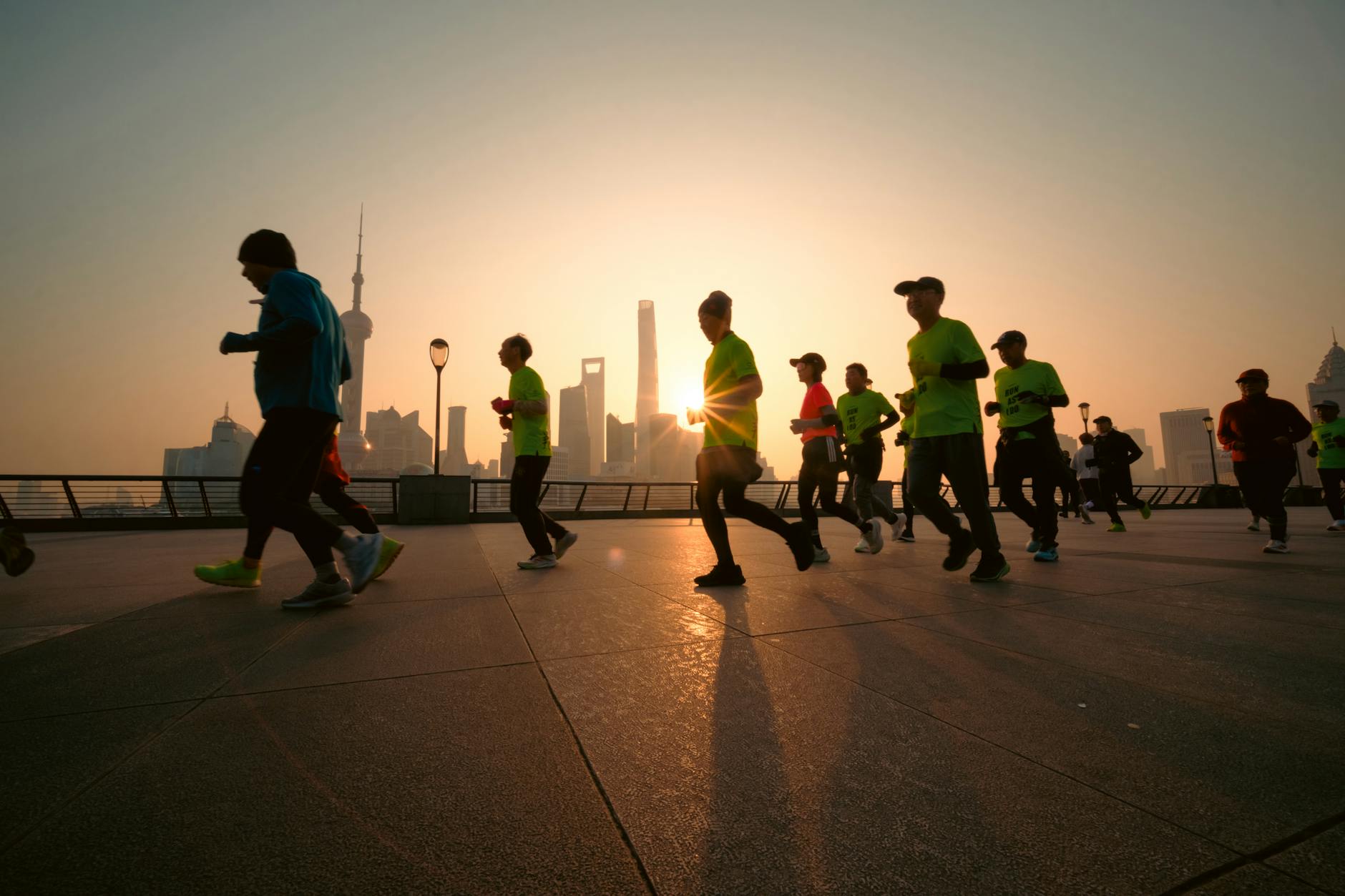
Start: Yan’an East Road and the Bund Bull. Photograph the bull, then climb the steps to the elevated promenade. Look across to Pudong for your first full skyline view.
Walk north along the promenade. Pause at the Gutzlaff Signal Tower for context. As you walk, the buildings on your left should be read in numerical order.
Mid-walk: stop for a drink at the Long Bar (Waldorf Astoria, No. 2) or Three on the Bund’s eighth-floor Bar Constellation. The view from these elevated bars is among the best free-with-purchase views in the city.
Continue north past the HSBC Building (No. 12). Step inside if it is during business hours to see the lobby mosaic.
Pause at the Customs House (No. 13) to hear the clock chime if your timing is right (on the hour).
Continue past the Fairmont Peace Hotel (No. 20). The lobby is freely accessible and worth a short stop. The Old Jazz Bar performs from 6:30 PM nightly.
End at the Monument to the People’s Heroes near Suzhou Creek. From here you can cross under the road to Waibaidu Bridge, the oldest steel bridge in Shanghai (1907), and continue to the Astor House Hotel, an 1846 institution with a very different, quieter character than the Bund.
Huangpu River Cruise: Worth It?
Huangpu River cruises are one of the most popular Bund-adjacent activities and the right answer for many visitors. The right cruise, however, depends on your goals.
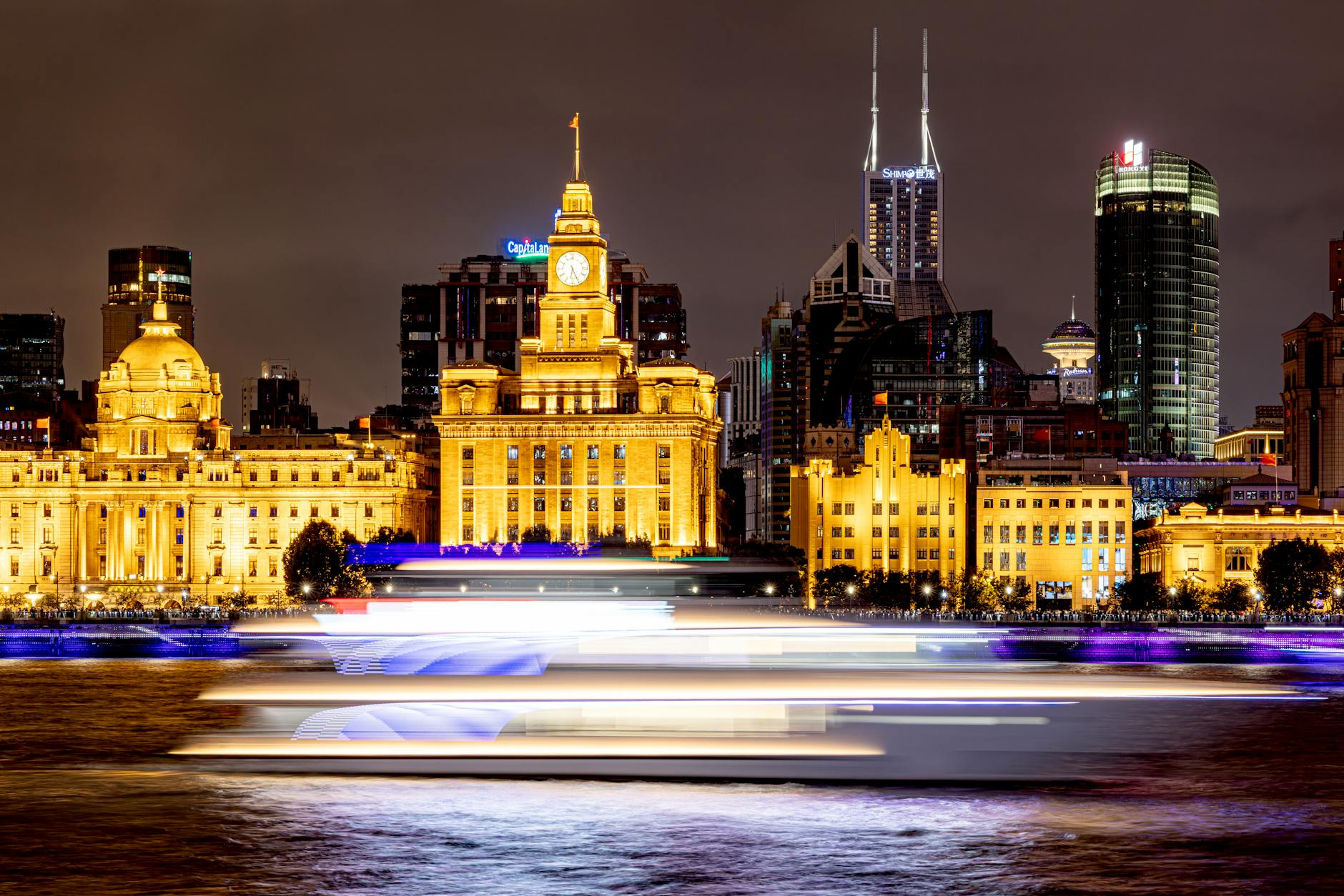
Standard sightseeing cruise (40–50 minutes). Operates day and night from the Bund piers near Jinling Road. RMB 80–150 depending on time. Covers the central Bund-Pudong stretch and is the most popular option. Excellent for first-timers.
Dinner cruise (90–120 minutes). RMB 250–700 depending on dining package. Worth it only if you want to combine sightseeing with dining; the food is generally banquet quality, not destination dining.
Long cruise (3.5 hours). Goes farther downriver toward Wusongkou. Worth it for cruise enthusiasts but the second half is not particularly scenic; most visitors find it too long.
Verdict: The 40–50-minute evening sightseeing cruise (around 7:30 or 8:30 PM departure) is the sweet spot. Tickets are bookable through Trip.com or Klook in advance, which saves the line at the pier. Bring a jacket; the open deck is breezy.
Where to Eat and Drink on the Bund
The Bund has some of Shanghai’s most expensive dining and most photogenic bars. Reservations are essential at the higher-end venues, especially for Friday and Saturday evening windows.
Mr & Mrs Bund (Bund 18, sixth floor). Modern French by Paul Pairet. The spotlight Shanghai bistro experience for a decade.
Lost Heaven on the Bund (Yan’an East Road). Yunnan-Burmese fusion. One of the most enjoyable mid-range dinners on the Bund and a personal favorite among repeat visitors.
Jean-Georges (Three on the Bund). Modern French. Fine-dining icon since 2004.
Hakkasan (Bund 5). Modern Cantonese. Ideal for groups and special occasions.
The Long Bar (Waldorf Astoria, No. 2). 100-foot reconstruction of the original 1911 Shanghai Club bar. Cocktails are excellent. Possibly the best bar atmosphere on the Bund.
Bar Rouge (Bund 18, seventh floor). A long-running rooftop institution. Skyline view, energetic crowd, less polished food. Better for drinks than dinner.
Sir Elly’s (Peninsula Hotel, fourteenth floor, just north of the Bund). Modern European on the rooftop of the Peninsula. The view is among the best in the city.
Casual options near the Bund include the food court at Bund Center, the Lost Heaven bar (often a wait), and the cafes scattered through Bund 18. For a more affordable Shanghainese meal, walk five blocks east to Lao Ji Shi or south to the Yuyuan Bazaar restaurants. For deeper food guidance, see Shanghai Food Guide.
Best Bund Skyline Views (Free and Paid)
The Bund itself offers the most iconic free view of the Pudong skyline. For elevated perspectives, you have several options.
Free elevated views: The Long Bar at the Waldorf Astoria, the lobby of the Fairmont Peace Hotel, the Bar Rouge terrace at Bund 18 (no minimum until 9 PM), and the Bund Sightseeing Tunnel exit on the Pudong side.
Paid observation decks across the river: Shanghai Tower (Floors 118 and 119, RMB 220), Shanghai World Financial Center “100 Floor” (RMB 220), Jin Mao Tower (RMB 120), Oriental Pearl Tower (RMB 220 with various combinations).
Hotel sky bars in Pudong: Cloud 9 at the Grand Hyatt Shanghai (87th floor of Jin Mao Tower) is the most famous, with classic cocktails and live jazz. Flair at the Ritz-Carlton has the highest open-air terrace in the world; Heyhey at the Park Hyatt Shanghai is on the 92nd floor with three-sided views.
For a free, less-crowded alternative, the Bund Riverside Park promenade just south of the main Bund is a quieter walking stretch with similar views.
Getting to the Bund
The Bund is in central Shanghai and easily reached by metro, taxi, or on foot from Nanjing Road.
Metro. Take Line 2 or Line 10 to East Nanjing Road Station. Walk fifteen minutes east along Nanjing Road East (the pedestrian street) to the Bund. The walk itself is a sight worth doing slowly.
Taxi or Didi. Tell the driver “waitan” (the Bund) or show the Chinese characters 外滩. Taxis stop at the south end at Yan’an East Road; the elevated promenade is up the steps.
From the Old City and Yu Garden. Walk north for fifteen minutes; this is a popular combined-day strategy.
From Pudong. Take the Bund Sightseeing Tunnel (a kitschy underground attraction with light shows, RMB 70 round trip) or the Huangpu Ferry from Lujiazui to the Bund-side (RMB 2 each way, every 10–15 minutes during the day). The ferry is the locals’ way and offers excellent views of both sides for almost no money.
For metro and city transit detail, see Getting Around Shanghai.
Visitor Tips and Common Mistakes
A few practical considerations.
Crowds. Weekend evenings between 7 PM and 9 PM are the most crowded times of the week. National holidays (May 1–5 and October 1–7) can see hundreds of thousands of visitors per day. Visit weekdays or early/late hours if possible.
Pickpocketing. The Bund’s crowded weekend evenings are the highest-risk pickpocketing time in central Shanghai. Use front pockets or a money belt for valuables.
Tea house and art student scams. Both scams target tourists on the Bund and at the eastern end of Nanjing Road. Polite refusals are sufficient; do not engage.
Photography permits. Casual photography is fine. Drone photography is not allowed without registration. Tripod photography in the most crowded zones may be restricted by police on busy holidays.
Toilets. Public toilets are scattered along the promenade but can have lines on busy evenings. The Waldorf Astoria, Fairmont Peace Hotel, and Bund 18 all have clean accessible facilities for guests; ordering a drink first is the polite way to use them.
Walking shoes. The promenade is paved and flat, but a thorough Bund visit involves a lot of walking. Bring comfortable shoes.
Weather. The promenade is exposed; bring an umbrella in summer thunderstorm season, a windbreaker on cold winter days, and water in summer. The skyline lights operate regardless of light rain but the show ends earlier in heavy rain.
What to Combine with a Bund Visit
The Bund pairs naturally with several adjacent attractions for a richer half- or full-day visit.
Yu Garden and Yuyuan Bazaar (15-minute walk south). The Old City’s classical garden and the surrounding bazaar are the natural daytime pairing. Most first-timers do Yu Garden in the morning, then the Bund in the late afternoon.
Nanjing Road East (continuous to the west). The famous pedestrian shopping street runs from the Bund’s western edge to People’s Square. Walk it to see the Park Hotel and the Peace Cinema along the way.
Pudong observation decks (across the river). Combine the Bund with a Shanghai Tower or SWFC observation deck for the city’s two most iconic views in one outing.
Suzhou Creek and the Astor House Hotel (just north). Cross Waibaidu Bridge for a quieter, often-overlooked stretch of waterfront.
Bund Sightseeing Tunnel (across to Pudong). A short, kitschy light-show tunnel ride. Worth it once if you have kids.
Frequently Asked Questions
Is the Bund free to visit?
Yes. The promenade is freely accessible twenty-four hours. Individual buildings have varying public access; lobbies of major hotels are generally open to the public.
How long does it take to walk the Bund?
Walking the entire mile-long promenade at a normal pace takes about twenty-five minutes. With photo stops and building reading, plan for 45–60 minutes.
What time do the lights turn on?
Major skyline lights flip on around 7 PM (slightly later in summer). The full show, including the brightest building animations, runs until about 10 PM. Specific timing varies by season.
Should I take a Huangpu River cruise?
Yes for first-time visitors. The 40–50-minute evening cruise is the best balance of cost and experience. Skip the long 3.5-hour cruises unless you specifically enjoy boat travel.
Is the Bund safe at night?
Very safe. The crowded evenings have minimal violent-crime risk; the only meaningful risk is pickpocketing, which is easily prevented with front-pocket discipline and money belts.
Can I bring a drone to the Bund?
Drone use requires registration with the Civil Aviation Administration of China and is restricted in most central Shanghai areas. Casual drone flights at the Bund will likely be stopped by police.
Are the Bund buildings open to visitors inside?
Some are. Hotel lobbies (Waldorf Astoria, Peace Hotel) are freely accessible. The HSBC Building lobby is open during business hours. Most other buildings are private offices with no public access.
What is the best Bund hotel?
The Fairmont Peace Hotel for the most iconic Art Deco rooms. The Waldorf Astoria for restored heritage and the Long Bar. The Peninsula Shanghai (just north of the Bund) for newer luxury. See Where to Stay in Shanghai.
Can I visit the Bund and Pudong in one evening?
Yes, easily. Walk the Bund first, take the ferry or metro across to Pudong for an observation deck or rooftop bar, then return for late-evening dinner on the Bund side.
Are there guided tours of the Bund?
Yes. Several companies offer architectural walking tours in English (Newman Tours, Insiders Shanghai, and Context Travel). Most last 90–120 minutes and cost $20–$60 USD. Worth it if you are interested in the architectural history.
Plan Your Bund Visit
The Bund is the easiest sight in Shanghai to plan: it is free, central, and rewards repeat visits. Walk it once during the day for the architecture, again in the evening for the skyline lights, and integrate one of the Huangpu River cruises if your timing allows. Combine with Yu Garden, Nanjing Road, or a Pudong observation deck for a full day. For broader planning, see our Shanghai itinerary planner and our Things to Do in Shanghai overview.
However many days you have in the city, plan to walk the Bund at least once at sunset. It is the photograph everyone takes home, and after a hundred years of being the face of Shanghai to the rest of the world, it has earned the trip.
For more background, see The Bund on Wikipedia.