Shanghai is one of the most exciting cities in Asia, but some of the best experiences in eastern China lie just beyond its borders. The best day trips from Shanghai take you through ancient water towns with stone bridges and winding canals, classical gardens that have inspired poets for centuries, serene lakeside cities, misty bamboo-covered mountains, and pristine island wetlands. Thanks to China’s world-class high-speed rail network, many of these destinations are just 30 minutes to two hours away, making them perfect for a full day of exploration before returning to your Shanghai hotel in the evening.
This comprehensive guide covers the best day trips from Shanghai for every type of traveler. Whether you want to wander through UNESCO-listed gardens in Suzhou, cruise across the legendary West Lake in Hangzhou, step back in time at ancient water towns like Zhujiajiao and Zhouzhuang, or escape to the bamboo forests of Moganshan, you will find detailed itineraries, transportation tips, costs, and insider advice to make each excursion unforgettable. We have organized these day trips by destination type so you can quickly find the adventure that fits your interests and schedule.
Table of Contents
- Suzhou: The Garden City
- Hangzhou: West Lake and Beyond
- Zhujiajiao: Shanghai’s Nearest Water Town
- Zhouzhuang: China’s Most Famous Water Town
- Wuzhen: The Best Preserved Water Town
- Tongli: The Hidden Gem Water Town
- Moganshan: Mountain Retreat in Bamboo Forests
- Chongming Island: Shanghai’s Ecological Paradise
- Nanjing: The Ancient Capital
- Putuoshan: Sacred Buddhist Island
- How to Choose the Right Day Trip
- Day Trip Transportation Guide
- Booking Tickets and Practical Tips
- Frequently Asked Questions About Day Trips from Shanghai
Suzhou: The Garden City — Best Day Trip from Shanghai for Culture Lovers
Suzhou is arguably the most popular day trip from Shanghai, and for good reason. Known as the Venice of the East, this 2,500-year-old city is home to nine UNESCO World Heritage classical gardens, atmospheric canal districts, and a silk-making tradition that dates back thousands of years. Suzhou sits just 25 to 35 minutes from Shanghai by high-speed train, making it one of the most convenient and rewarding excursions you can take.
Top Attractions in Suzhou
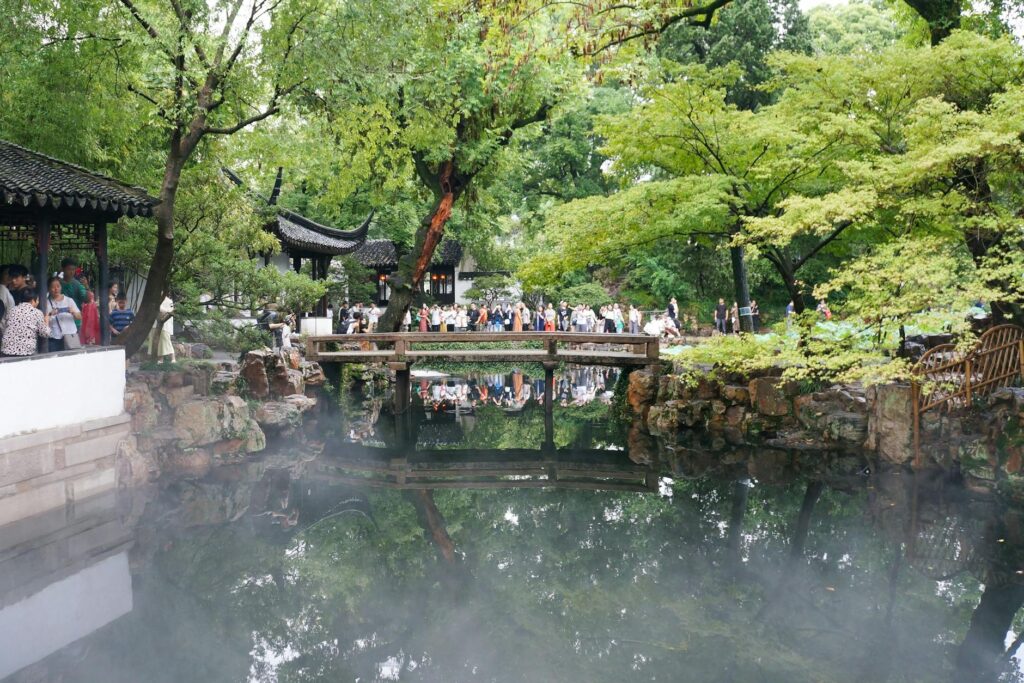
The Humble Administrator’s Garden is Suzhou’s largest and most celebrated classical garden. Built in 1509 during the Ming Dynasty, it spans over five hectares of interconnected ponds, pavilions, bridges, and meticulously designed rock formations. The garden is divided into three distinct sections — the eastern garden features broad lawns and open spaces, the central garden is the most scenic with its lotus-filled ponds and zigzag bridges, and the western garden feels more intimate with winding corridors. Plan to spend at least 90 minutes here, and try to arrive when it opens at 7:30 AM to beat the crowds.
The Lingering Garden is another UNESCO-listed masterpiece that many visitors consider even more beautiful than the Humble Administrator’s Garden. Dating from 1593, it is famous for its extraordinary rock formations, particularly the Crown of Clouds Peak limestone rock that stands over six meters tall. The garden’s architecture brilliantly uses windows, corridors, and framing techniques to create a series of living paintings as you walk through its chambers.
Tiger Hill is a must-visit landmark where you can see the iconic leaning Cloud Rock Pagoda, built over 1,000 years ago and tilting at a noticeable angle similar to the Tower of Pisa. The hill is steeped in legend — it is said that the King of Wu was buried here with 3,000 swords, and a white tiger appeared three days later to guard the tomb.
For a more relaxed experience, stroll along Pingjiang Road, a historic canal-side street lined with teahouses, silk shops, and traditional Suzhou snack vendors. The atmosphere here captures the essence of old Suzhou, and you can take a small boat ride along the canal for around 80 RMB per person.
Getting to Suzhou from Shanghai
High-speed G-trains depart from Shanghai Hongqiao Railway Station every few minutes and reach Suzhou North Station in approximately 25 minutes. Tickets cost around 40 RMB for a second-class seat. From Suzhou North Station, take Metro Line 2 directly to the old town area. D-trains are slightly slower at 30 to 35 minutes but cost about 25 RMB. Alternatively, intercity buses run from Shanghai South Long Distance Bus Station and take about 1.5 hours, costing approximately 35 RMB.
Suggested Suzhou Day Trip Itinerary
Take an early morning train to arrive by 9 AM. Visit the Humble Administrator’s Garden first, then walk to the nearby Suzhou Museum designed by I.M. Pei (free admission). Have lunch on Pingjiang Road, then visit the Lingering Garden in the afternoon. If time allows, take a taxi to Tiger Hill before catching an evening train back to Shanghai by 7 PM.
Hangzhou: West Lake and Beyond — A Day Trip from Shanghai to Paradise
There is a famous Chinese saying: “Above there is heaven, below there are Suzhou and Hangzhou.” As the capital of Zhejiang Province, Hangzhou has been celebrated for its natural beauty for over a thousand years, and the UNESCO World Heritage West Lake is at the center of it all. A day trip from Shanghai to Hangzhou takes about one hour by high-speed train and offers a refreshing contrast to Shanghai’s urban energy.
Top Attractions in Hangzhou
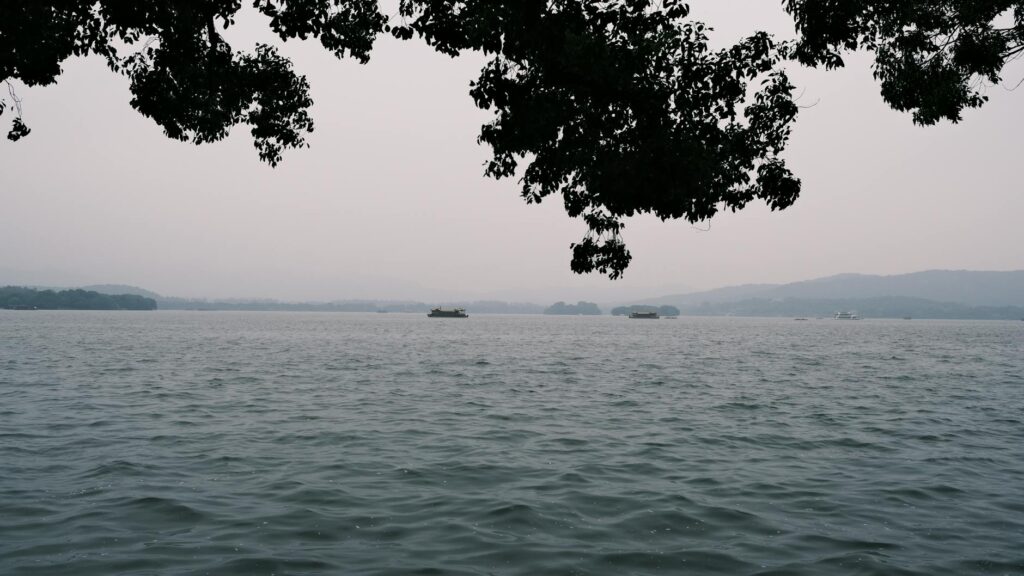
West Lake is the undisputed highlight and the reason most people visit Hangzhou. This serene freshwater lake covers roughly 6.5 square kilometers and is surrounded by forested hills, ancient pagodas, ornamental gardens, and causeways that divide it into distinct sections. The Su Causeway, a 2.8-kilometer tree-lined path across the lake, is one of the most romantic walks in China. You can rent a paddleboat or take a traditional wooden boat to Three Pools Mirroring the Moon, a small island with its iconic trio of stone pagodas that appear on the one-yuan banknote. Boat rides cost around 55 RMB including island admission.
Lingyin Temple, also known as the Temple of the Soul’s Retreat, is one of China’s oldest and most significant Buddhist temples, founded in 328 AD. The temple complex nestles at the foot of a lush mountain and houses an impressive 20-meter-tall golden statue of Sakyamuni Buddha carved from camphorwood. On the way to the temple, you will pass Feilai Feng, a limestone cliff covered with over 300 Buddhist rock carvings dating from the 10th to 14th centuries. Admission to the scenic area is 45 RMB, with an additional 30 RMB for the temple itself.
Longjing Tea Village sits in the hills west of West Lake and is the origin of China’s most famous green tea, Dragon Well. You can visit working tea plantations, watch tea being hand-roasted in traditional woks, and purchase fresh leaves directly from farmers. The best time to visit is during the spring harvest season from late March to early May, when the hills are covered in bright green tea bushes. A taxi from West Lake takes about 20 minutes.
Getting to Hangzhou from Shanghai
High-speed trains from Shanghai Hongqiao Station reach Hangzhou East Station in approximately 50 to 60 minutes. Second-class tickets cost around 75 RMB. Trains run extremely frequently, with departures every few minutes during peak hours. From Hangzhou East Station, take Metro Line 1 or Line 4 to reach West Lake in about 30 minutes. Some trains also run to the older Hangzhou Station, which is closer to West Lake but has fewer departures.
Suggested Hangzhou Day Trip Itinerary
Catch an early train to arrive by 9 AM. Start with a morning stroll along the Su Causeway and take a boat to Three Pools Mirroring the Moon. Have lunch at a lakeside restaurant and try the famous Dongpo Pork and West Lake Vinegar Fish. In the afternoon, visit Lingyin Temple or take a taxi to Longjing Tea Village. Return to Shanghai on an evening train around 6 to 7 PM.
Zhujiajiao: Shanghai’s Nearest Ancient Water Town
If you have limited time for day trips from Shanghai but want to experience a traditional Chinese water town, Zhujiajiao is the perfect choice. Located within Shanghai’s Qingpu District, this 1,700-year-old town is easily reachable by metro and offers an authentic glimpse into the canal-side lifestyle of the Jiangnan region without the long travel times required for more distant water towns.
What to See and Do in Zhujiajiao
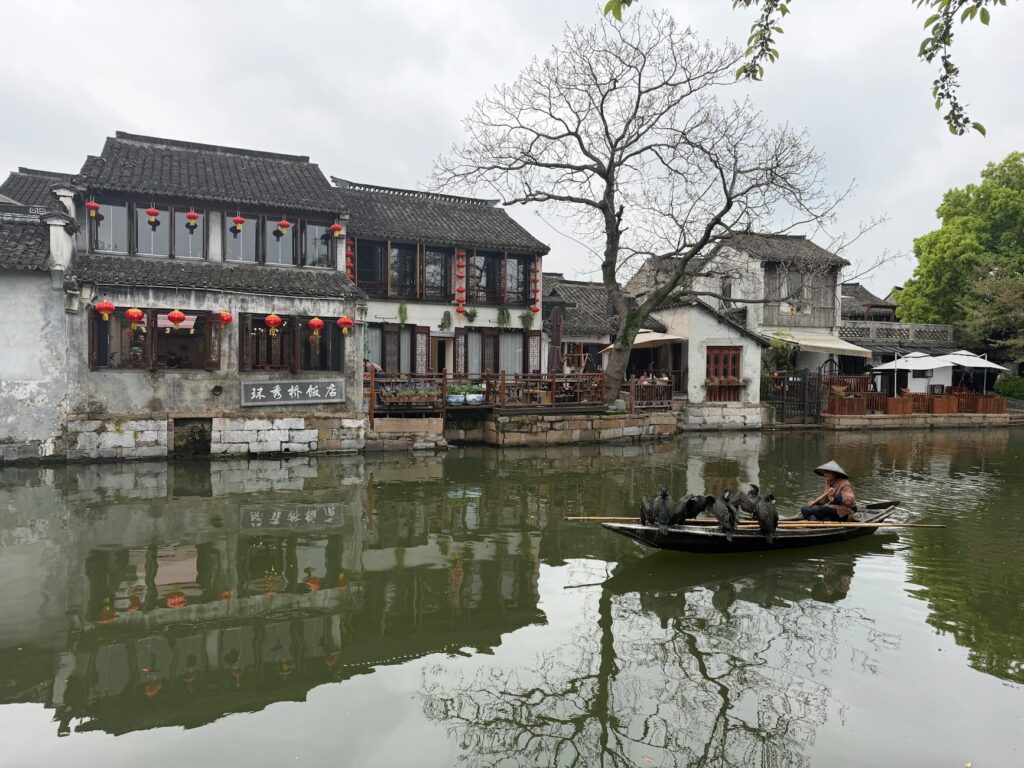
The highlight of Zhujiajiao is simply wandering its narrow stone lanes alongside the peaceful canals. The town is crisscrossed by waterways spanned by 36 ancient stone bridges, the most famous being the five-arched Fangsheng Bridge, which is the largest stone arch bridge in Shanghai. Built in 1571 during the Ming Dynasty, it offers excellent views of the town and is especially photogenic in the early morning light.
Kezhi Garden is the town’s most impressive cultural site, a classical Chinese garden built in 1912 that combines Jiangnan garden design with Western architectural elements. The garden features koi ponds, hidden pavilions, rockery formations, and beautifully carved windows that frame views of the surrounding waterways. Admission is included in the combined ticket.
A gondola ride through the town’s canals is one of the most relaxing and scenic experiences. Traditional wooden boats carry passengers through narrow waterways lined with whitewashed Ming and Qing Dynasty houses. Tours last about 20 to 30 minutes and cost around 80 to 150 RMB per boat depending on the route. For the best experience, try to go on a weekday when the canals are less crowded.
Do not leave without trying the local specialty: zongzi, sticky rice dumplings wrapped in bamboo leaves and filled with either sweet red bean paste or savory pork. Vendors sell them fresh along the main streets for just a few yuan each. The pork zongzi with rich, dark braised meat is particularly delicious and unique to this area.
Getting to Zhujiajiao from Shanghai
Take Shanghai Metro Line 17 directly to Zhujiajiao Station. The ride takes approximately 1 hour to 1.5 hours from central Shanghai depending on your starting point, and costs about 8 RMB. From the metro station, it is a 15-minute walk to the town entrance, or you can take a short local bus. The town itself is free to enter and explore, though a combined ticket for interior attractions costs around 60 to 80 RMB. Opening hours are 8:30 AM to 5:00 PM, but the streets remain accessible after hours.
Zhouzhuang: China’s Most Famous Water Town
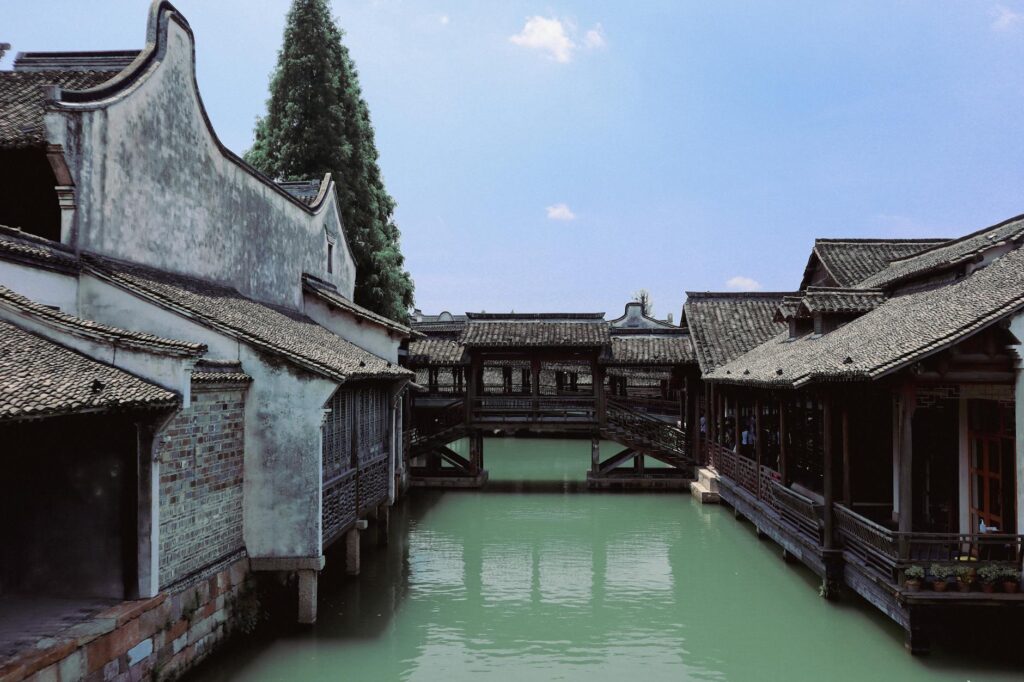
Zhouzhuang holds the title of China’s most famous water town and has been drawing visitors since it first gained recognition in the 1980s through the paintings of artist Chen Yifei. With a history spanning over 900 years, this well-preserved town in Kunshan, Jiangsu Province, features an intricate network of canals, 14 stone bridges, and remarkably intact Ming and Qing Dynasty architecture. It is slightly further from Shanghai than Zhujiajiao but offers a more extensive and historically significant water town experience.
Top Attractions in Zhouzhuang
The Double Bridges, known as Shuang Qiao, are the iconic symbol of Zhouzhuang. These two adjacent bridges — Shide Bridge and Yongan Bridge — form a right angle over two converging canals and were immortalized in Chen Yifei’s famous painting that brought international attention to China’s water towns. The view of the double bridges with traditional boats passing beneath is the quintessential Zhouzhuang photograph.
The Zhang House is a sprawling residential complex built in 1436 that demonstrates the wealth and lifestyle of Ming Dynasty merchants. The complex covers over 1,800 square meters and contains more than 70 rooms arranged around six courtyards. The architecture blends residential, commercial, and garden elements, with a private wharf where goods were loaded and unloaded directly from the canals.
The Shen House is equally impressive, built in 1742 by a descendant of the wealthy Shen Wansan family, who were among the richest merchants in Ming Dynasty China. The seven-courtyard mansion features elaborately carved brick, wood, and stone decorations that showcase the finest craftsmanship of the era. Together, the Zhang and Shen Houses provide a fascinating window into the commercial prosperity of ancient Jiangnan.
The local culinary specialty is Wansan Elbow, a slow-braised pork hock named after the legendary merchant Shen Wansan. The meat is braised for hours until it becomes tender and richly flavored, served with the bone still intact. You will find it at most restaurants in town for around 60 to 80 RMB.
Getting to Zhouzhuang from Shanghai
The most efficient route is to take a high-speed train from Shanghai Hongqiao to Kunshan South Station (about 20 minutes, 25 RMB), then take a bus or taxi to Zhouzhuang (about 40 minutes). Alternatively, direct tourist buses depart from Shanghai Stadium and Shanghai South Long Distance Bus Station, taking about 1.5 to 2 hours. Admission to Zhouzhuang is 100 RMB and includes access to all major attractions within the town. The ticket is valid for multiple entries within three days if you register it at the entrance.
Wuzhen: The Best Preserved Water Town for Day Trips from Shanghai
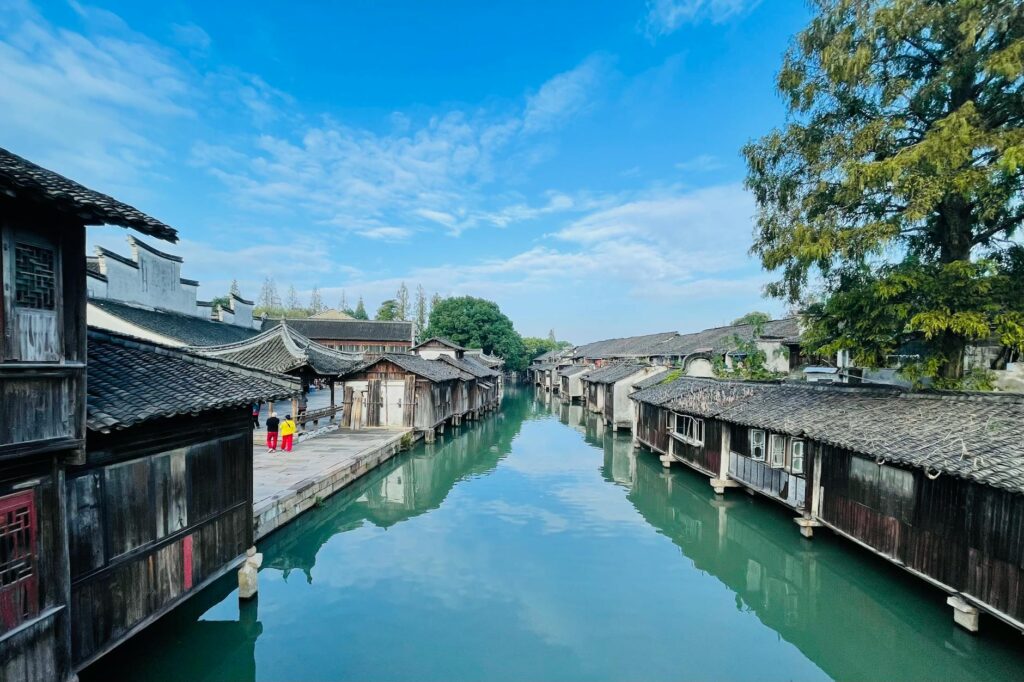
Wuzhen is widely regarded as the best-preserved and most beautifully managed water town in the Jiangnan region. This 1,300-year-old town gained international fame as the permanent host of the World Internet Conference and has been carefully restored and maintained to an exceptionally high standard. Located in Zhejiang Province, Wuzhen is divided into two scenic areas: Dongzha (East Gate) and Xizha (West Gate), each offering a distinct experience for visitors on day trips from Shanghai.
Dongzha vs. Xizha: Which Area to Visit
Dongzha (East Gate) is the smaller and more affordable section, with admission around 110 RMB. It focuses on traditional crafts and cultural demonstrations, including indigo cloth dyeing workshops, rice wine distilleries, traditional Chinese shadow puppet theaters, and a fascinating old pharmacy. Dongzha is ideal if you only have a few hours and want a quick cultural immersion.
Xizha (West Gate) is the larger, more comprehensively restored section with admission around 150 RMB. It features broader canals, more elaborate architecture, excellent restaurants, and atmospheric guesthouses built into historic buildings. Xizha is particularly stunning at night when the buildings and bridges are illuminated with soft lantern light reflecting off the water. If you have a full day, a combined ticket for both areas costs approximately 190 RMB.
Getting to Wuzhen from Shanghai
Take a high-speed train from Shanghai Hongqiao to Tongxiang Station (about 40 minutes, 40 RMB), then a local bus or taxi to Wuzhen (about 20 minutes). Direct tourist buses also run from Shanghai South Bus Station, taking about 2 hours. Some organized tour buses depart from Shanghai Stadium. For the most flexibility, the train plus taxi combination is recommended as it allows you to stay as late as you want and return on your own schedule.
Tongli: The Hidden Gem Water Town Near Shanghai
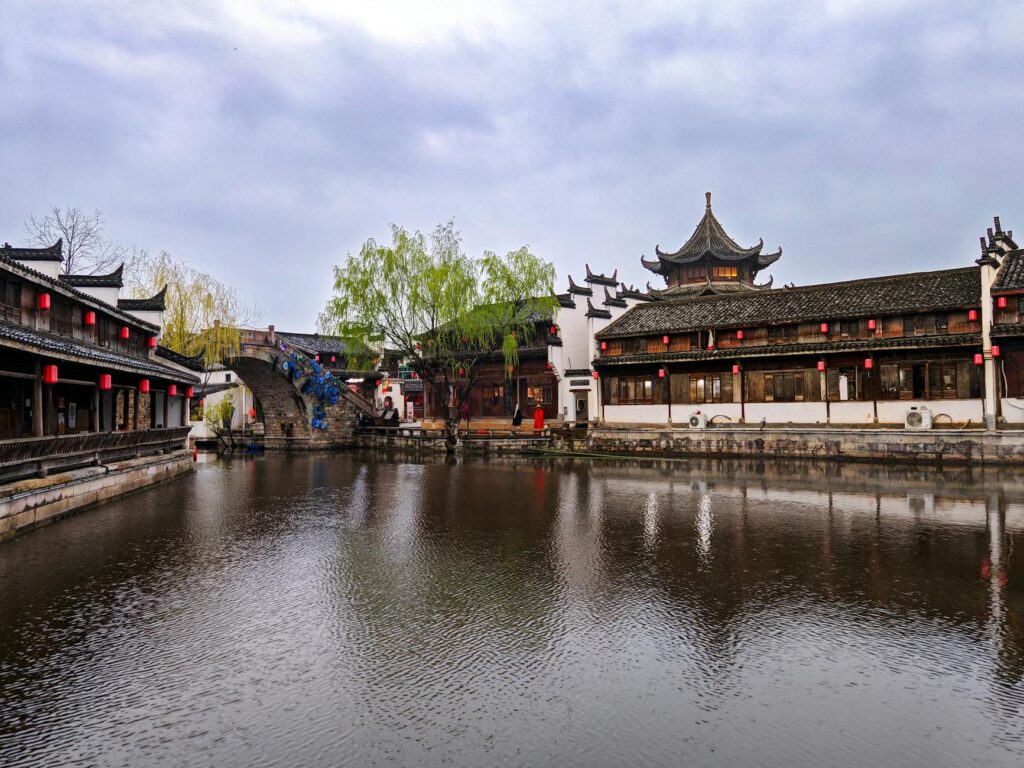
Tongli is often overlooked by tourists who flock to the more famous Zhouzhuang and Wuzhen, but seasoned travelers frequently rank it as their favorite water town near Shanghai. Located just 18 kilometers from Suzhou in Jiangsu Province, Tongli has maintained a quieter, more authentic atmosphere compared to its more commercialized neighbors. The town dates back over 1,000 years and is characterized by its unique integration of rivers, ancient streets, and classical gardens.
Why Tongli Stands Out
Tongli’s crown jewel is Tuisi Garden, the only World Cultural Heritage site among all the Jiangnan water towns. Built in 1886 by a retired government official, the garden follows the principle of “retreating and reflecting” — its name literally means “retreat and contemplation garden.” The compact layout places water at its center, surrounded by residential halls, study rooms, and garden pavilions that create an atmosphere of scholarly refinement. The garden’s design maximizes beauty within a small space and is considered a masterclass in Qing Dynasty garden architecture.
A beloved local tradition involves walking across the three famous bridges of Tongli: Taiping Bridge (Peace Bridge), Jili Bridge (Good Luck Bridge), and Changqing Bridge (Celebration Bridge). According to local custom, crossing all three bridges in sequence brings peace, good fortune, and happiness. This tradition has been practiced for centuries, and you will often see families with newlyweds or elderly residents completing the circuit on important occasions.
The ancient residential houses along the canals in Tongli have been remarkably well preserved, and many are still inhabited by local families. This gives the town a lived-in authenticity that some of the more tourist-oriented water towns lack. Wander off the main streets into the quiet back lanes to discover hidden courtyards, neighborhood tea houses, and the gentle rhythm of daily life along the canals.
Getting to Tongli from Shanghai
The easiest route is to take the high-speed train to Suzhou, then a local bus or taxi to Tongli (about 30 to 40 minutes from Suzhou). Total travel time is about 1 to 1.5 hours. You can also combine Tongli with a Suzhou day trip, visiting gardens in the morning and Tongli in the afternoon. Admission to the scenic area is about 80 RMB and includes access to all major attractions including Tuisi Garden.
Moganshan: Mountain Retreat in Bamboo Forests
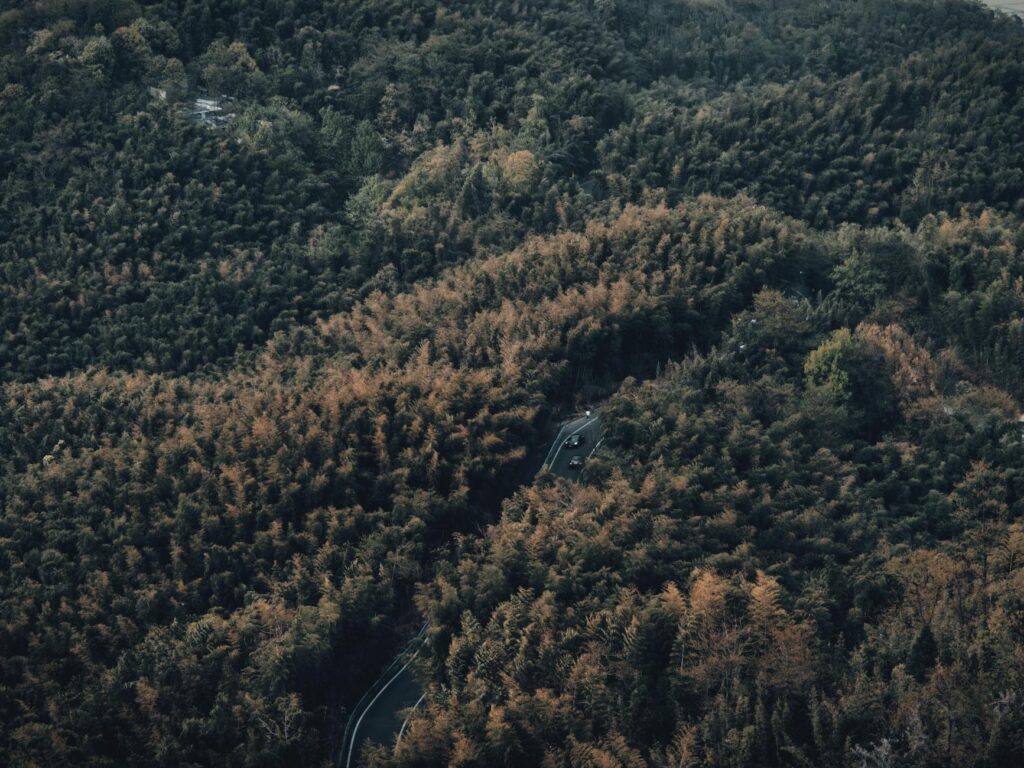
For travelers seeking a nature-focused day trip from Shanghai, Moganshan offers a dramatic change of scenery. This mountain resort area in Zhejiang Province rises to 758 meters above sea level and is covered in dense bamboo forests, tea plantations, and hiking trails that wind through misty valleys. Moganshan has been a popular retreat from the summer heat since the 1800s, when foreign diplomats and Shanghai residents built colonial-era stone villas on its slopes.
What to Do in Moganshan
Hiking through the bamboo forests is the main attraction. The most popular trail leads from the main village area to the summit, where you can enjoy panoramic views of the surrounding mountains and valleys on clear days. The trail passes through groves of towering moso bamboo that create a green canopy overhead, filtering sunlight into dappled patterns on the forest floor. The hike to the summit takes about one to two hours each way at a moderate pace.
The Sword Pond is a scenic spot steeped in legend — it is said that the ancient swordsmith Gan Jiang tested his legendary blades in these waters. The area features waterfalls, rock formations, and a peaceful atmosphere perfect for contemplation. Other attractions include the colonial-era villas scattered across the mountain, several of which have been converted into boutique hotels and cafes. The Moganshan Scenic Area also includes tea fields where you can learn about local yellow tea production.
Moganshan is particularly beautiful in spring when the new bamboo shoots emerge, in summer when the mountain temperatures are 5 to 10 degrees cooler than Shanghai, and in autumn when the surrounding forests display subtle color changes. Winter visits are less common but offer a serene, misty atmosphere.
Getting to Moganshan from Shanghai
Take a high-speed train from Shanghai Hongqiao to Deqing Station (about 50 minutes, approximately 50 RMB), then a taxi or local bus to Moganshan Scenic Area (about 30 to 40 minutes up the mountain road). Alternatively, you can drive or hire a car for the roughly 3-hour journey. Note that a day trip to Moganshan is tight — consider leaving very early and having a car arranged for the Deqing Station to Moganshan leg to maximize your time on the mountain. The scenic area entrance fee is approximately 80 to 100 RMB.
Chongming Island: Shanghai’s Ecological Paradise
Chongming Island is the third-largest island in China and the largest alluvial island in the world, sitting at the mouth of the Yangtze River just north of Shanghai. Designated as a UNESCO-recognized ecological island, Chongming offers a completely different experience from the historic towns and gardens of other day trips from Shanghai. Here, the attraction is pure nature — wetlands teeming with migratory birds, vast forest parks, organic farms, and a refreshing escape from the urban density of Shanghai.
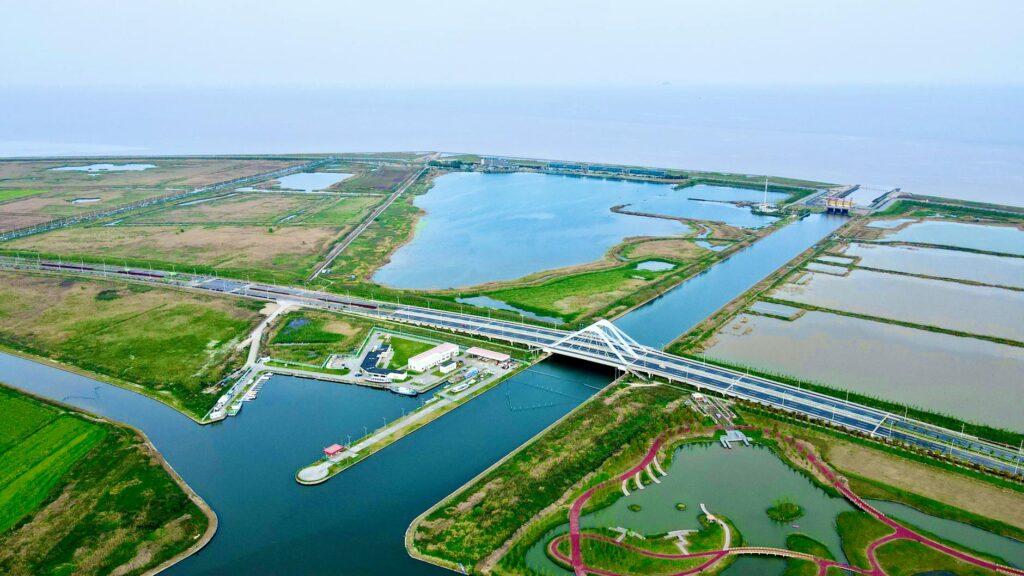
Top Nature Attractions on Chongming
Dongtan Wetland Park is Chongming’s premier nature destination and one of the most important bird habitats on China’s eastern coast. Each autumn, over 200,000 migratory birds pass through or winter here, including rare species like the Black-faced Spoonbill. The park features elevated boardwalks through reed marshes, observation towers, and guided birdwatching tours. The best time for birdwatching is October through March, though the wetlands are beautiful year-round. Admission is approximately 50 RMB.
Dongping National Forest Park is a 4A-rated scenic area covering 3.55 square kilometers of dense woodland, including impressive stands of metasequoia trees. Activities include cycling through forested paths, boating on small lakes, horseback riding, and paintball. In spring, the park hosts spectacular flower festivals, while autumn brings stunning foliage as the metasequoia trees turn golden-orange. The park is particularly popular with Shanghai families looking for an outdoor adventure. Admission is about 70 RMB.
Xisha Wetland Park, on the island’s western shore, is free to enter and offers a different ecosystem from Dongtan. The wooden ecological trails wind through metasequoia groves and tidal wetlands, and the experience is particularly romantic in autumn when the leaves turn golden. Visit on a weekday to avoid crowds, and note that arriving after 3 PM gives you the most atmospheric lighting for photography.
Getting to Chongming from Shanghai
Drive or take a taxi via the Shanghai Yangtze River Tunnel-Bridge, which takes about 1 to 1.5 hours from central Shanghai. Public buses also run from Shanghai Science and Technology Museum metro station. A new metro line extension is improving connectivity to the island. Once on Chongming, you will need a car, taxi, or local bus to get between attractions as they are spread across the large island. Renting a bicycle is also a popular option for exploring the quieter eastern areas.
Nanjing: The Ancient Capital — A Full Day Trip from Shanghai
Nanjing, the capital of Jiangsu Province, served as the capital of China during several dynasties and the Republic of China era. While it is the furthest destination on this list at about one hour by high-speed train, the depth of history and number of significant sites make it a worthwhile full-day excursion from Shanghai. Nanjing rewards visitors with grand imperial ruins, solemn memorials, beautiful tree-lined avenues, and a vibrant food scene.
Key Attractions in Nanjing
The Sun Yat-sen Mausoleum sits at the foot of Purple Mountain and honors the founder of the Republic of China. A monumental staircase of 392 stone steps leads up to the mausoleum hall, flanked by manicured gardens and towering trees. The climb offers increasingly expansive views of Nanjing and the surrounding forested hills. Admission is free but requires advance reservation during peak periods.
The Nanjing Massacre Memorial Hall is one of the most important and emotionally powerful museums in China, documenting the atrocities committed during the Japanese occupation of Nanjing in December 1937. The stark, somber architecture and comprehensive exhibits demand respectful contemplation. Allow at least 90 minutes for your visit. Admission is free.
The Confucius Temple area, known as Fuzimiao, is a lively district along the Qinhuai River featuring traditional architecture, street food vendors, souvenir shops, and the historic Jiangnan Imperial Examination Hall. In the evening, the riverbanks come alive with lanterns and illuminated traditional buildings. A boat ride on the Qinhuai River costs about 80 RMB and offers beautiful views of the illuminated temple complex.
The Ming Dynasty City Wall is the longest surviving city wall in the world, stretching over 35 kilometers around the old city. You can walk along extensive restored sections near Zhonghua Gate, the largest and best-preserved city gate in China, which features a complex system of four gates and three courtyards designed for military defense. Wall admission is approximately 50 RMB.
Getting to Nanjing from Shanghai
High-speed G-trains from Shanghai Hongqiao to Nanjing South Station take approximately 60 to 75 minutes, with tickets around 135 to 230 RMB depending on class. Trains depart every few minutes throughout the day. Nanjing has an extensive metro system that connects the train station to all major attractions. Start early to make the most of your day, as there is enough to see in Nanjing to easily fill a full 10-hour visit.
Putuoshan: Sacred Buddhist Island
Putuoshan is one of the four sacred Buddhist mountains in China, dedicated to Guanyin, the Bodhisattva of Compassion. This small island in the Zhoushan Archipelago off the coast of Zhejiang Province is covered with ancient temples, meditation halls, and scenic coastal paths. While it requires a longer travel commitment of about 4 to 4.5 hours each way, Putuoshan offers a truly unique spiritual and natural experience that makes an ambitious but rewarding long day trip from Shanghai.
What to See on Putuoshan
The island is home to three major temples. Puji Temple is the largest and most important, originally built in 916 AD, featuring extensive halls, beautiful lotus ponds, and ancient trees. Fayu Temple sits on a hillside and is known for its elegant architecture and peaceful atmosphere. Huiji Temple crowns the summit of Foding Mountain and requires a scenic hike or cable car ride to reach, rewarding visitors with ocean views stretching to the horizon.
The 33-meter-tall bronze Guanyin statue at the Southern Sea Guanyin is Putuoshan’s most iconic landmark, standing majestically overlooking the sea. The Thousand Step Beach and Hundred Step Beach offer beautiful sandy stretches where you can relax between temple visits. Walking the pilgrimage paths that connect the temples through forested hillsides is a meditative experience regardless of your religious beliefs.
Getting to Putuoshan from Shanghai
The fastest route is to drive or take a high-speed train to Ningbo (about 2 hours), then transfer to a ferry or speedboat to Putuoshan (about 2 hours). Alternatively, some services run from the Xiaoyangshan Port near Shanghai. Given the travel time, Putuoshan is better suited as an overnight trip, but determined early risers can manage a day trip by departing Shanghai before 6 AM and returning late in the evening. Island admission is 160 RMB, and individual temples charge additional small fees.
How to Choose the Right Day Trip from Shanghai
With so many excellent options, choosing the right day trip depends on your interests, available time, and travel style. Here is a quick guide to help you decide which day trip from Shanghai is best for you.
For history and culture enthusiasts, Suzhou and Nanjing offer the deepest cultural experiences. Suzhou’s classical gardens are unmatched in their beauty and historical significance, while Nanjing provides grand imperial history and important modern memorials. For nature lovers, Moganshan’s bamboo forests and Chongming Island’s wetlands provide refreshing escapes from urban life. For the classic Jiangnan water town experience, your choice depends on how much time you have and how tourist-friendly you want the environment to be. Zhujiajiao is the most convenient, reachable by metro alone. Tongli is the most authentic and least crowded. Wuzhen is the best managed and most beautiful overall, especially at night. Zhouzhuang is the most historically significant. For spiritual seekers, Putuoshan’s ancient Buddhist temples and coastal setting offer a profoundly different experience from anything else near Shanghai.
Day Trip Transportation Guide: Getting Around from Shanghai
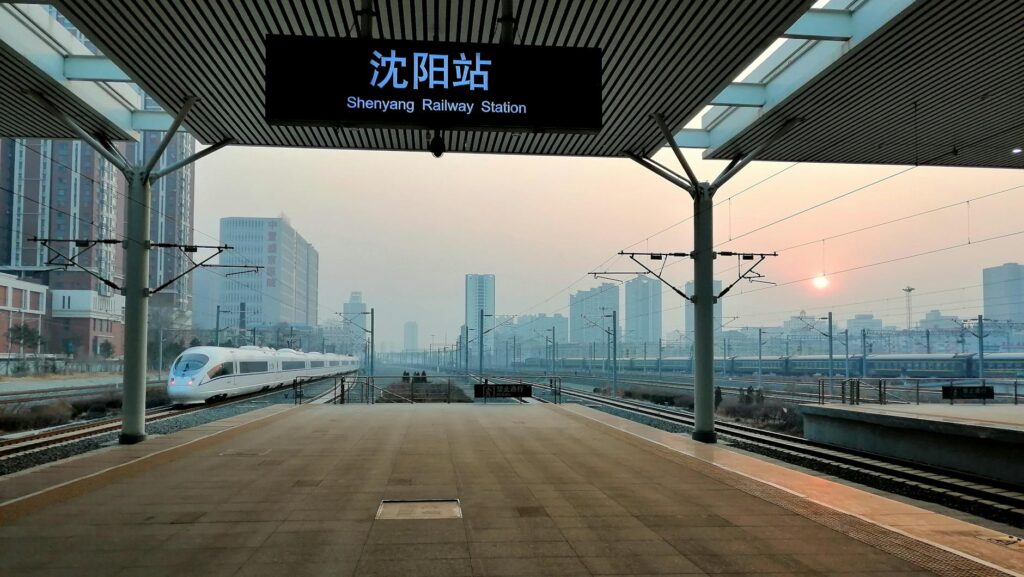
High-Speed Rail: Your Best Friend for Day Trips
China’s high-speed rail network is the backbone of day trip travel from Shanghai. The system is fast, affordable, punctual, and comfortable. Most day trip destinations are served by G-trains (Gaotie, top speed 350 km/h) or D-trains (Dongche, top speed 250 km/h). Shanghai Hongqiao Railway Station is the primary departure point for most destinations, conveniently connected to Metro Lines 2, 10, and 17. Shanghai Railway Station near the Bund serves some routes as well.
Booking tickets is straightforward using the official 12306 railway booking platform or Trip.com for English-language booking. Tickets go on sale 15 days in advance. For popular routes like Shanghai-Suzhou and Shanghai-Hangzhou, trains run so frequently that advance booking is often unnecessary on weekdays, but weekends and holidays can sell out. Second-class seats are comfortable with ample legroom, charging outlets, and fold-down tray tables. First-class offers wider seats and more space for a modest premium.
Quick Reference: Travel Times and Costs from Shanghai
Suzhou is 25 to 35 minutes by high-speed train at approximately 25 to 40 RMB. Hangzhou is 50 to 60 minutes at roughly 75 RMB. Nanjing takes about 60 to 75 minutes and costs 135 to 230 RMB. Zhujiajiao is reachable by Metro Line 17 in about 60 to 90 minutes for around 8 RMB. Wuzhen requires a train to Tongxiang (40 minutes, 40 RMB) plus a local transfer. Zhouzhuang needs a train to Kunshan South (20 minutes, 25 RMB) plus a bus or taxi. Moganshan involves a train to Deqing (50 minutes, 50 RMB) plus a mountain taxi. Chongming Island is about 1 to 1.5 hours by car via the tunnel-bridge.
Booking Tickets and Practical Tips for Day Trips from Shanghai
Essential Tips for a Successful Day Trip
Start early. The most rewarding day trips begin with an early departure, ideally catching a train by 7:30 to 8:00 AM. This gives you the maximum time at your destination and helps you avoid the largest tour groups that typically arrive mid-morning. Most scenic areas and gardens are at their most peaceful in the first hour after opening.
Download essential apps before your trip. The 12306 app handles train bookings (now with English support for foreigners). Alipay and WeChat Pay are essential for payments everywhere from train stations to street food vendors. Amap (Gaode Maps) or Baidu Maps provide accurate navigation and public transit directions in China, which Google Maps does not reliably offer. DiDi is the Chinese ride-hailing app that works like Uber and is invaluable for getting from train stations to attractions.
Carry your passport. Foreign visitors need their passport for all train travel in China, both for booking and boarding. Some scenic areas and museums also require ID for ticket purchases or free admission. Keep a photo of your passport on your phone as a backup.
Avoid weekends and Chinese holidays when possible. All of these destinations see dramatically higher visitor numbers on weekends and during national holidays such as May Day (May 1 to 5), National Day (October 1 to 7), and Chinese New Year. Water towns that feel atmospheric and peaceful on a Tuesday morning can become uncomfortably crowded on a Saturday. If weekend travel is unavoidable, arrive as early as possible and focus on less popular areas of each destination.
Pack light and prepare for weather. Bring a small daypack with water, snacks, sunscreen, and a portable umbrella. Comfortable walking shoes are essential as most destinations involve significant walking on uneven stone paths. Check the weather forecast before departing, as conditions can differ between Shanghai and mountain or lakeside destinations.
Learn a few key phrases. While tourist destinations are increasingly English-friendly, basic Mandarin phrases go a long way outside Shanghai. Knowing how to say “hello” (nǐ hǎo), “thank you” (xièxie), “how much” (duōshao qián), and “where is” (zài nǎlǐ) will enhance your interactions with locals and often earn friendly smiles and extra helpfulness. Having your destination name written in Chinese characters on your phone is invaluable for showing to taxi drivers.
For more detailed guidance on navigating China’s transport systems, see our comprehensive Getting Around Shanghai guide. Planning your first visit? Our Shanghai Travel Guide covers everything you need to know. And if you are wondering about the best season for your day trips, check our Best Time to Visit Shanghai guide for month-by-month weather and festival information.
Frequently Asked Questions About Day Trips from Shanghai
What is the best day trip from Shanghai for first-time visitors?
For first-time visitors, Suzhou is the best day trip from Shanghai. It combines stunning UNESCO gardens, atmospheric canal streets, and delicious local cuisine, all within just 25 to 35 minutes by high-speed train. The short travel time means you can maximize your sightseeing hours and return to Shanghai comfortably in the evening.
Which water town near Shanghai is least crowded?
Tongli is generally the least crowded of the major water towns near Shanghai. Because most tourists gravitate toward the more famous Zhouzhuang and Wuzhen, Tongli maintains a quieter, more authentic atmosphere. Visiting any water town on a weekday morning further reduces crowds significantly.
Can I visit Suzhou and Hangzhou in one day from Shanghai?
While technically possible since both cities are on the same rail line, it would be extremely rushed and not recommended. Each city deserves at least a full day to explore properly. If you must combine them, consider spending a morning in Suzhou (visiting one garden and Pingjiang Road) before taking a 1.5-hour train to Hangzhou for an afternoon at West Lake, but you will miss many highlights of both cities.
Do I need to book train tickets in advance for day trips from Shanghai?
For weekday travel to popular destinations like Suzhou and Hangzhou, advance booking is usually not necessary as trains run every few minutes. However, for weekend and holiday travel, or for destinations with less frequent service like Nanjing, booking at least a day or two in advance is recommended to secure your preferred departure time. Use the 12306 app or Trip.com to book tickets.
What is the cheapest day trip from Shanghai?
Zhujiajiao is the cheapest day trip from Shanghai. You can reach it using the metro for about 8 RMB, and the town itself is free to enter and explore. You only pay if you want to visit specific interior attractions (combined ticket around 60 to 80 RMB) or take a gondola ride. A full day trip including food and admission can easily cost under 150 RMB total.
Is it safe to travel independently on day trips from Shanghai?
Yes, independent day trips from Shanghai are extremely safe and straightforward. China has very low crime rates, and the transportation infrastructure is modern, efficient, and well-signed (increasingly with English). Train stations have security screening and helpful staff. Most tourist destinations have good signage and are easy to navigate. The biggest challenges for independent travelers are the language barrier outside major tourist zones and the need for Chinese mobile payment apps, but a translation app and some cash will get you through most situations.
What should I pack for a day trip from Shanghai?
Pack a small daypack with your passport, phone with offline maps and translation app, portable battery charger, water bottle, sunscreen, a compact umbrella, comfortable walking shoes, and some cash (100 to 200 RMB) as a backup to mobile payments. In summer, add insect repellent and a hat. In winter, bring layers as temperatures at garden and water town destinations can feel colder than Shanghai due to the dampness.