Asking for the best coffee Shanghai can produce is a bit like asking for the best noodle shop in Tokyo. There are more than ten thousand cafés in this city — more than New York, London and Tokyo have between them — and they are not competing in one race. A ¥10 latte ordered through an app on the way to the metro and a ¥55 hand-poured Panamanian geisha in a twelve-seat room in Xuhui are both Shanghai coffee, and both are worth understanding.
What makes the city genuinely unusual is not the volume but the compression. Shanghai went from a place where you drank instant coffee in a hotel lobby to the densest café market on earth in about fifteen years, and all three tiers of that market — the app-driven ¥10 chains, the ¥15–20 quality-for-price operators, and a serious third-wave scene — coexist within a few streets of each other. This guide explains the tiers, names the places worth going out of your way for, translates the menu, and tells you how to order when you have no Chinese at all.
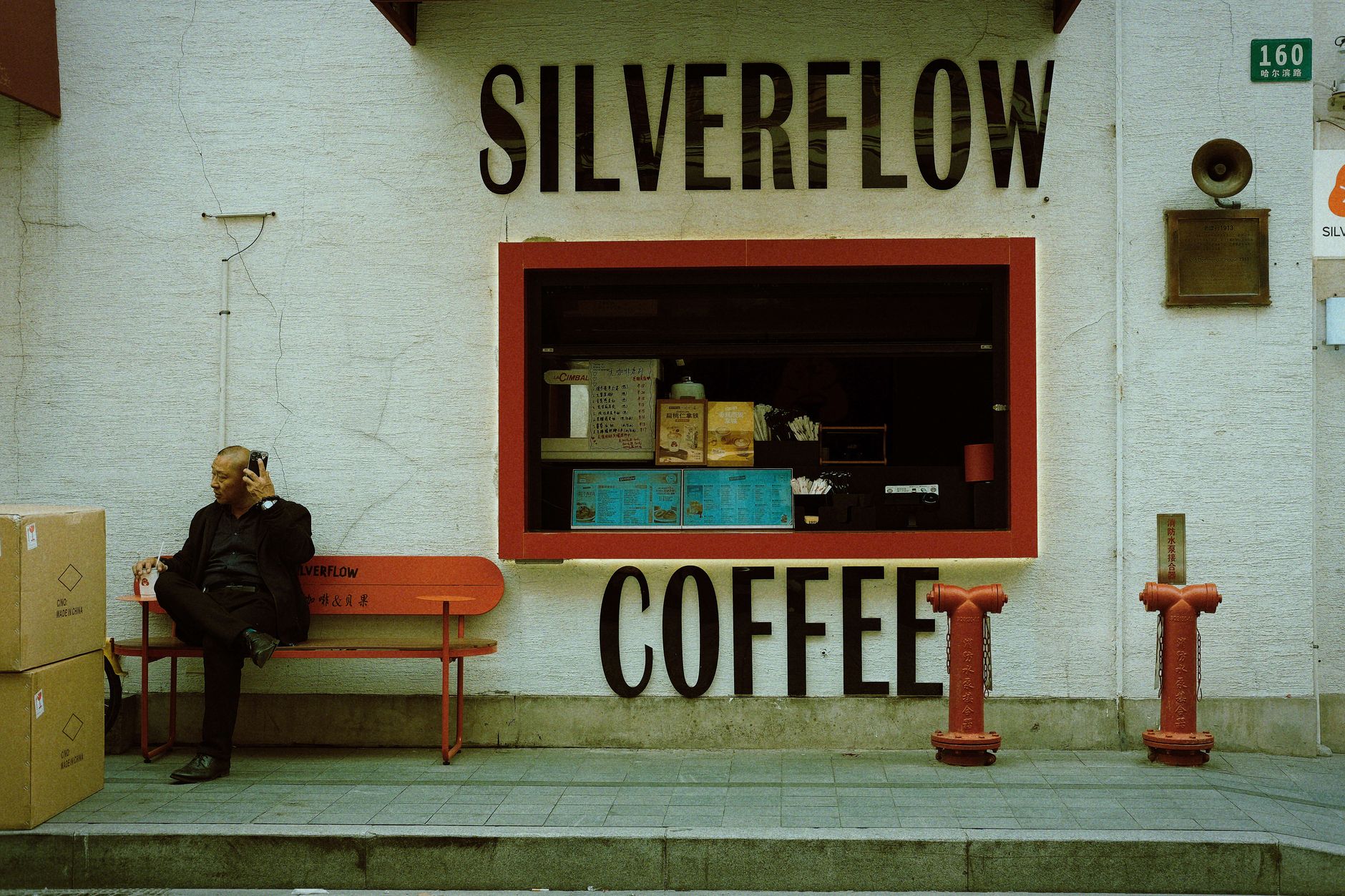
Table of Contents
- How Shanghai became the world’s café capital
- The three tiers, and what each is for
- The chains, compared
- Where to drink, neighbourhood by neighbourhood
- The specialty shops worth crossing town for
- Three coffee mornings, mapped
- C-Coffee: what the Chinese menu is doing
- Ordering without Chinese
- What the best coffee in Shanghai actually costs
- Cafés for working
- What people get wrong
- Frequently Asked Questions
- Where to go next
How Shanghai became the world’s café capital
The number that gets quoted is 10,336 cafés as of early 2026, up from something north of 9,500 the year before. Even allowing for how you count a hatch in a lane, that is a market that has roughly doubled in five years, in a country that drinks a fraction of the coffee per head that Europe does. The city treats this as an economic story rather than a lifestyle one, and the municipal government’s English portal publishes on the sector regularly, including its annual coffee culture programme.
Three things explain it. First, Shanghai has a genuine pre-revolutionary coffee history: the former French Concession had cafés in the 1920s and 1930s, and the city’s association with coffee never entirely disappeared even during the decades when nobody was drinking it. Second, Yunnan happened. China now grows a serious volume of arabica in Yunnan province, quality has improved sharply over fifteen years, and Shanghai roasters buy it — which means a good single-origin here can be domestic and cheap at the same time. Third, and most importantly, coffee in China became a social format rather than a caffeine delivery system. A café is where people meet, work, take photographs and spend an afternoon. The economics of that are completely different from a takeaway cup on the way to an office.
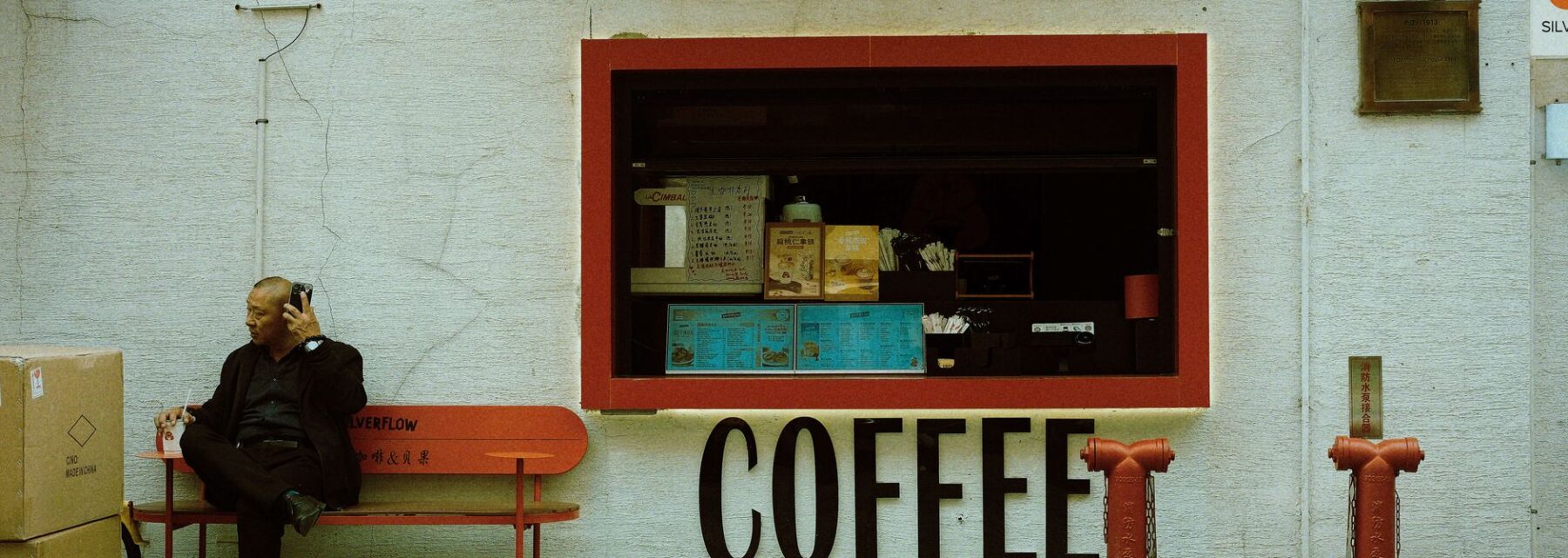
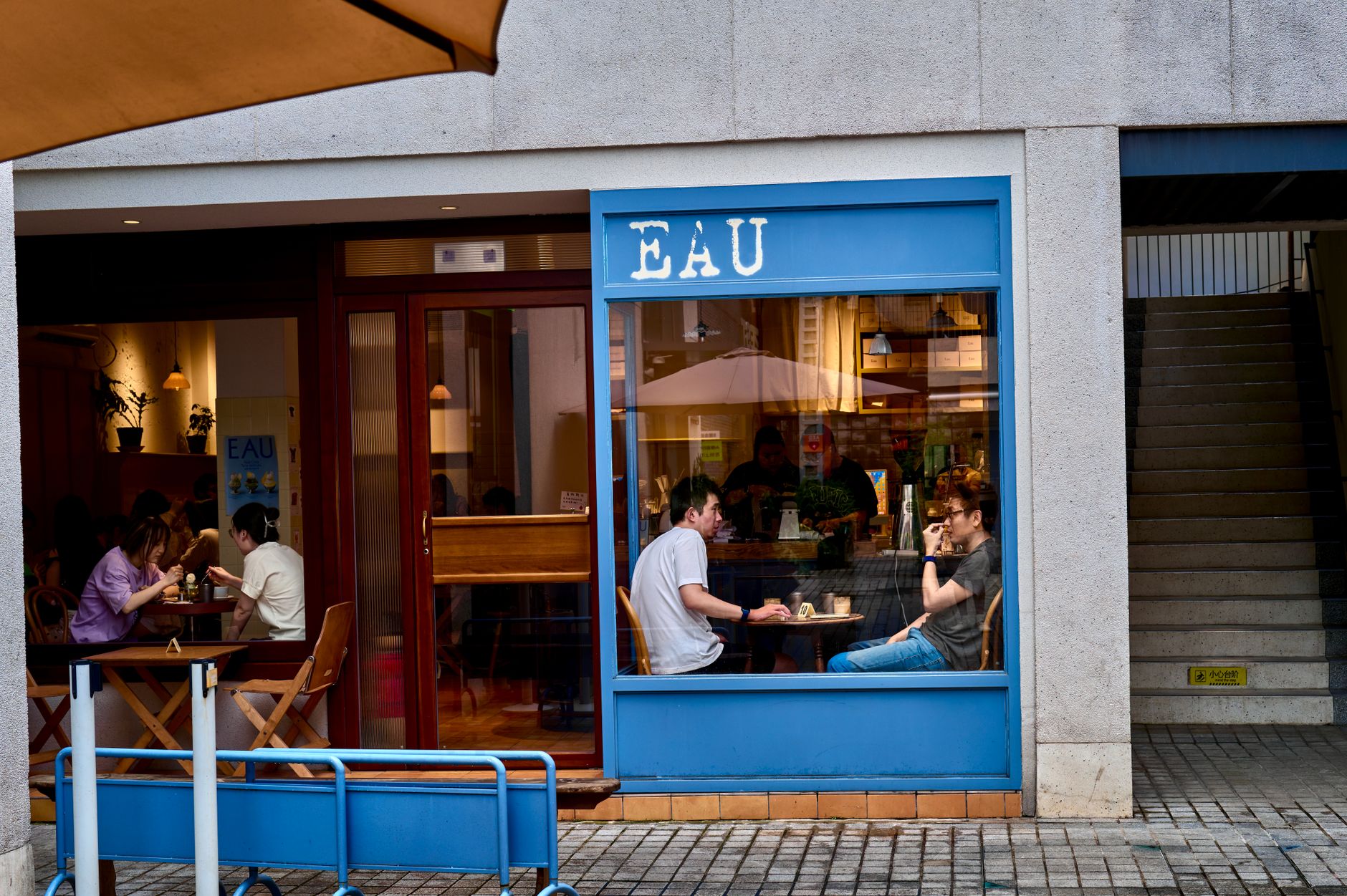
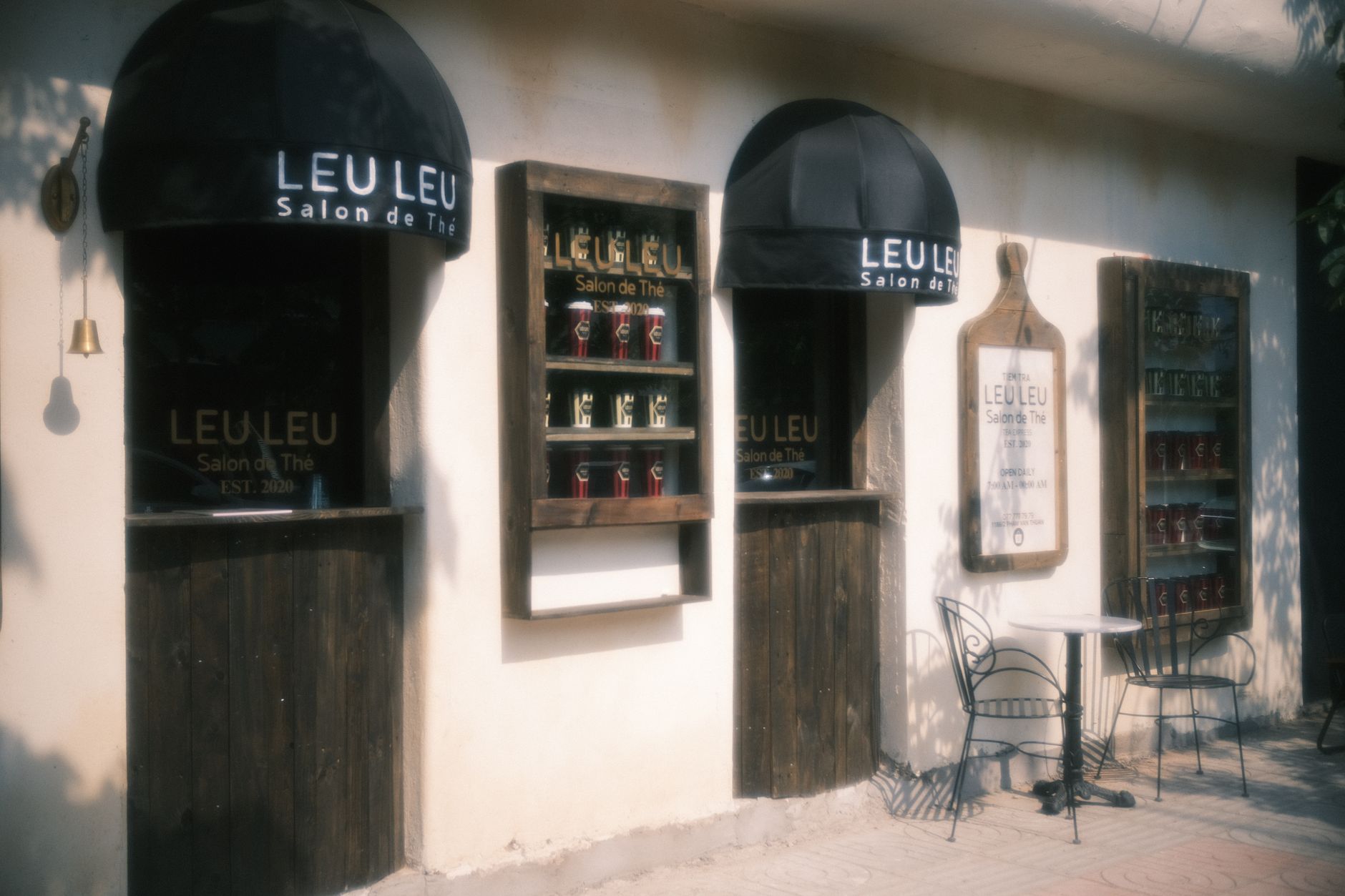
The visible consequence is that cafés in Shanghai are often absurdly small — a converted garage, a window in a lane wall, six stools — and absurdly well designed. Rent forces the size; the social function forces the design.
The three tiers, and what each is for
Tier one: the app chains. Luckin is the giant, with tens of thousands of outlets nationally, and it works entirely through its own app: order, pay, walk in, collect from a shelf with your name on it. Coupons are constant and a latte routinely lands under ¥15. The coffee is fine. Nobody in Shanghai pretends otherwise, and nobody feels bad about it.
Tier two: Manner. Shanghai’s own success story and the tier that does not exist in most Western cities. Manner started as a two-square-metre window in the former Concession and now runs hundreds of shops, mostly tiny, mostly standing-room. The pitch is proper espresso from a proper machine at roughly ¥15–20, with a discount if you bring your own cup. If you want a genuinely good flat white for the price of a bus fare, this is the answer, and it is the answer for most days of most trips.
Tier three: specialty. Independent roasters and third-wave shops, ¥35–55 a cup, single origins, hand pours, a menu that names the farm. This is where Shanghai stops being surprising-for-China and starts being straightforwardly world-level. Seesaw was the early mover and is now a chain of some scale; below it sits a long tail of small independents, most of them in Xuhui, Jing’an and Hongkou.
The chains, compared
| Chain | Typical price | How you order | Seating | Worth it? |
|---|---|---|---|---|
| Luckin (瑞幸) | ¥10–15 after coupons | Own app only, in Chinese | Little or none | Cheapest caffeine in the city; app is a barrier for visitors |
| Manner (manner咖啡) | ¥15–20; ¥5 off with your own cup | Counter or app | Usually standing | The best value in Shanghai. Real espresso, real prices |
| Seesaw | ¥28–40 | Counter | Yes, proper cafés | The bridge between chain and specialty; reliable |
| %Arabica | ¥32–48 | Counter | Minimal, and photographed constantly | Good coffee, long queues, more design than drink |
| Starbucks | ¥30–42 | Counter or app | Plenty | Only for the Roastery on West Nanjing Road, which is a spectacle |
| Independent specialty | ¥35–55 | Counter, usually with English | Small, sometimes none | Yes, if you care. This is the actual scene |
The practical shape of a trip: Manner for the everyday cup, one or two specialty shops as destinations, Luckin if you have the app and are in a hurry, and Starbucks only for the Reserve Roastery at 789 West Nanjing Road, which is a 2,700-square-metre working roastery and worth twenty minutes as architecture even if you never drink there.
Where to drink, neighbourhood by neighbourhood
The former French Concession (Xuhui and western Huangpu) is the centre of gravity and where you should spend a coffee morning if you only have one. Wukang Road, Anfu Road, Yongkang Road, Wuyuan Road and Yongfu Road all have several cafés per block, occupying the ground floors of 1920s and 1930s buildings. Density is the point: you can walk for an hour and pass thirty of them.
Jing’an is the business-district version — larger rooms, more laptops, higher ceilings, slightly less charm. Good if you want to sit down for two hours rather than stand at a hatch. The area around Jing’an Temple and along Wujiang Road works well.
Hongkou, north of Suzhou Creek, is where the scene has been moving. Harbin Road and the streets around it hold a cluster of small independents in old industrial and residential buildings, with a fraction of the Concession’s foot traffic. This is where you go on your third coffee morning, not your first.
Pudong and Lujiazui are the weakest for coffee. What exists is mall coffee and hotel coffee, which is competent and expensive. If you are staying on that side of the river, cross it.
Around the Bund and People’s Square, the coffee is largely aimed at visitors and priced accordingly, with a couple of good exceptions on Nanchang Road just to the south-west.

The specialty shops worth crossing town for
A short, honest list rather than a long one. Hours at independent Shanghai cafés change often — check on the day rather than trusting any published time, including these.
Café del Volcán, 25 Yongkang Road, Xuhui. One of the city’s earliest specialty roasters, run by a family who own an estate in Guatemala; the house beans come from it. Small, unfussy, serious about extraction and entirely uninterested in being photogenic. If you only do one specialty shop, this is a good one, and Yongkang Road itself is worth the walk. You can see what they roast on their own site before you go.
Metal Hands, Nanchang Road, near People’s Square. Industrial fit-out, exposed pipework, a serious espresso set-up, and the most central of the shops on this list. A useful one to know if you are sightseeing around the Bund and want something better than the tourist-facing options.
RAC Coffee & Bar, Anfu Road. French-leaning, does food as well as coffee, and busy at weekend brunch. Fits naturally into a former Concession walk.
Sumerian, Jing’an. A long-running fixture with a loyal following, good filter coffee and the kind of room you can sit in for a while.
Coffee Tree, in Ferguson Lane at 374–376 Wukang Road. Not the best coffee in the city, but the courtyard setting is the nicest place to drink a flat white in the former Concession, and it is exactly where you will be if you are walking Wukang Road.
Sunflour, 308 Anfu Road, 08:00–21:00. A bakery more than a coffee shop, and the standard neighbourhood breakfast: the sun bread and a coffee for ¥40–60.
Beyond these, the correct method in Shanghai is not to follow a list. Walk Wuyuan Road, Yongfu Road or Harbin Road, look through the windows, and go into the one with three people in it and a grinder you recognise. The hit rate is extraordinarily high, which is the single best thing about coffee in this city.
Three coffee mornings, mapped
Coffee in Shanghai works better as a walk than as a destination. Three routes, each about three hours with stops, each ending somewhere you would want to have lunch.
The classic: Yongkang Road to Anfu Road. Start at Café del Volcán on Yongkang Road at about nine, when it is quiet. Walk west along Xinle Road and Donghu Road, both lined with small shops, then north to Anfu Road for a second cup at RAC and a pastry at Sunflour. Finish at Wukang Road, which is fifteen minutes further west and has a courtyard café at Ferguson Lane if you want a third. Roughly 2.5 km, three cafés, and it doubles as the best architecture walk in the city.
The quiet one: Hongkou and Harbin Road. North of Suzhou Creek, twenty minutes from People’s Square, and almost entirely free of visitors. The independents here occupy old industrial units and lane houses, the roasting is often done on site, and you will be the only foreigner in most of them. Combine it with a walk along the creek and the 1933 Old Millfun slaughterhouse building, which is ten minutes away and one of the strangest structures in Shanghai. Start late — most of these open at ten.
The efficient one: Jing’an in two hours. If you are short of time or working, stay in Jing’an. A Seesaw or a large independent near the temple gives you a table and a socket; Sumerian is ten minutes away for a proper filter; and West Nanjing Road puts the Starbucks Reserve Roastery, Plaza 66 and a hundred lunch options inside a five-minute radius. Less charming, far more efficient.
A note on timing that applies to all three. Independent Shanghai cafés open late — ten o’clock is normal and eleven is not unusual — and close between six and nine. The chains open at seven. If you are an early riser, the first cup of the day is a Manner or a Luckin whether you like it or not, and the good stuff starts mid-morning.
C-Coffee: what the Chinese menu is doing
Alongside the espresso menu you will find drinks that make no sense in a European café and are the most interesting thing happening here. The industry shorthand is “C-Coffee” — Chinese coffee — and it means coffee crossed with the country’s tea and dessert traditions.
- Jasmine latte — jasmine tea and espresso, and much better than it sounds.
- Osmanthus coffee — the floral, apricot-ish note that flavours a great deal of Shanghainese dessert, applied to a latte.
- Coconut latte (生椰拿铁) — the drink that made Luckin’s numbers. Coconut milk and espresso, cold, and genuinely good.
- Cheese foam and salted cream tops — a savoury-sweet whipped layer borrowed from the bubble-tea world, floated on cold coffee.
- Baijiu latte — a Luckin and Moutai collaboration that briefly broke the internet in China. Order it once, for the story.
- Yunnan single origins — not a novelty at all. Chinese-grown arabica, increasingly good, and the cheapest way to drink an interesting single origin anywhere.
If you order one non-standard thing on your trip, make it a jasmine latte or a Yunnan pour-over. Both tell you something about the city that a flat white does not. The tea-buying guide covers the other half of that heritage.
Ordering without Chinese
Easier than almost any other food transaction in Shanghai, for three reasons: the vocabulary is loanwords, the menus are usually bilingual, and payment is contactless.
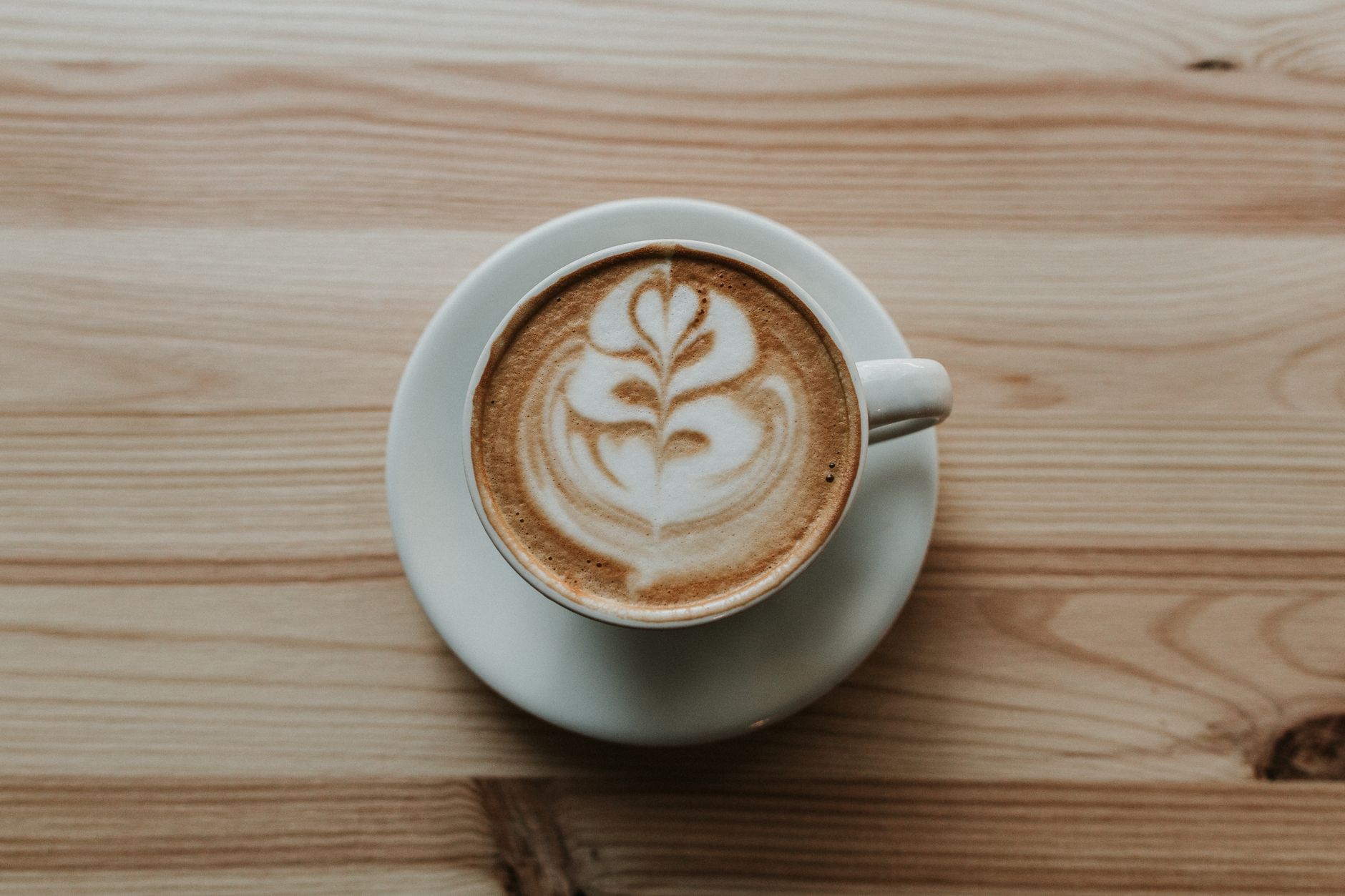
The words. Most of the menu is transliterated English. 拿铁 (ná tiě) is latte. 卡布奇诺 is cappuccino. 美式 (měi shì) is Americano — literally “American style”. 澳白 (ào bái) is a flat white — “Australian white”. 手冲 (shǒu chōng) is hand pour-over. 冰 (bīng) is iced, 热 (rè) is hot. Saying “latte” or “Americano” in English works in nine cafés out of ten.
Sugar. This is the one that catches people. Chinese coffee shops often default to sweetened, and the standard question is about sugar level. 无糖 (wú táng) means no sugar. If you are asked something you do not understand at a counter, “无糖” is usually the right answer and always a safe one.
Milk. Oat milk (燕麦奶) is universal and often the default in specialty shops. Dairy is fine everywhere. Soy is common.
Payment. Alipay or WeChat Pay, both of which accept foreign cards. Cash is technically legal tender and practically a nuisance — small cafés often have no float. Set this up before you arrive; our guide to Alipay and WeChat Pay for visitors walks through it.
The app problem. Luckin genuinely requires its own Chinese-language app, which is a real barrier. Manner and most specialty shops will serve you at the counter without one. If a shop has a QR-only ordering system and no counter service, that is your cue to walk to the next one, which will be forty metres away.
What the best coffee in Shanghai actually costs
| Drink | Chain | Manner | Specialty |
|---|---|---|---|
| Americano | ¥10–15 | ¥15 | ¥30–38 |
| Latte / flat white | ¥12–18 | ¥18–20 | ¥35–45 |
| Single-origin pour-over | Not offered | Occasionally | ¥45–65 |
| Cold brew | ¥15–20 | ¥20 | ¥38–48 |
| Pastry or bread | ¥10–18 | ¥12–20 | ¥25–45 |
| A morning of three cafés | ¥60–150 depending entirely on which tier you pick | ||
Two things worth knowing. Bringing your own cup to Manner saves ¥5, which over a week of daily coffee is a real number and is also the reason you will see people carrying keep-cups everywhere. And the specialty premium in Shanghai is smaller than in London or New York in absolute terms — a ¥45 pour-over is around five pounds, which buys you rather less at home.
If you are counting every yuan, coffee is one of the easiest places to spend less without noticeably worse days: Manner at ¥18 twice a day is ¥36. See Shanghai on a budget for where the rest of the savings are.
Cafés for working
Shanghai is superb for this, with caveats that catch visitors out.
Power and wifi. Sockets are common but not universal — the very small shops often have none. Wifi is near-universal and frequently requires a Chinese mobile number for the SMS code, which visitors do not have. Roaming data or an eSIM sidesteps the whole problem and is what most people end up using; see our guide to internet access in Shanghai, which also covers what you will and will not be able to reach.
Where. Jing’an and the larger Seesaw branches are the reliable answer: proper tables, sockets, tolerance for a long sit. The tiny Concession shops are not built for it and standing at a Manner with a laptop is not a thing.
Etiquette. Buy something roughly every ninety minutes, do not take a four-top alone at lunchtime, and do not take calls on speaker, which is more common than it should be and no more welcome here than anywhere else.
What people get wrong
Assuming Chinese coffee is bad. It stopped being bad about a decade ago. Yunnan arabica in a Shanghai specialty shop is genuinely good coffee.
Queuing forty minutes at %Arabica. The coffee is fine and there are eleven better shops within a ten-minute walk with nobody in them.
Trying to use Luckin without the app. There is no counter workaround. Go to Manner.
Expecting to sit down. A large share of Shanghai cafés are standing-room hatches. If you want a chair, choose for that specifically.
Not saying 无糖. Sweetened by default is common. One word solves it.
Looking for coffee in Pudong. Cross the river.
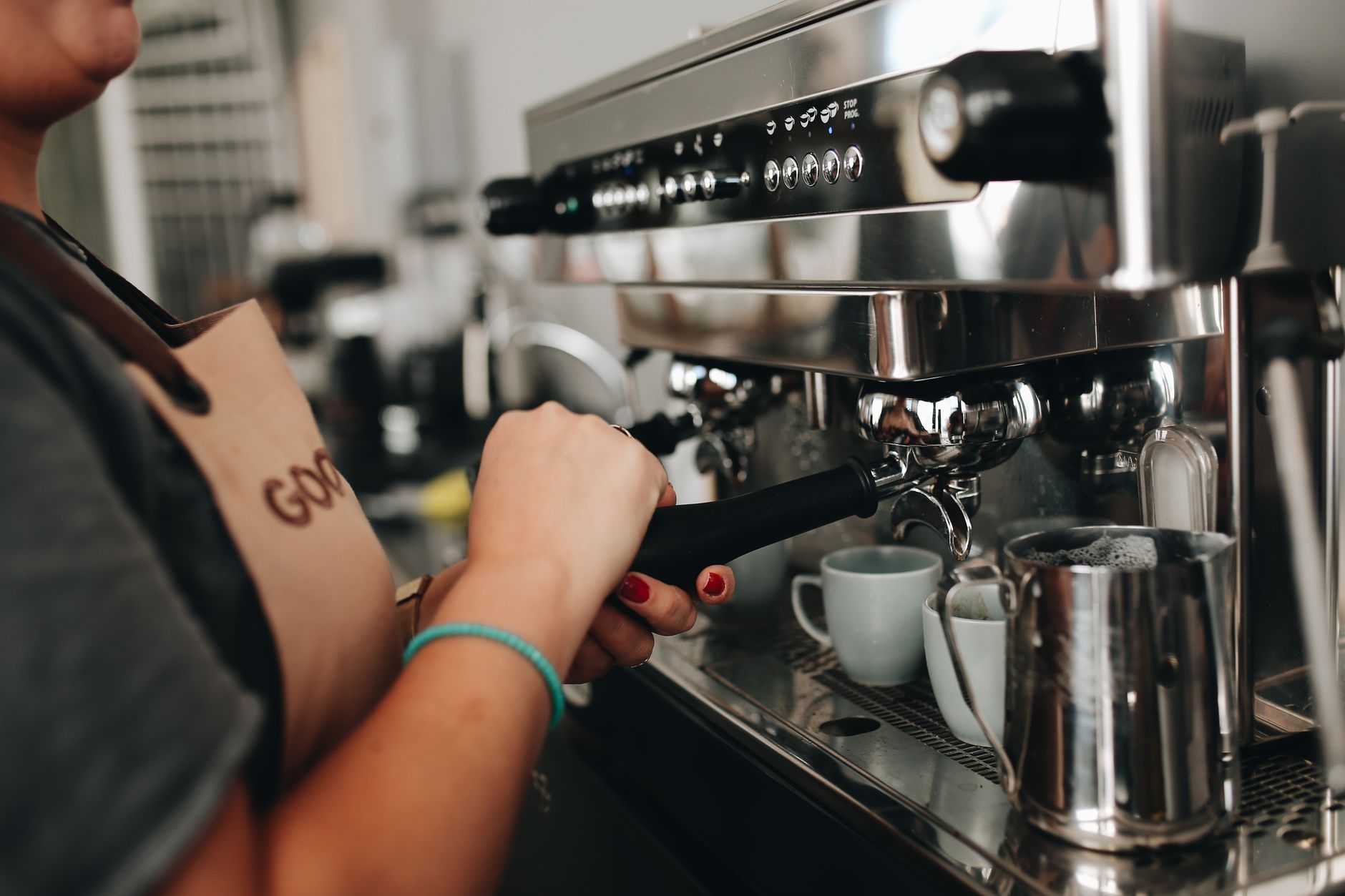
Judging by the interior. Shanghai’s design standard is so high that a beautiful room tells you nothing about the coffee. Look at the grinder and the queue instead.
Only drinking espresso drinks. The Chinese half of the menu is the interesting half and the reason to drink coffee here rather than at home.
Frequently Asked Questions
How many coffee shops does Shanghai have?
Around 10,300 as of early 2026, up from roughly 9,500 the year before — more than New York, London and Tokyo combined, and the highest count of any city in the world.
Where do I find the best coffee in Shanghai?
The former French Concession — Wukang Road, Anfu Road, Yongkang Road, Wuyuan Road — for density and quality together, and Hongkou around Harbin Road for the newer independents with fewer people in them. Jing’an if you want to sit down for two hours.
How much does a coffee cost in Shanghai?
¥10–15 at Luckin after coupons, ¥15–20 at Manner, ¥28–40 at Seesaw and %Arabica, and ¥35–55 at independent specialty shops. A single-origin pour-over runs ¥45–65.
What is Manner Coffee?
A Shanghai-born chain that started as a two-square-metre window in the former Concession and now runs hundreds of mostly standing-room shops. Proper espresso at ¥15–20, with ¥5 off if you bring your own cup. It is the best value in the city.
Can I order coffee in English in Shanghai?
In most places, yes. Menus are usually bilingual and the vocabulary is largely transliterated English — latte, cappuccino, Americano all work spoken aloud. Specialty shops almost always have English-speaking staff.
Do Shanghai cafés take foreign cards?
Rarely, and it is not the way to pay. Alipay and WeChat Pay both accept foreign cards and are what everyone uses. Cash works in theory but small cafés often cannot make change.
What is a jasmine latte?
Jasmine tea combined with espresso and milk — part of what the industry calls C-Coffee, the crossover between Chinese tea traditions and specialty coffee. Osmanthus coffee and coconut lattes are the other common examples, and all three are worth trying once.
Is Chinese coffee any good?
Yunnan province now grows a substantial volume of arabica and the quality has improved sharply. A Yunnan single origin in a Shanghai specialty shop is genuinely good and cheaper than an imported bean.
Can I use Luckin Coffee as a tourist?
Only with its app, which is Chinese-language and requires an account. There is no counter-service alternative. Manner is the better answer for visitors and the coffee is better anyway.
Are Shanghai cafés good for working?
The larger ones in Jing’an, yes — tables, sockets and tolerance for long stays. Wifi often needs a Chinese phone number for the verification code, so roaming data or an eSIM is the practical route. The tiny Concession shops are not built for laptops.
What time do coffee shops open in Shanghai?
Chains from around 07:00, independents typically 09:00 or 10:00 and closing between 18:00 and 21:00. Independent hours change often, so check on the day rather than trusting a published time.
Is the Starbucks Reserve Roastery worth visiting?
As a building, yes. It is a 2,700-square-metre working roastery on West Nanjing Road and one of the more remarkable retail spaces in the city. As coffee, it is Starbucks at Starbucks prices. Go for twenty minutes, look at it, drink elsewhere.
Where to go next
Coffee is the easiest way into eating in Shanghai and a good route into neighbourhoods you would otherwise skip. Pair a coffee morning with the French Concession walking tour, which passes most of the streets named here, or start earlier with the Shanghai breakfast guide — youtiao and soy milk first, coffee second, is the correct order.
For everything else on the plate, the food guide is the hub, cheap eats covers the ¥20 lunch, and the best food streets tells you which lanes to walk hungry. If you are travelling alone, cafés are the single best place to spend a Shanghai afternoon — see solo travel in Shanghai.