For thirty years “the Shanghai Museum” meant one building: the round-topped stone drum on People’s Square, with its bronzes, porcelain and scroll paintings and a queue down the steps. That is no longer where the permanent collection is. Since 2024 the city’s great collection of Chinese art has had a second, far larger home, Shanghai Museum East in Pudong. As of late 2026 every permanent gallery is there: bronze, ceramics, painting, calligraphy, jade, seals, coins, and two galleries on Shanghai and the Jiangnan region. You walk in with your passport, without a ticket or a booking.
The People’s Square building, meanwhile, has been handed over to one very large exhibition. On Top of the World Tree: Ancient Civilizations of the Americas runs there until 14 November 2027, entry is by real-name ticket, and while it runs nothing else is on show in that building. So the question isn’t really “is the Shanghai Museum worth it?” It’s which of the two you’re going to, and why. This guide covers what is in each, how entry and tickets work, the audio guides, getting there, and the mistakes that send people to the wrong side of the river.
Table of Contents
- Shanghai Museum in 2026: which building to visit
- Shanghai Museum East: what’s inside
- Visiting East: entry, hours and audio guides
- How to spend three hours at East
- A short history of the Shanghai Museum
- The People’s Square building and the Americas exhibition
- Shanghai Museum tickets: the Americas exhibition prices
- When to go, and going with children
- Getting there
- What to pair it with
- What people get wrong
- Frequently Asked Questions
Shanghai Museum in 2026: which building to visit
The short answer: if you want Chinese art and antiquities, which is what the Shanghai Museum is famous for, go to East. If you want the ancient Americas, Maya, Aztec and Andean civilisations shown in China on a very large scale, go to People’s Square and buy a ticket. If you have a free afternoon and both interest you, do both on different days, because they close on different days of the week.
| Shanghai Museum East | Shanghai Museum, People’s Square | |
|---|---|---|
| What’s on | All the permanent galleries, plus special exhibitions | Only “On Top of the World Tree: Ancient Civilizations of the Americas”, to 14 November 2027 |
| Address | 1952 Century Avenue, Pudong | 201 Renmin Avenue, Huangpu |
| Entry | No ticket or booking for individuals; scan your passport at the B1 East Gate | Ticket required for every visitor, from RMB 148 full price |
| Hours | 10:00–18:00, last entry 17:00 | 09:00–17:00, last entry 15:00; some evening sessions to 21:00 |
| Closed | Tuesdays, except national holidays | Mondays, except national holidays |
| English audio guide | RMB 40, no deposit | Rented separately for the exhibition |
| Nearest metro | Line 2, Science and Technology Museum, Exit 8 | Lines 1, 2 and 8, People’s Square, Exit 1 |
| Time to allow | Three hours minimum; a full day is easy | Two to three hours |
One practical warning before the detail. Plenty of older guides, hotel concierges and taxi drivers still say “Shanghai Museum” and mean People’s Square. If someone sends you there for the bronzes, they’re working from an out-of-date picture.
Shanghai Museum East: what’s inside
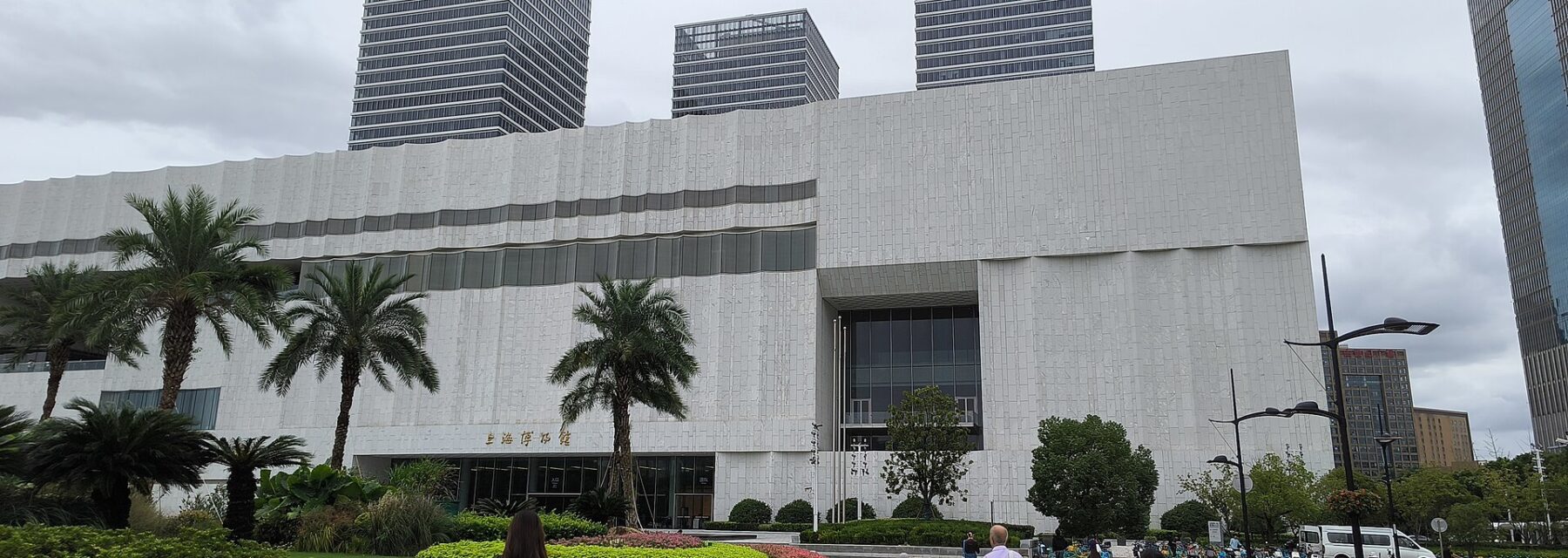
Shanghai Museum East opened its first galleries in February 2024 and has a floor area of nearly 120,000 square metres, about three times that of the People’s Square building. It’s a vast, pale, stone-clad block on Century Avenue, and the scale is the first thing you notice. The museum describes it as twenty galleries and interactive spaces. Where the old building made you queue for each floor, here there is room to stand back from a case and look.
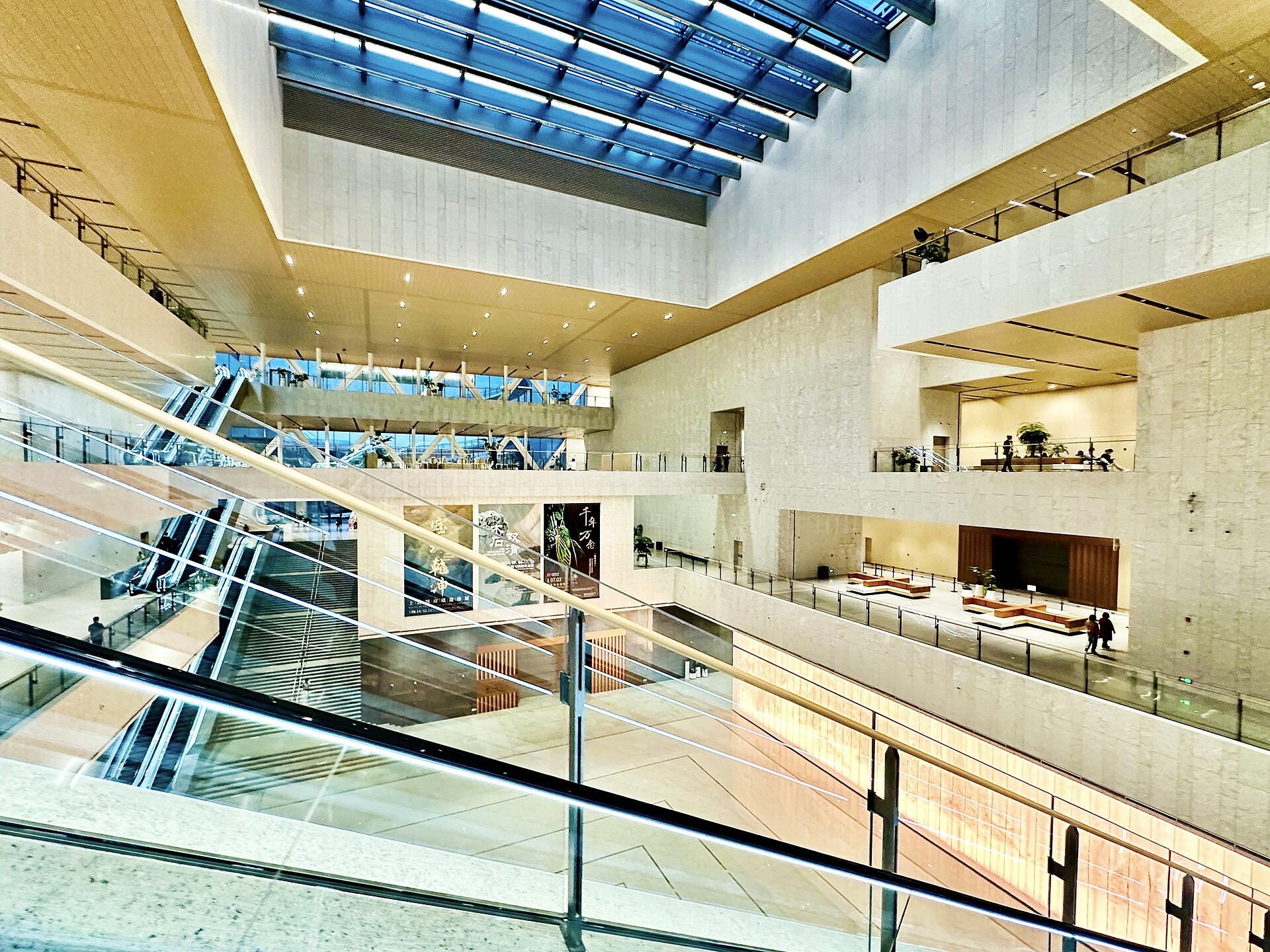
The permanent galleries the museum lists for East are:
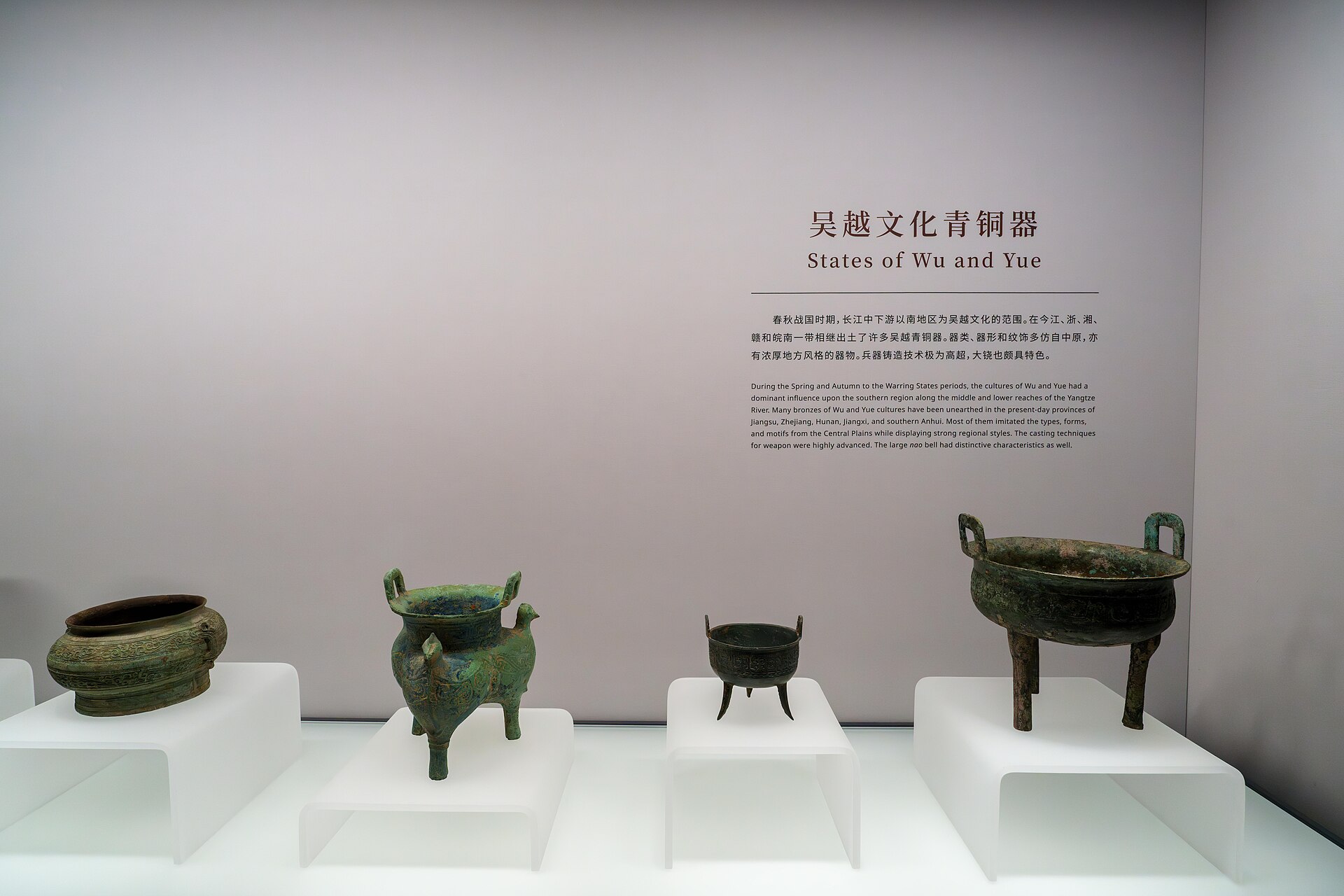
- Bronze. The collection the Shanghai Museum built its name on: ritual vessels from the Shang and Zhou dynasties, cast for offerings to ancestors, with the green patina and dense decoration that most people picture when they think of ancient China. The museum names the Da Ke Ding, a great Western Zhou cauldron, as one of its most famous works. Check the museum’s own collection pages for where it is shown.
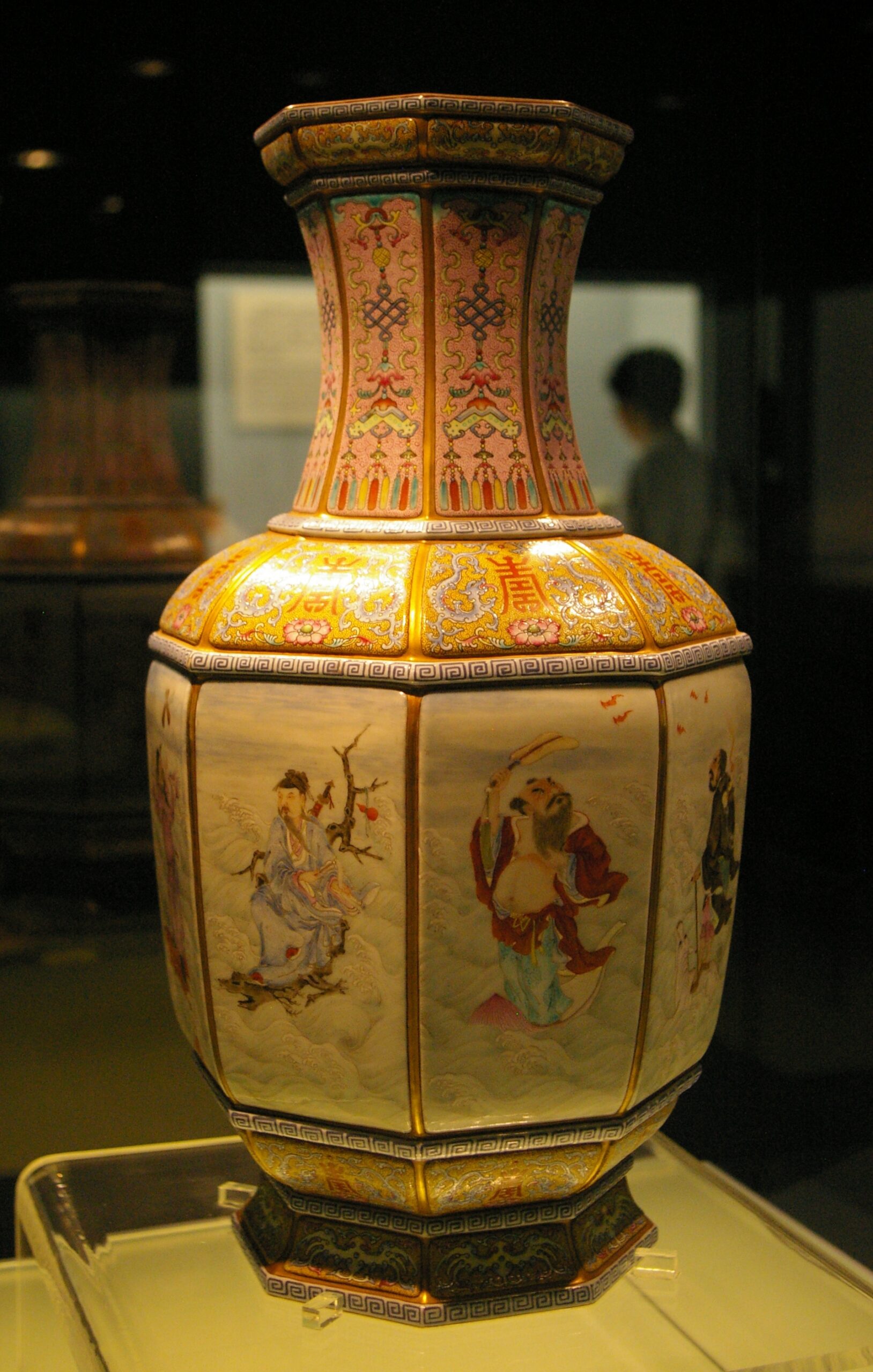
- Ceramics. The Ancient Chinese Ceramics Gallery, on the third floor, runs from Neolithic pottery to the Ming and Qing imperial kilns. If you only have an hour, spend most of it here. The final section holds Transient Possession Lasting Delight, Ming and Qing porcelain donated by the Zande Lou collection, until 22 February 2027.
- Painting and Calligraphy. Two separate galleries, plus the Hall for Monumental Calligraphies and Paintings on the second floor, which is used for the largest scrolls. Paper and silk can only be exposed to light for short spells, so works are rotated. What’s up when you visit is a matter of luck.
- Jade. From Neolithic ritual discs to Qing carvings. It’s quieter than the bronze and ceramics rooms and one of the most rewarding at close range.
- Seals and Numismatics. Seals are a specialist taste. The coin gallery, which tells the story of Chinese money, is better than it sounds.
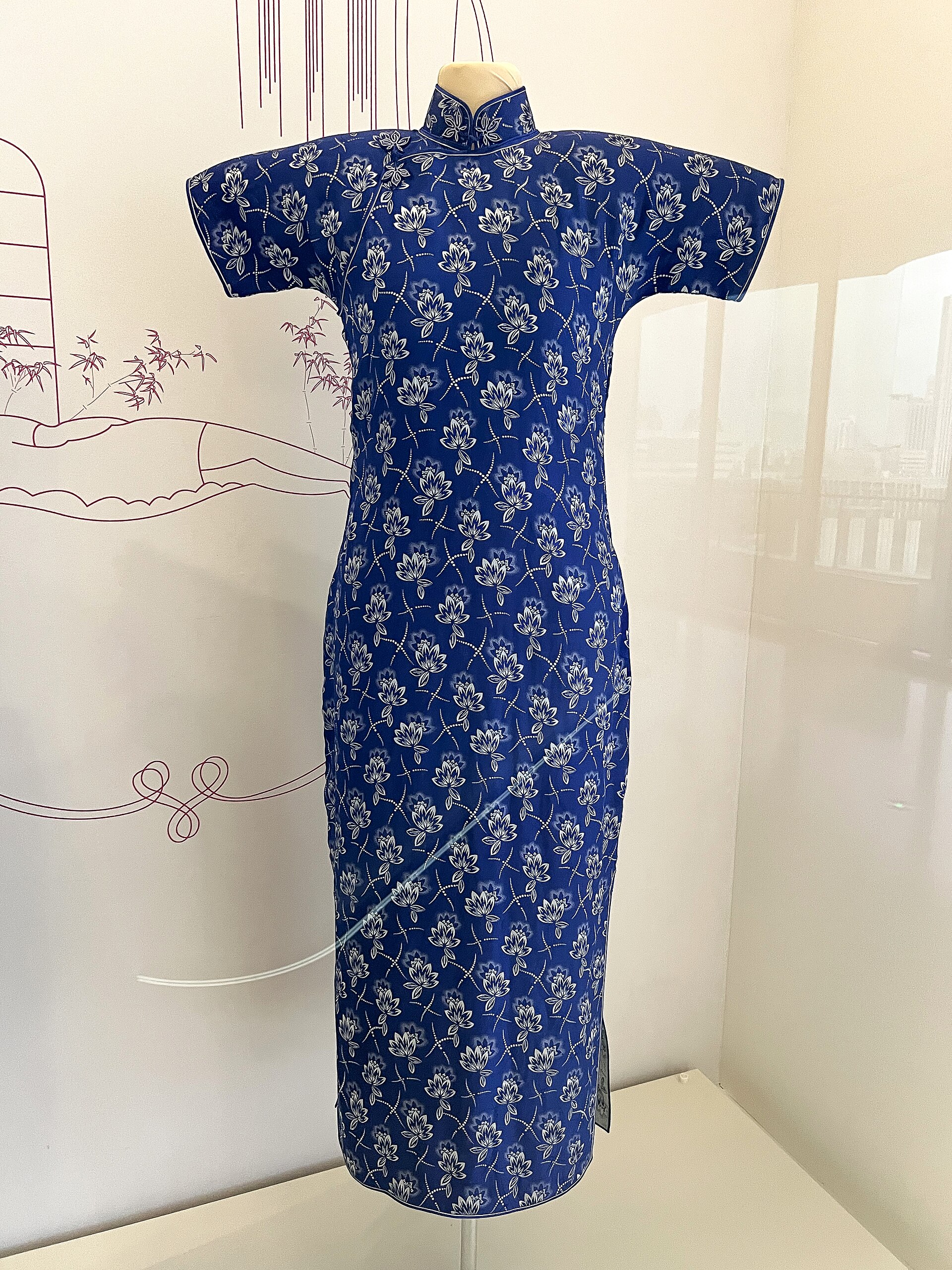
- Shanghai culture and Jiangnan culture. Two galleries on the region itself. The Jiangnan gallery is where you’ll find the material culture of the lower Yangtze delta, down to Republican-era fashion. It’s the gallery that ties the antiquities to the city outside.
Beyond the galleries, East has three interactive spaces: The Curio-City, The Digital Gallery and the Open Conservation Lab, where you can watch conservators at work through glass. The Curio-City and the Digital Gallery need a separate advance booking, through the museum’s reservation mini program under “Special Reservation”. They are the parts of the building aimed most at children.
Special exhibitions at East
East also hosts the museum’s temporary exhibitions. In October 2026 these include Beneath the Golden Crown: Highlights of Silla’s Treasures, organised with the Gyeongju National Museum in Korea. It runs in Exhibition Gallery 2 on the second floor from 23 September 2026 to 18 January 2027. Some special exhibitions are charged. Where they are, tickets are sold through the museum’s reservation mini program, and the museum’s reservation page lists Trip.com for international visitors. Check the exhibition’s own page on the museum’s site for admission details before you go.
Visiting East: entry, hours and audio guides
Since 15 September 2024, individual visitors haven’t needed to book for East. Bring the original of your passport, go to the B1 East Gate near Dingxiang Road, pass through security and scan the passport at the gate. Groups use a separate North Gate on Century Avenue and do book in advance.
The hours are 10:00 to 18:00, with entry stopping at 17:00. East is closed on Tuesdays, except when a national holiday falls on a Tuesday. Children under 12 must be with an adult for the whole visit. When the number of people inside reaches the building’s daily or instantaneous limit, the museum restricts entry and you queue. On ordinary weekdays that’s unlikely. On weekends in the school holidays and during national holidays, arrive at 10:00.
Audio guides. East has a good range of audio guides, and none of the devices needs a deposit.
- A standard audio guide for the permanent galleries costs RMB 20 in Chinese or RMB 40 in English. It starts playing automatically when you hold it near an exhibit. More languages are listed as coming.
- A “smart guide” handset with video, a gallery map and location detection costs from RMB 30.
- AR glasses that layer animation over the objects cost RMB 60.
- A free WeChat guide covers the highlights of the permanent galleries, if you’d rather use your own phone and earphones.
- Paid English guided tours start at RMB 300 and can be booked through WeChat or at the guided tour desk in the building.
Devices for special exhibitions are charged separately. For most visitors the RMB 40 English set is the right call. The wall labels are bilingual, but brief, and the guide is where the explanation is.
Facilities. The cloakroom is on the first floor. Coats, bags and luggage can be checked after a security search, but valuables other than laptops can’t be left. There’s a shop and café on the first floor, and a café staircase between the second and third floors. You’ll also find a baby-care room, accessible lifts and toilets, drinking water, and free wheelchairs and strollers against your ID or a RMB 300 deposit. There’s no dedicated public car park. The museum points drivers to the garage under the Huamu Shiguangli mall, entered from Yanggao South Road or Dingxiang Road.
How to spend three hours at East
The building rewards a plan, because it’s large enough to exhaust you before you reach the best rooms. Here’s a sensible split for a first visit.
- First hour: ceramics. Go straight up to the third floor while you’re fresh. Ceramics is the gallery where the Shanghai Museum’s collection is hardest to match. Walking it in order, from earthenware to Song celadon to blue-and-white to the enamelled Qing wares, is a crash course in Chinese taste over five thousand years.
- Second hour: bronze and jade. The bronzes are the museum’s founding glory. Give them proper time, and use the audio guide here, because the vessel types and inscriptions mean little without it. Jade is a good quiet coda.
- Third hour: painting and calligraphy. Leave this until last only if you enjoy it. Otherwise swap it for the Jiangnan and Shanghai galleries, which are easier going and more connected to what you’ll see in the city.
- Break: the café staircase between the second and third floors is the obvious pause.
With children, reverse the order. Book the Curio-City in advance, do that first, and treat the galleries as a bonus. If you have a whole day, add a special exhibition and lunch in the area. East is far enough out that it’s worth making a day of it.
A short history of the Shanghai Museum
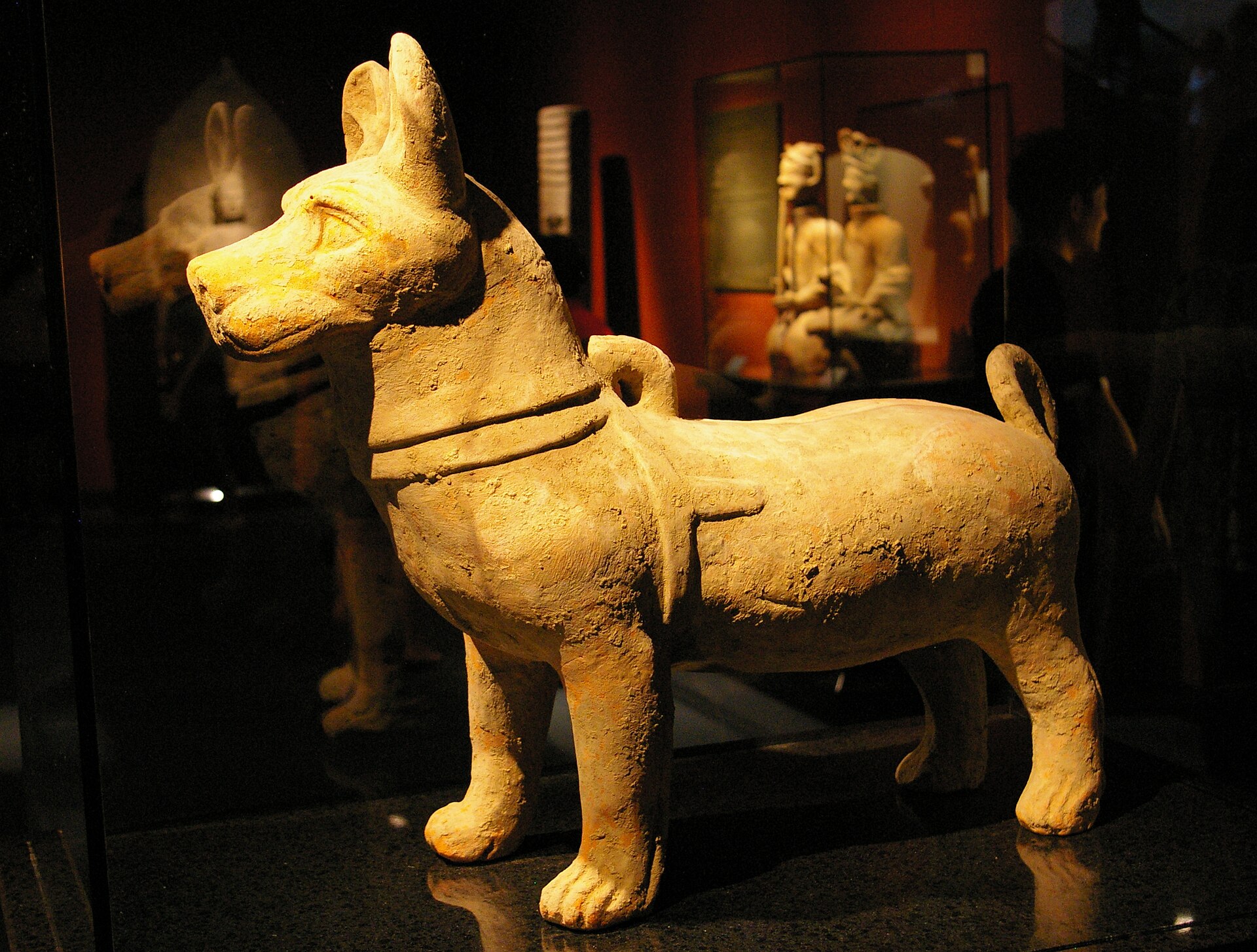
The museum is younger than its collection suggests. It was founded in 1952 and first opened in the former clubhouse of the Shanghai Racecourse, the building that still stands at 325 West Nanjing Road beside People’s Park. Part of its founding collection came from the museum of the Royal Asiatic Society, one of the foreign institutions that wound up as foreigners left the city in the 1950s. In 1959 it moved into the Zhonghui Building, a former bank and insurance office block at 16 South Henan Road, and spent more than three decades in rooms that were never designed for it.
The building on People’s Square exists because of one director. When a new museum was left out of the city’s five-year rebuilding plan in 1992, Ma Chengyuan, a bronze scholar who ran the museum until 1999, lobbied the mayor, Huang Ju, for a site. He got the plot on People’s Square, but not the money: the museum had to raise its own building funds, and Ma found US$25 million of it partly by leasing out the old building. Construction began in August 1993, and the new museum opened on 12 October 1996, five floors and 39,200 square metres under that round bronze-vessel roof.
Shanghai Museum East is the next chapter: a second building about three times the size, which lets the museum put far more of its collection on show. The museum says a third site, focused on a shipwreck, is planned in Yangpu. For the bigger story of the city the collection sits in, our history of Shanghai is the place to start.
The People’s Square building and the Americas exhibition
The museum itself dates from 1952. The People’s Square building opened in October 1996, designed by the architect Xing Tonghe, with a round top on a square base modelled on an ancient bronze ding, the same vessel that appears in the museum’s logo. It’s one of the most recognisable buildings in central Shanghai and still worth walking past even when you’re not going in.
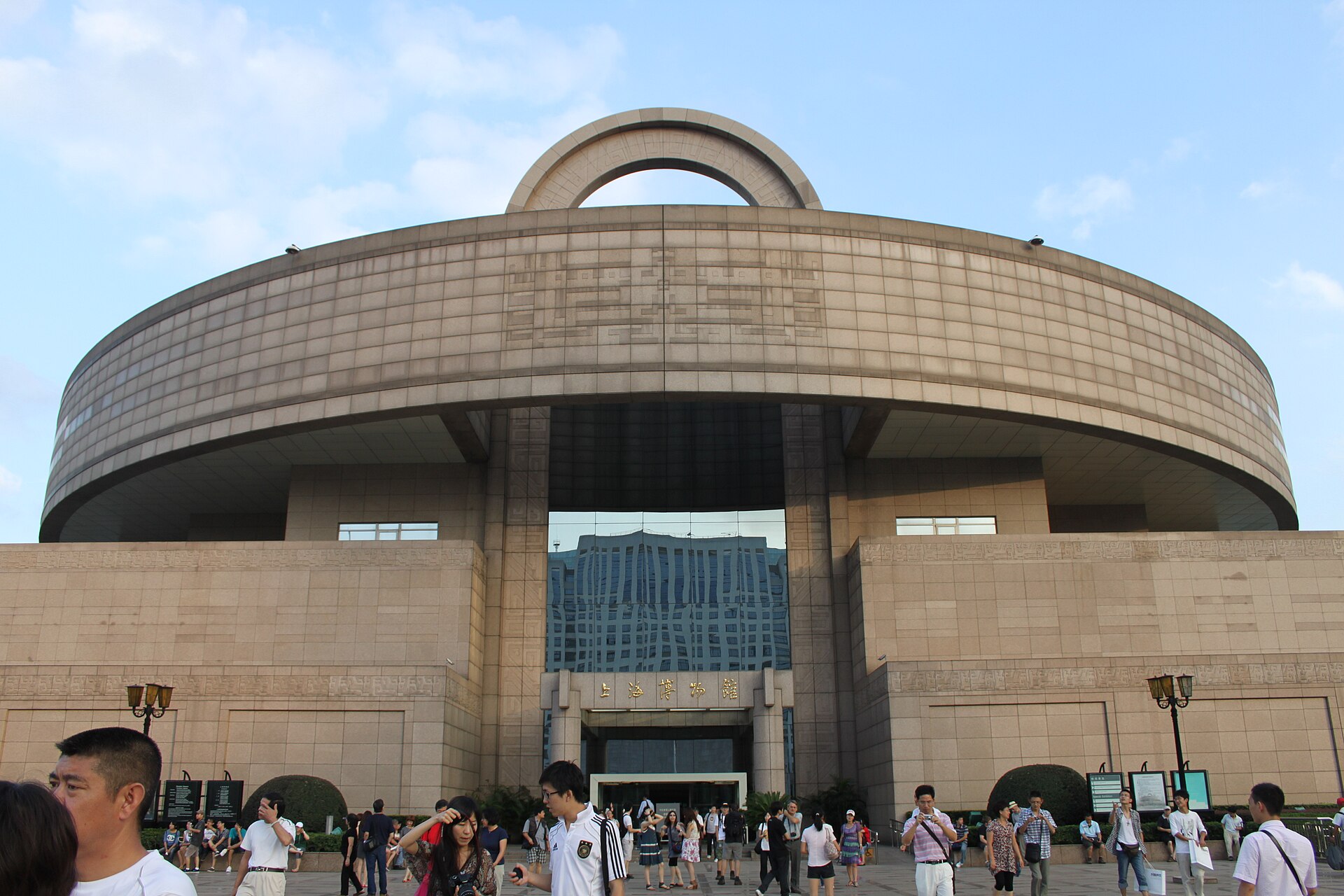
Until 14 November 2027, it holds On Top of the World Tree: Ancient Civilizations of the Americas, across the first to third floors. The museum describes nearly 3,000 artefacts in 1,129 sets, drawn from institutions in Mexico and Peru, among other lenders. The museum states that while it runs, the building shows no other exhibitions. If you go to People’s Square, this is what you’re paying to see.
Is it worth it? For anyone curious about the Maya, the Aztecs or the Andean cultures, yes. Nearly 3,000 objects is a very large show by any standard, and it’s laid out over three floors of a building made for exactly this sort of crowd. For a first-time visitor to Shanghai with one museum slot, though, East gives you more of what makes the city’s museum special, without a ticket.
Hours and entry. The building opens Tuesday to Sunday, 09:00 to 17:00, with last entry at 15:00, and is closed on Mondays except national holidays. On some days the museum adds an evening session to 21:00, with last entry at 19:00. In September 2026 these ran on Friday and Saturday evenings. The museum announces each month’s evening sessions on its website and WeChat account, so check before you plan around one. Tickets are real-name, one per ID per day, for a chosen date and session, and your ID is checked at the South Gate.
Facilities. There are cloakrooms at the north and south gates, and every bag is security-checked. Free wheelchairs and strollers are available against ID or a RMB 300 deposit. The building has a first-floor restaurant open 11:00 to 14:00, a second-floor tea room and a museum shop. There’s no public parking.
Shanghai Museum tickets: the Americas exhibition prices
These are the prices published for the Americas exhibition. Tickets go on sale in monthly batches, so confirm the price and availability when you book.
| Ticket | Price | Who it’s for |
|---|---|---|
| Full price | RMB 148 | Adults |
| Designated-day | RMB 135 | Not valid at weekends, on public holidays, 1 January to 28 February 2027 or 1 July to 31 August 2027 |
| Concession | RMB 74 | Visitors aged 60 and over; children over 6 up to 18; full-time students up to undergraduate level; serving military, veterans, police and fire-rescue staff, among others |
| Parent-child A | RMB 200 | One adult and one child aged 6 to under 14 |
| Parent-child B | RMB 320 | Two adults and one child aged 6 to under 14 |
| Repeat visit | RMB 130 | A second visit |
| Free | RMB 0 | Up to two children aged 6 and under per adult; disabled visitors with ID |
Tickets are sold through the museum’s WeChat mini program, and overseas visitors can book through Trip.com. Weekend and holiday sessions are the likeliest to sell out, so book a few days ahead if your dates are fixed. Concessions are checked against your ID at the gate, so if you’re relying on a foreign student card, ask before you buy. The museum’s enquiries line is 021 6022 6699.
The museum also sells combination tickets that pair the exhibition with Shanghai Zoo, Chenshan Botanical Garden and others. They only make sense if you were going to those places anyway.
When to go, and going with children
Best times. For East, a weekday at 10:00 is ideal. Mondays work well, since that’s the day the People’s Square building is shut. Avoid the national holidays, when both sites limit entry once they hit capacity. Afternoons from about 15:00 are calmer than late mornings, but leave yourself enough time before entry stops at 17:00. For the Americas exhibition, a weekday daytime session is the quietest and, outside the excluded periods, qualifies for the cheaper designated-day ticket.
With children. East is the more child-friendly of the two. The Curio-City and the Digital Gallery are built for younger visitors. Book them in advance through the museum’s mini program, because they’re the only parts of East with a separate reservation. Under-12s must stay with an adult throughout. Strollers can be borrowed free against ID, and there’s a baby-care room. At People’s Square, up to two children aged 6 and under go in free with each adult, older children up to 18 pay the RMB 74 concession, and the parent-child tickets cover children aged 6 to under 14. Our Shanghai with kids guide has more ideas for the rest of the day.
Getting there
To Shanghai Museum East
- Metro Line 2 to Science and Technology Museum station, Exit 8. This is the easiest route from People’s Square, East Nanjing Road or Lujiazui, as Line 2 runs straight through all three with no change.
- Metro Line 4 to Xiangcheng Road station, Exit 2.
- Metro Line 6 to Pudian Road station, Exit 1.
- Buses 638 and 975 stop at South Yanggao Road Century Avenue; 987 and Pudong 36 stop at Century Avenue Dingxiang Road.
Remember that individual visitors enter at the B1 East Gate, near Dingxiang Road, not the grand entrance facing Century Avenue, which is for groups. Our Shanghai metro guide covers fares, cards and paying by phone.
To the People’s Square building
- Metro Lines 1, 2 and 8 to People’s Square, Exit 1.
- Metro Line 14 to Dashijie, Exit 4.
The museum sits on the south side of People’s Square, on Renmin Avenue.
What to pair it with
East sits in the Huamu area of Pudong, a district of wide avenues and civic buildings rather than streets to wander. The Science and Technology Museum, which the metro station is named after, is the obvious companion for families. Our Shanghai Science and Technology Museum guide covers it. For the Pudong skyline afterwards, Line 2 takes you back towards Lujiazui, and our Lujiazui guide covers the riverside.
People’s Square is the opposite: the centre of the city, with everything within walking distance. Nanjing Road East starts on its north-east corner and leads to the Bund in about half an hour on foot. Our Nanjing Road guide covers the walk.
If museums are a theme of your trip, our round-up of the best museums in Shanghai covers the rest of the city’s collections, from contemporary art to history. And if you’re building a rainy-day plan, our guide to free attractions in Shanghai lists others that cost nothing to enter.
What people get wrong
- Going to People’s Square for the bronzes and porcelain. Until November 2027 the only thing on show there is the Americas exhibition. The permanent galleries are at East.
- Mixing up the closing days. East closes on Tuesdays and People’s Square on Mondays, each except national holidays. A Monday is a good day for East; a Tuesday is the only day of the week you can’t see the permanent collection.
- Trying to book East. Individuals don’t need to. Just bring your passport, the original rather than a photo, and use the B1 East Gate.
- Turning up at the wrong door at East. The monumental entrance on Century Avenue is for groups. Individuals go in at B1, near Dingxiang Road.
- Arriving late. Entry stops at 17:00 at East and at 15:00 at People’s Square, except during evening sessions. Three hours at East is a minimum, so arriving at 16:00 is a waste of a trip.
- Not booking the Curio-City. If you’re bringing children, it’s the part they’ll remember, and it needs a separate advance reservation.
- Skipping the audio guide. At RMB 40 with no deposit, it’s the best value in the building. The wall labels assume you already know what a gui or a zun is.
- Trusting an old blog’s floor plan. Older guides describe the People’s Square galleries floor by floor. That layout no longer exists.
Frequently Asked Questions
Is the Shanghai Museum free?
The permanent galleries at Shanghai Museum East don’t need a ticket for individual visitors: you scan your passport at the B1 East Gate and go in. Some special exhibitions there are charged. The People’s Square building is different: until 14 November 2027 it shows only the Americas exhibition, and everyone needs a ticket, from RMB 148 full price.
Do I need to book the Shanghai Museum?
Not for East, where individual visitors have entered without booking since September 2024. The Curio-City and the Digital Gallery do need advance booking. For People’s Square you need a ticket for a date and session, bought through the museum’s mini program or, for overseas visitors, Trip.com.
Which is better, the Shanghai Museum or Shanghai Museum East?
For Chinese art and antiquities, East, because that’s where all the permanent galleries now are. People’s Square is only worth it if you want the Americas exhibition.
What day is the Shanghai Museum closed?
Shanghai Museum East closes on Tuesdays and the People’s Square building on Mondays, both except national holidays.
What are the Shanghai Museum opening hours?
East is open 10:00 to 18:00, with last entry at 17:00. People’s Square is open 09:00 to 17:00, with last entry at 15:00, and on some days runs an evening session to 21:00, with last entry at 19:00. Check the museum’s site for each month’s evening sessions.
How long do you need at Shanghai Museum East?
Three hours for the highlights: ceramics, bronze and one more gallery. A full day if you add a special exhibition or the interactive spaces.
Is there an English audio guide?
Yes. At East the English set costs RMB 40 with no deposit, a smart guide costs from RMB 30, AR glasses cost RMB 60, and there’s a free WeChat guide to the highlights. At People’s Square, audio guides for the exhibition are rented separately.
How much is the Americas exhibition at the Shanghai Museum?
RMB 148 full price, RMB 135 on designated weekdays, RMB 74 concession, RMB 200 or RMB 320 for parent-child tickets, and RMB 130 for a repeat visit. Up to two children aged 6 and under per adult go free.
How do I get to Shanghai Museum East?
Take Metro Line 2 to Science and Technology Museum, Exit 8, Line 4 to Xiangcheng Road, Exit 2, or Line 6 to Pudian Road, Exit 1. Individual visitors enter at the B1 East Gate near Dingxiang Road.
How big is the Shanghai Museum’s collection?
The museum states that it holds nearly 1,020,000 items in 33 categories, about 140,000 of them graded as precious cultural relics. Only a small share is on display at any one time.
For the full picture of what Shanghai has to see, start with our list of things to do in Shanghai. Fit the museum into a three-day Shanghai itinerary. Current hours, exhibitions and the visit notices are on the museum’s own pages for Shanghai Museum East and the People’s Square building.
Photo credits.
Shanghai Museum East exterior: 2026-10-02 Shanghai Museum East 上海博物馆东馆 02 by 源義信, CC BY 4.0, via Wikimedia Commons.
East central hall: Shanghai Meseum East hall by Alexey Yakovlev, CC0, via Wikimedia Commons.
Wu and Yue bronzes: 吴越文化青铜器 by Lt2818, CC0, via Wikimedia Commons.
1930s qipao: 1930s blue Qipao with silver white floral pattern at The Jiangnan Gallery, Shanghai Museum East (20251026160458) by N509FZ, CC BY-SA 4.0, via Wikimedia Commons.
Famille rose vase: 20090822 Shanghai Museum 3505 by Jakub Hałun, CC BY-SA 4.0, via Wikimedia Commons.
People’s Square building: 2010 Shanghai Museum by Gary Todd, CC0, via Wikimedia Commons.
Eastern Han ceramic dog: 20090822 Shanghai Museum 3378 by Jakub Hałun, CC BY-SA 4.0, via Wikimedia Commons.
Folding armchair: 049 20100911 bt shanghai museum (4986508459) by Bill Taroli, CC BY 2.0, via Wikimedia Commons.