Three cities, two weeks, one country that most first-time visitors will only see once. The Beijing Xian Shanghai itinerary — spelled that way in every search box, Xi’an properly — is the route almost every operator sells and almost every independent traveller ends up building for themselves, and the reason is not laziness: those three cities happen to give you imperial China, ancient China and modern China in a triangle that high-speed rail covers comfortably in a fortnight.
What most published versions get wrong is the order and the pacing. They fly you into Shanghai because the fares look cheaper, then run you north and back again, and you spend two of your fourteen days repeating a journey you have already made. The better shape is an open-jaw ticket — into Beijing, out of Shanghai — moving in one direction, with the trains doing the work. This guide sets out fourteen days that way, with the rail legs, the ticket prices, the booking traps and a budget table, plus honest advice on what to cut if you only have ten days.
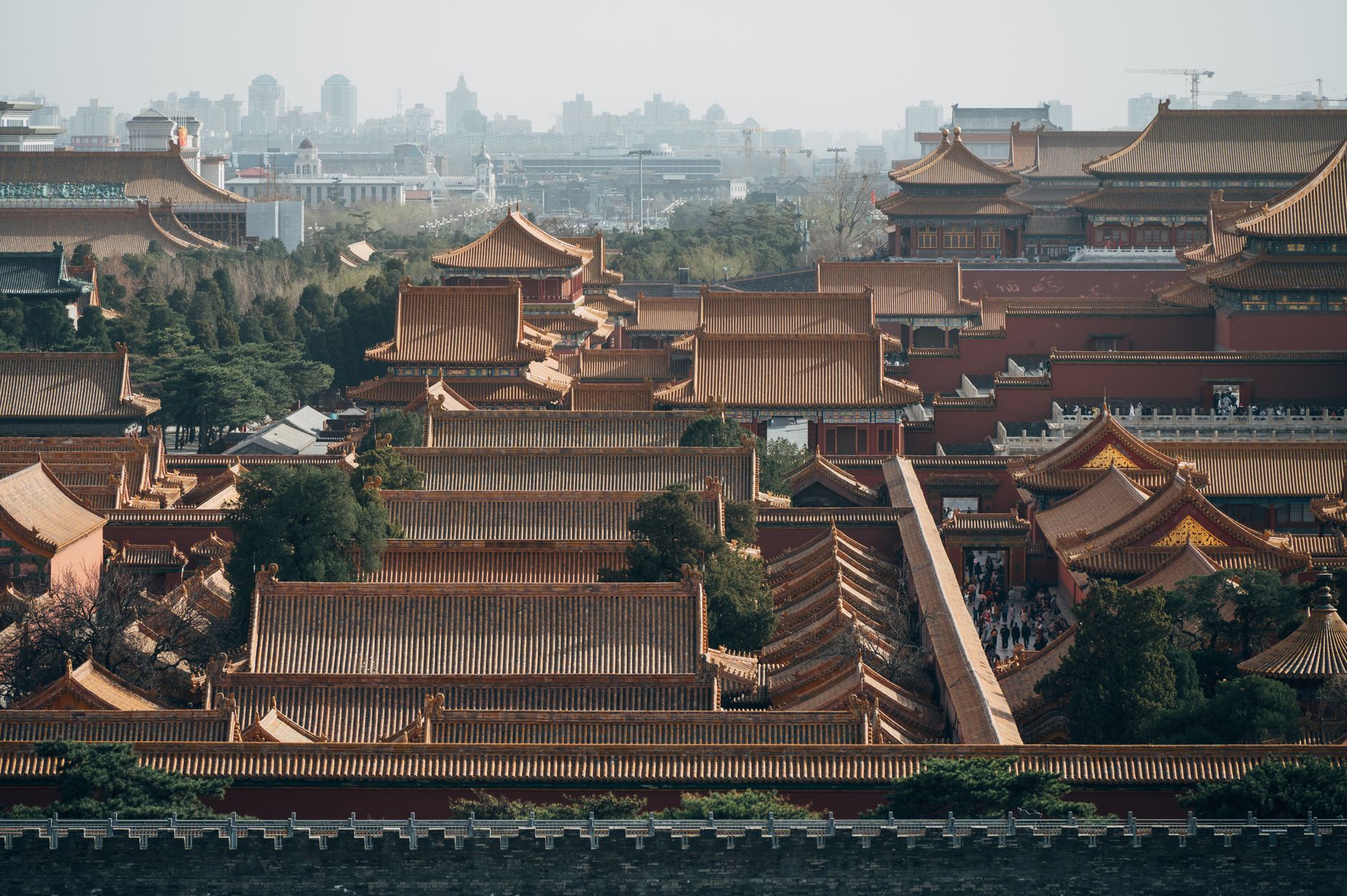
Table of Contents
- The shape of the trip
- Which order: the case for flying into Beijing
- The train legs, priced
- Days 1–5: Beijing
- Days 6–9: Xi’an
- Days 10–14: Shanghai
- Cutting it to ten days
- What a Beijing Xi’an Shanghai itinerary costs
- Visas and the geographic trap
- Booking: what needs doing in advance
- What people get wrong
- Frequently Asked Questions
- Where to go next
The shape of the trip
| Days | Where | Nights | Getting there |
|---|---|---|---|
| 1–5 | Beijing | 4 | International arrival |
| 5 | Beijing → Xi’an | — | G train, 4h30m–6h, ¥515–620 |
| 6–9 | Xi’an | 3–4 | — |
| 9 | Xi’an → Shanghai | — | G train, ~6h, ¥659–773 |
| 10–14 | Shanghai | 4–5 | — |
| 14 | Fly home from Pudong | — | Open-jaw ticket |
Four nights in Beijing, three or four in Xi’an, four or five in Shanghai, two travel days absorbed into the middle of the trip rather than added to it. Two train legs, both done in daylight, both comfortable. No internal flights and no backtracking.
If your dates are fixed and your flights are not open-jaw, the same route works in reverse — Shanghai, Xi’an, Beijing — and there is a case for it, which is that you end with the Great Wall rather than a skyline. It is a matter of taste. What does not work is Shanghai, Beijing, Xi’an, Shanghai, which adds a wasted six hours and roughly ¥700.
Which order: the case for flying into Beijing
Three arguments, in descending order of strength.
Jet lag. Beijing is the most demanding of the three: the sites are enormous, the walking distances are long, and the Forbidden City on four hours’ sleep is a slog. But that cuts both ways — you also have the most energy at the start of a trip. The real argument is that Shanghai is the easiest city to be tired in. English is more widely spoken, distances are shorter, and if you write off an afternoon in a café nothing is lost. Put the easy city at the end.
Chronology. Beijing is Ming and Qing, Xi’an is Qin and Tang — two thousand years older — and Shanghai is 1920s and 1990s. Travelling Beijing to Shanghai is not chronological, but it is a coherent narrative: the imperial capital, then the older imperial capital that explains it, then the treaty port that rejected all of it. Ending in Lujiazui, having started in the Forbidden City, is a genuinely good final image.
Flights. Open-jaw tickets into Beijing and out of Shanghai are widely available and usually cost within a few per cent of a return. Check before assuming a return is cheaper; it very often is not, and even when it is, the difference rarely covers the extra day and the extra train fare.
The counter-argument is real and worth stating: if you are arriving from Europe or North America and have any choice, Shanghai’s Pudong has better long-haul connectivity and Shanghai is the softer landing. If jet lag hits you hard, start soft and end with the Wall.
The train legs, priced
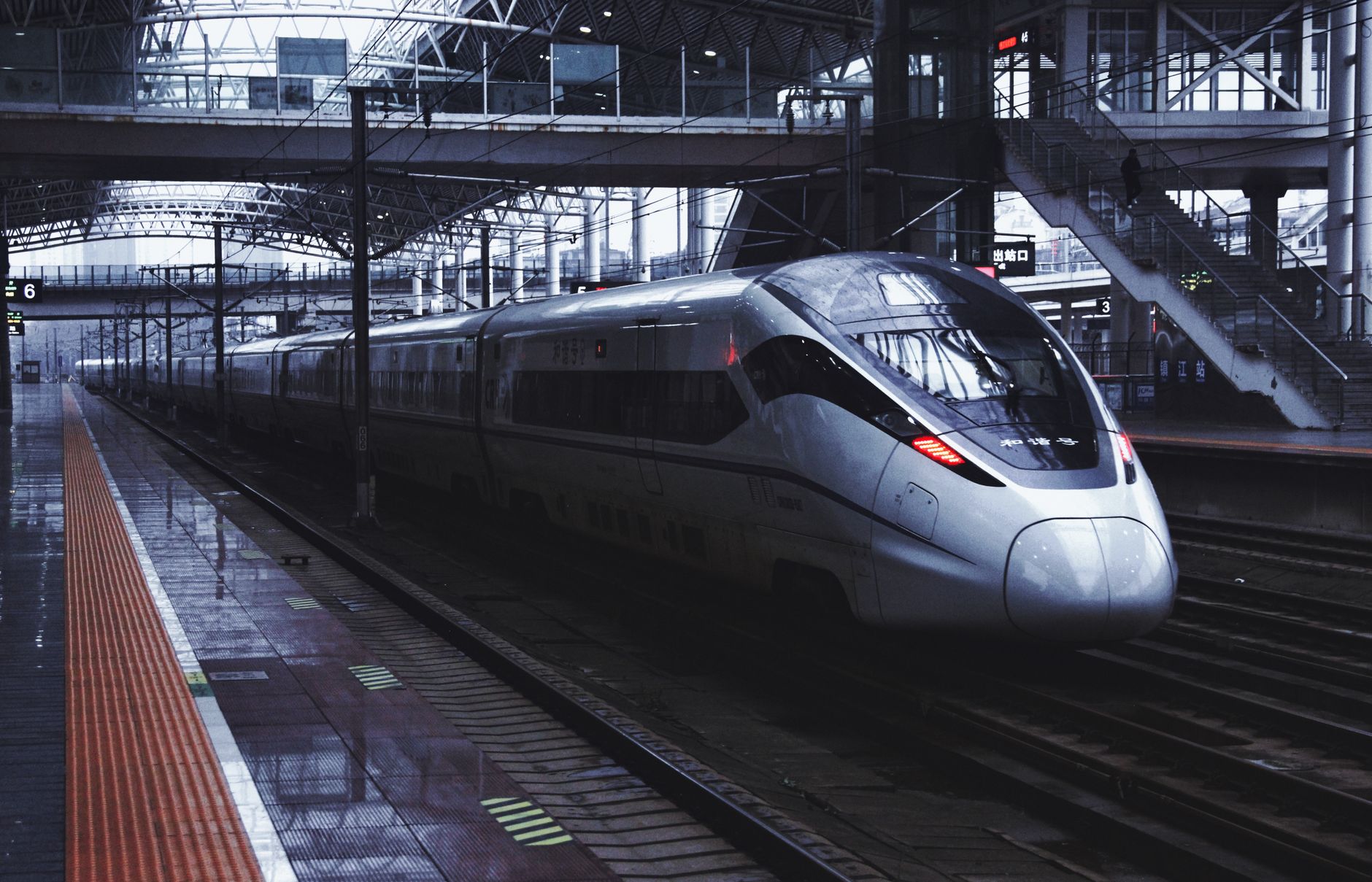
Both legs are high-speed G services and both are straightforward.
Beijing West or Beijing → Xi’an North. Roughly 4h30m to 6h depending on the service, around ¥515–620 in second class. Frequent departures through the day. Xi’an North is well outside the old city — allow 30 to 40 minutes on Metro Line 2 to get to the walled centre.
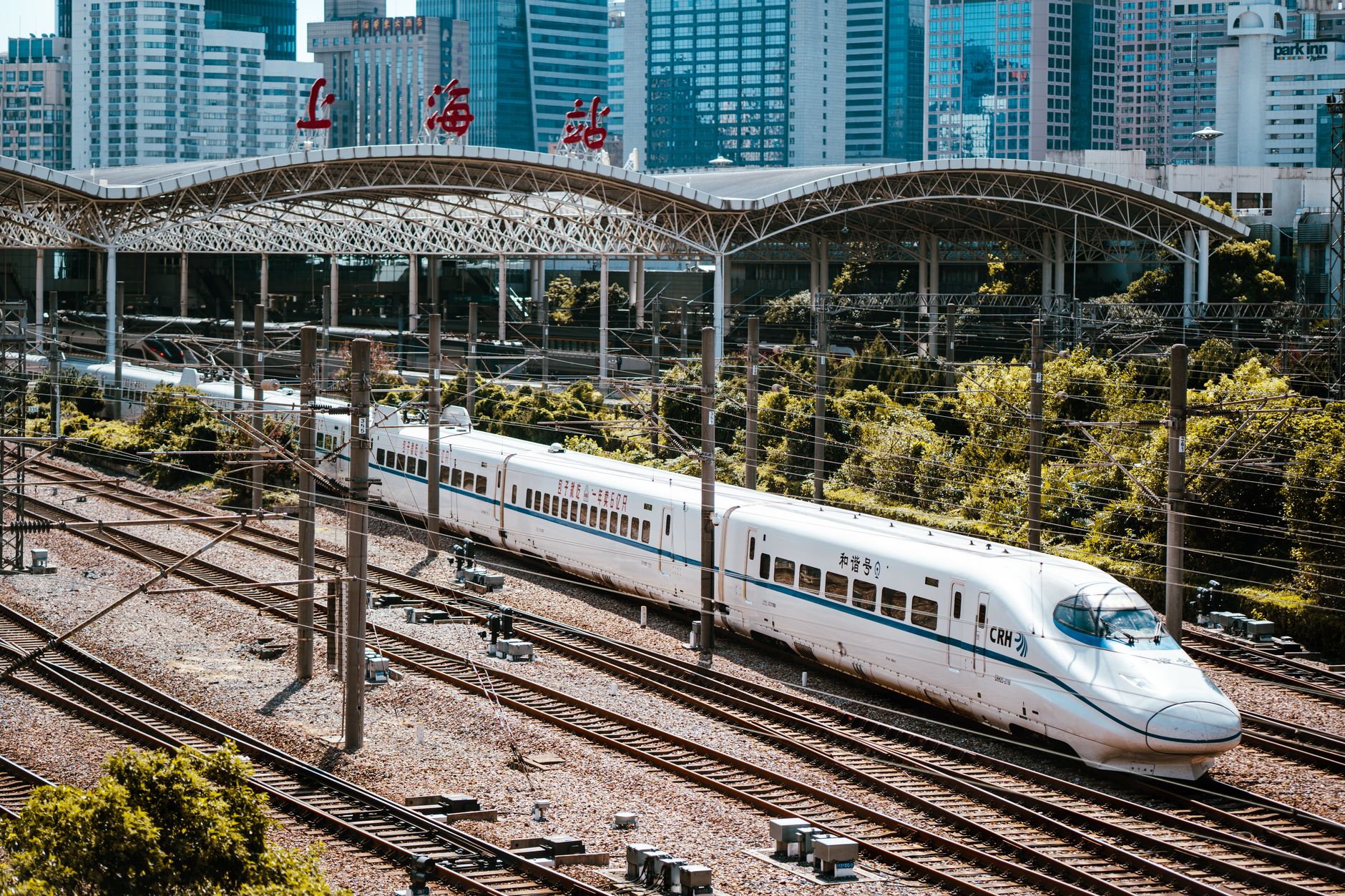
Xi’an North → Shanghai Hongqiao. About six hours, ¥659–773 in second class, with something in the region of 19 to 28 G trains a day. First class runs about 1.7 times the fare and is worth considering on a six-hour leg. Hongqiao is 35 to 50 minutes from central Shanghai on Metro Lines 2 or 10.
The mechanics that matter, because they differ from European rail:
- Tickets go on sale 14 days before departure. The sales window is 15 days including the day you buy, and the release time depends on the departure station, so check it on 12306. No earlier window, no advance-purchase discount, so nothing is lost by waiting — only availability.
- Your passport is the ticket. E-ticket only; you tap the passport at the gate, the platform barrier and on exit. No collection window.
- The gate closes three to five minutes before departure and is not reopened. Arrive 40 minutes early at a major station.
- Book through 12306 (the official app, no fee, accepts foreign passports and Visa/Mastercard but not American Express) or Trip.com (a service fee, but a checkout that handles foreign cards more reliably and English support if things go wrong).
- Second class is 3+2 with a power socket at every seat and is perfectly comfortable for six hours. Seat letters run A B C D F — there is no E; A and F are windows.
Days 1–5: Beijing
Day 1 — arrive. Get to the hotel, walk somewhere flat, eat early, sleep. Do not schedule the Forbidden City for a landing day; it is seven hundred metres of courtyards end to end and you will resent it.
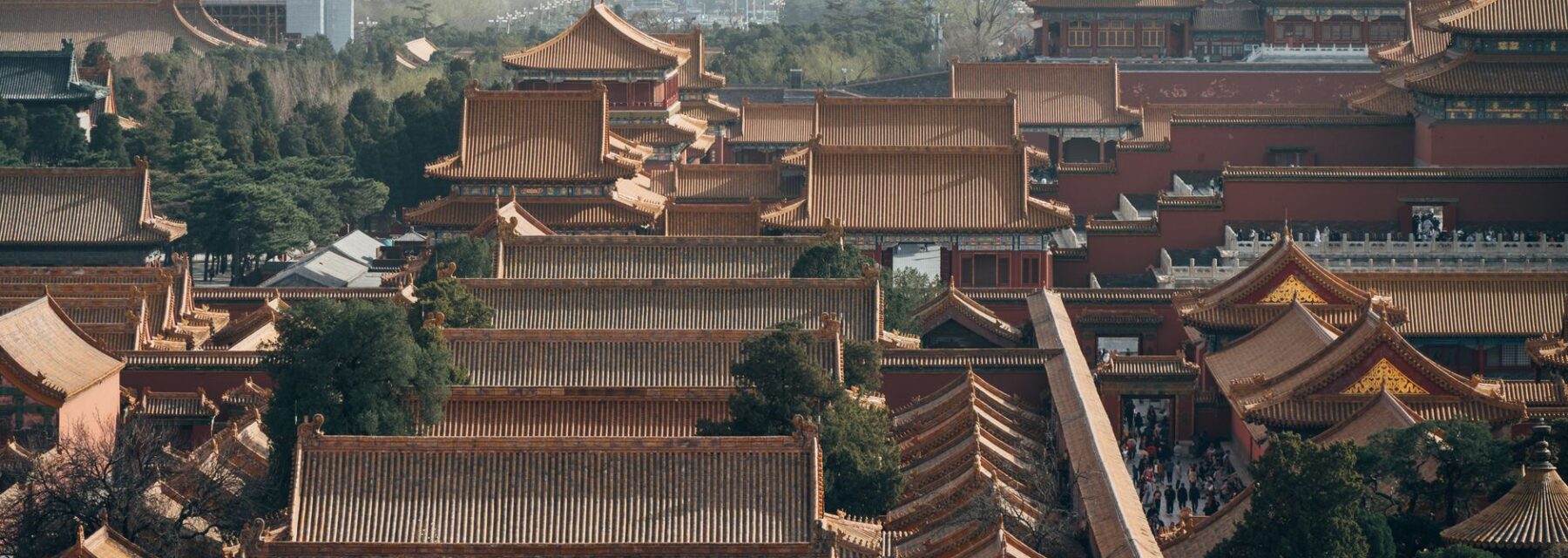
Day 2 — Tiananmen Square, the Forbidden City, Jingshan Park. The Palace Museum charges ¥60 in high season (1 April to 31 October) and ¥40 in low season, and every ticket must be booked online in advance — the current booking procedure is worth reading before you try it — up to seven days ahead, and you cannot buy at the gate. This catches an enormous number of visitors. Book it the moment your dates are fixed. Afterwards, climb Jingshan Park directly north for the view back over the golden roofs, which is the photograph you actually want and costs a couple of yuan.
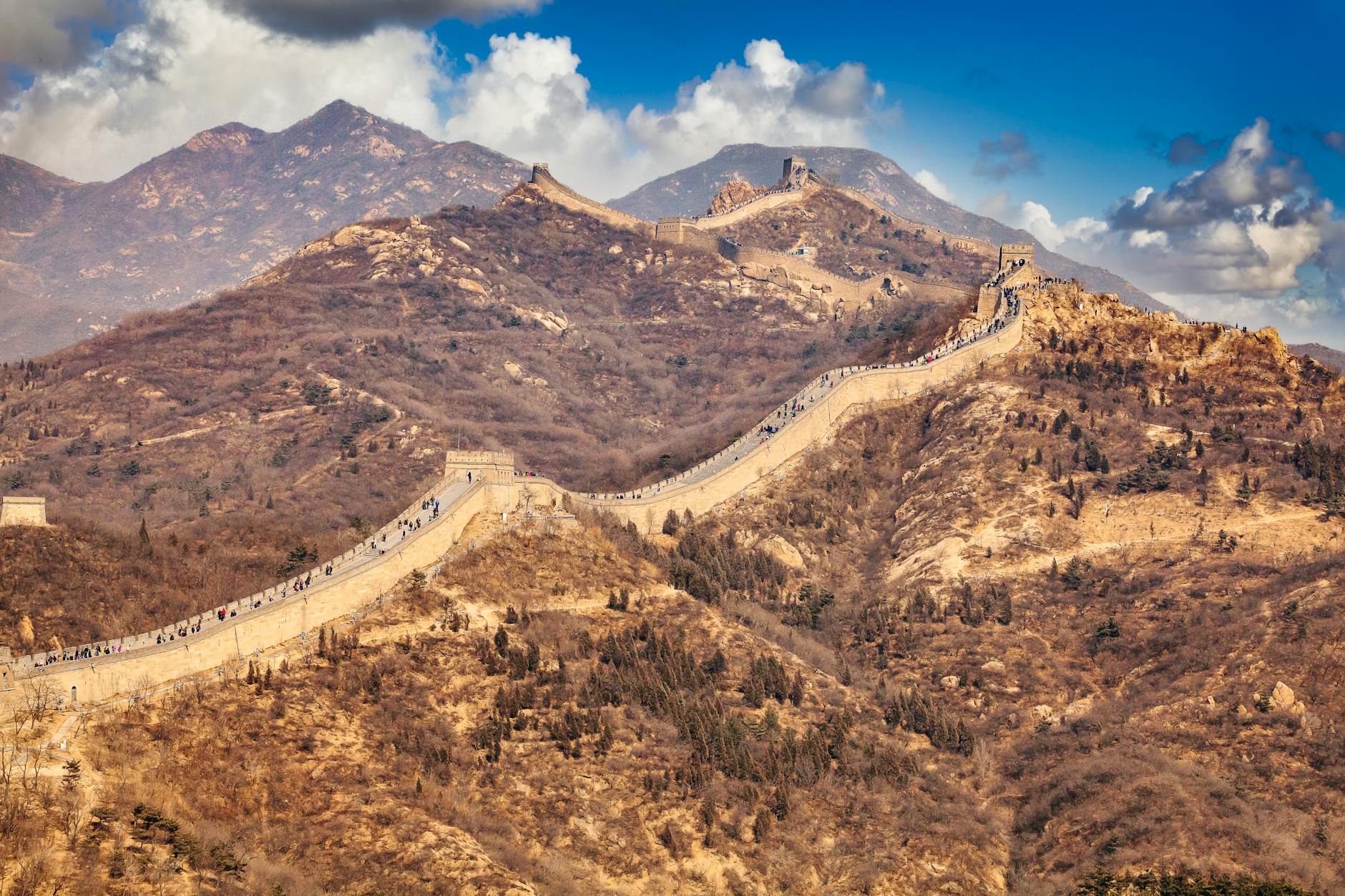
Day 3 — the Great Wall. Mutianyu is the section to choose: restored, well managed, a cable car up and a toboggan down, and far less crowded than Badaling. It is about 90 minutes from the centre. Go early. This is the day that justifies the whole trip for most people, so do not put it last in case of weather.
Day 4 — Temple of Heaven and a hutong afternoon. The Temple of Heaven park is at its best before nine, when it fills with people doing tai chi, ballroom dancing and calligraphy on the paving with water brushes. Then the hutongs around Nanluoguxiang or, better, the quieter lanes off Gulou — grey-brick alleys, courtyard houses, and the version of Beijing that is disappearing fastest.
Day 5 — Summer Palace, then the train. The Summer Palace in the morning, back for lunch, and an afternoon train to Xi’an. Or swap in the 798 Art District if you would rather have a modern day. Take the earlier train — arriving in a new city at nine in the evening is a worse experience than losing two hours of Beijing.
Days 6–9: Xi’an
Xi’an is the city people allocate two days to and wish they had given four. It was the capital for thirteen dynasties, it was the eastern terminus of the Silk Road, and it has the best street food in China.
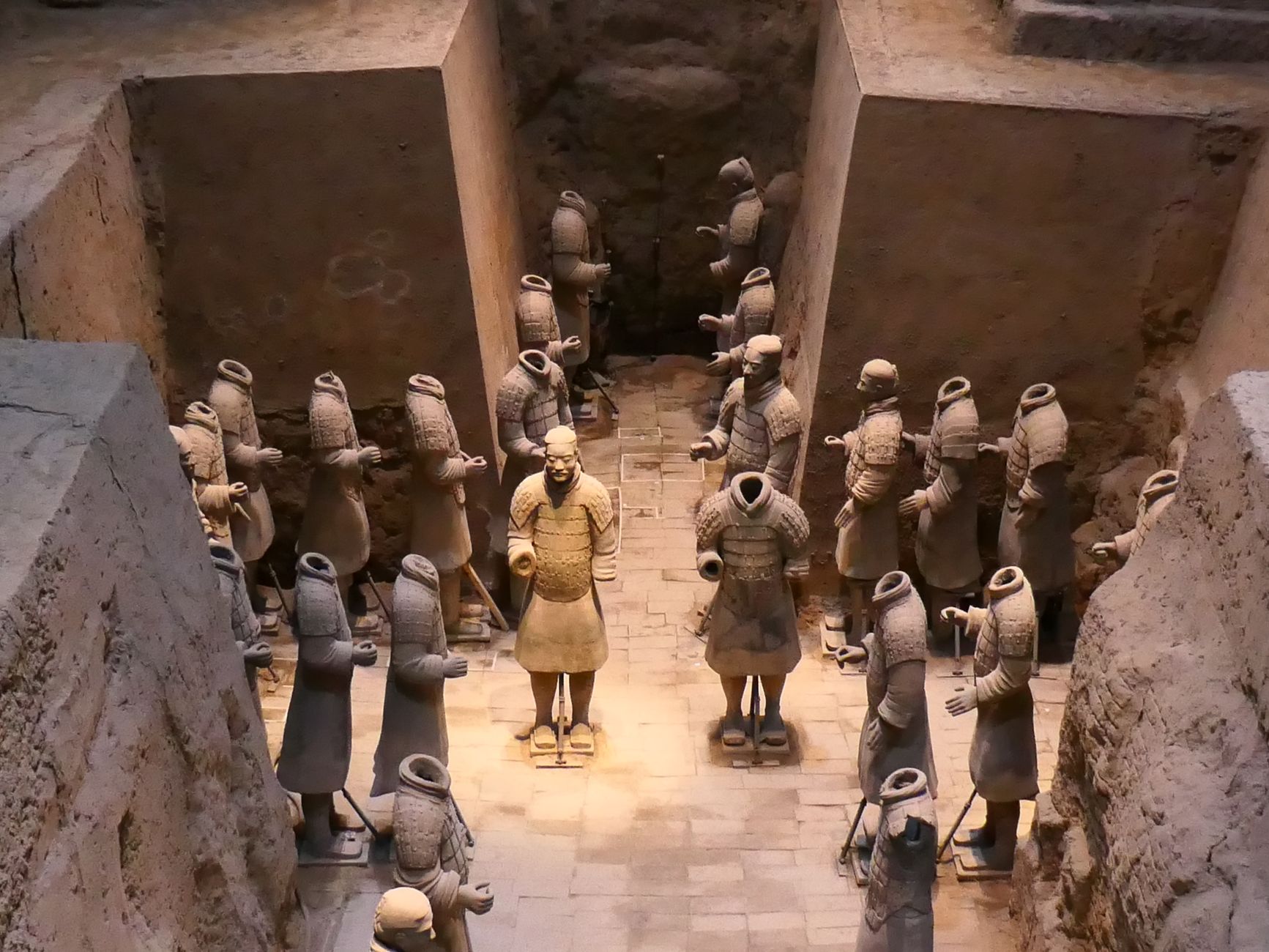
Day 6 — the Terracotta Army. ¥120 all year, book online in advance, and your passport is your ticket — the booking must match it exactly. Tickets are released up to seven days ahead. It is about an hour east of the city. Go early, do Pit 1 last rather than first (most people do the reverse and are worn out by the time they reach the best one), and give it a full half-day.
Day 7 — the city wall and the Muslim Quarter. The Ming city wall is 14 kilometres around, completely intact, and you can hire a bicycle on top of it — the single best thing to do in Xi’an. Entry is ¥54; the South Gate is open 08:00–22:00 and the North, East and West gates 08:00–19:00. Book through the official WeChat mini-programme, which releases tickets seven days ahead. Then the Muslim Quarter for the evening: hand-pulled noodles, roujiamo, persimmon cakes, and the Great Mosque tucked behind the food streets, which is a Chinese courtyard temple that happens to be a mosque and is one of the strangest and best buildings in the country.
Day 8 — Big Wild Goose Pagoda and the Shaanxi History Museum. The pagoda is ¥10 for the grounds with a further ¥25–30 to climb, and needs no advance booking. The Shaanxi History Museum is the best regional museum in China and is free, which means it is also heavily booked — reserve ahead.
Day 9 — a half day, then the train. The Han Yangling mausoleum, the Bell and Drum Towers, or simply the wall again at a different hour. Afternoon train to Shanghai, arriving in the evening.
If you are pressed, Xi’an compresses to three nights without much pain. Two nights is a mistake — you will spend one of your two days entirely at the Terracotta Army.
Days 10–14: Shanghai
After ten days of imperial and ancient China, Shanghai reads as a different country, which is exactly why it belongs at the end.
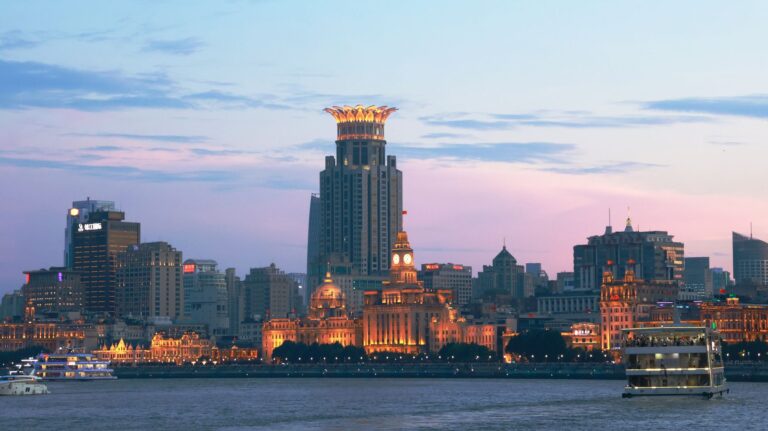
Day 10 — arrive, then the Bund at dusk. Drop the bags, take Line 2 or 10 in from Hongqiao, and walk the Bund as the lights come on. Nothing else needed.
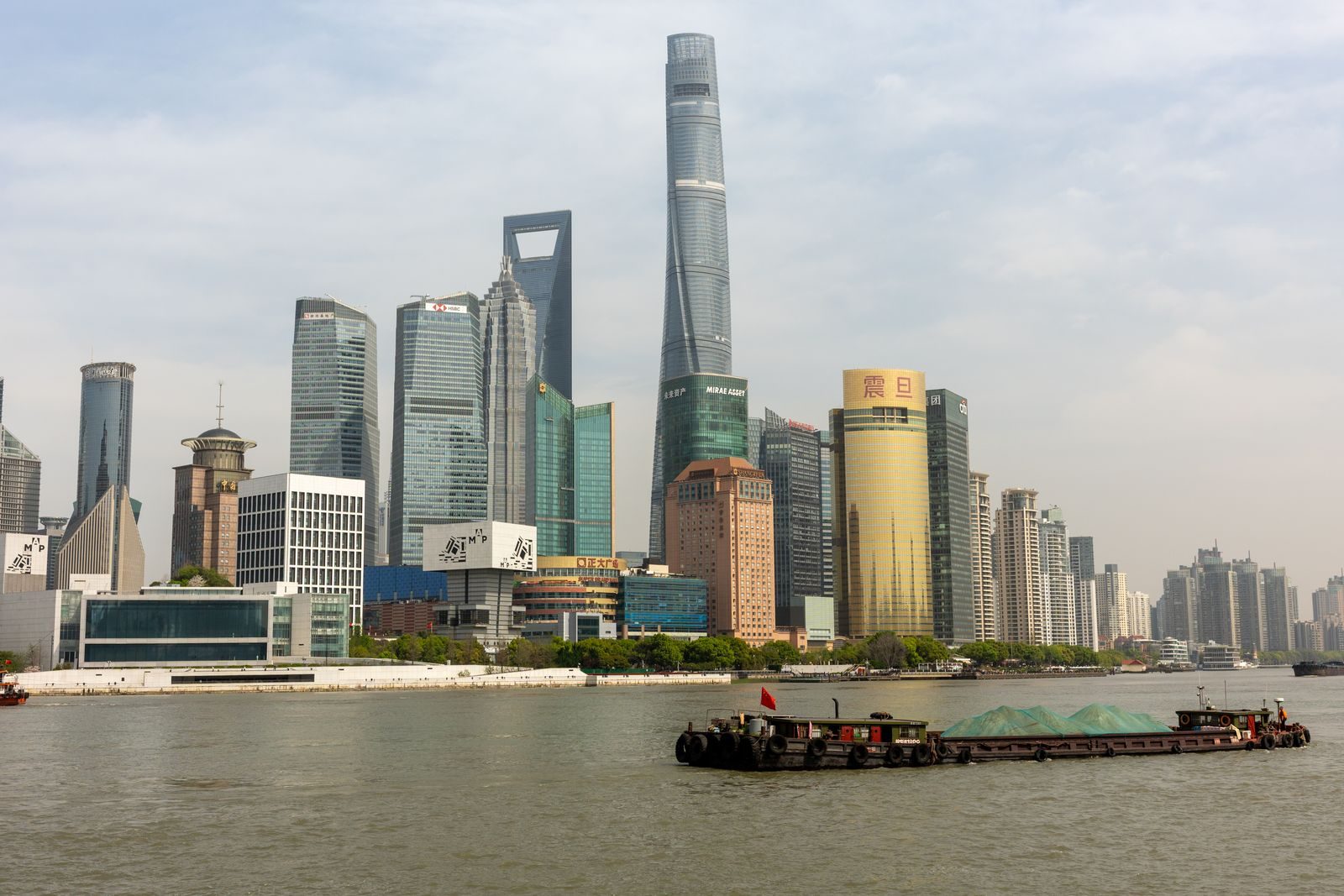
Day 11 — the Bund by day, Yu Garden, the Old City, then Lujiazui. Walk the 1920s waterfront properly in the morning, cross to Yu Garden and the bazaar around it, and take the ¥2 public ferry across to Pudong in the late afternoon. Go up one tower, not three.
Day 12 — the former French Concession. Wukang Road, Anfu Road, Tianzifang or Xintiandi, coffee, and no schedule. This is the day people remember, and it is the one that most itineraries cut.
Day 13 — a day trip or a museum day. Suzhou is 25 minutes away by train and has the classical gardens; Hangzhou is 45 minutes and has West Lake. Either makes a very good day. If you would rather stay put, the Shanghai Museum and the Power Station of Art fill it comfortably. See our day trips from Shanghai for the options.
Day 14 — a slow morning, then Pudong. Allow 60 to 75 minutes from central Shanghai to the airport on Line 2, or take the Maglev from Longyang Road. Do not cut this fine.
Our five-day Shanghai itinerary expands these days properly, and the itineraries hub has versions for every length.
Cutting it to ten days
Ten days is the most common real-world constraint and it works, with one honest compromise.
- Beijing: 4 nights. Do not cut this. The Wall alone needs a day and weather can take it from you.
- Xi’an: 2 nights. This is the compromise. You get the Terracotta Army on one day and the wall plus the Muslim Quarter on the other, and you skip the museums.
- Shanghai: 3 nights. The Bund and Yu Garden on one day, the former Concession on another, Lujiazui and a museum on the third. No day trip.
What you lose is depth in Xi’an and the Suzhou day. What you keep is all three cities and both train legs. The alternative — dropping Xi’an entirely and doing seven days across Beijing and Shanghai — is a perfectly good trip and a fundamentally different one; you would be choosing to skip ancient China altogether.
Below ten days, drop a city rather than thinning all three. Shanghai against Beijing makes the case for each if you have to pick two.
What a Beijing Xi’an Shanghai itinerary costs
Per person, fourteen days, excluding international flights.
| Item | Budget | Mid-range | Comfortable |
|---|---|---|---|
| Accommodation, 13 nights | ¥1,700 (hostel/budget) | ¥5,200 (3–4 star) | ¥13,000+ (4–5 star) |
| Train: Beijing–Xi’an | ¥515 (2nd) | ¥560 (2nd) | ¥950 (1st) |
| Train: Xi’an–Shanghai | ¥659 (2nd) | ¥720 (2nd) | ¥1,250 (1st) |
| Attractions and entry | ¥600 | ¥1,100 | ¥1,800 |
| Food, 14 days | ¥1,100 (street and noodles) | ¥2,800 | ¥6,000+ |
| Local transport | ¥350 | ¥700 | ¥1,600 (taxis) |
| Total | ≈ ¥4,900 | ≈ ¥11,100 | ≈ ¥24,600 |
China is cheap to travel in and expensive to sleep in — accommodation is by far the largest line and the one where your choices matter most. Food at the street level is remarkable value: a bowl of hand-pulled noodles in Xi’an is ¥15 to ¥25, and a good one is as memorable as anything you will eat at ten times the price. Our guide to what a Shanghai trip costs breaks down the third leg in more detail.
Visas and the geographic trap
This is the part that quietly ruins itineraries, so check it before booking anything.
30-day visa exemption. Most of Western Europe, plus Japan, South Korea, Australia, New Zealand, Brazil and others. Up to 30 days, no geographic restriction, any port of entry and exit, no onward ticket required. If you hold one of these passports, this itinerary presents no problem at all.
240-hour (10-day) visa-free transit. 57 countries, including the US, Canada and the UK. Counted from midnight after arrival, requires a confirmed onward ticket to a third country or region, and — this is the trap — travel is limited to 24 designated provinces and municipalities. Beijing, Shaanxi (Xi’an) and Shanghai are all inside the zone, so this exact route is legal on transit. But ten days is ten days: a fourteen-day version of this itinerary does not fit, and you would need to compress to the ten-day plan above and leave on time.
L tourist visa. 30 to 60 days per entry, no geographic limit, no onward-ticket condition. If you want fourteen days and hold a US, Canadian or UK passport, this is what you need. Ten-year multiple-entry visas are again being issued to some nationalities.
Read the 240-hour transit rules and the 30-day exemption against your own passport before you book flights, and see how to apply for a tourist visa if you need the L.
Booking: what needs doing in advance
China has moved almost entirely to advance online booking with passport verification, and turning up at a gate to buy a ticket increasingly does not work.
- Forbidden City — must be booked online, up to seven days ahead. No same-day gate sales. ¥60 April–October, ¥40 November–March.
- Terracotta Army — ¥120, book online, released seven days ahead, passport is the ticket.
- Xi’an city wall — ¥54, official WeChat mini-programme, seven days ahead.
- Shaanxi History Museum — free and therefore heavily booked. Reserve as early as the system allows.
- Trains — 14 days ahead, on 12306 or Trip.com; check the departure station’s release time on 12306.
- Big Wild Goose Pagoda — ¥10 grounds, ¥25–30 to climb, no reservation needed.
- Hotels — not every Chinese hotel is licensed to accept foreign guests. Book through Trip.com or Booking.com, which filter for it. The risk rises in smaller towns; it is not really an issue in these three cities.
Set up Alipay or WeChat Pay before you fly. Almost every booking system, ticket gate and noodle shop routes through one of them, and a foreign card links to both. Register on 12306 weeks ahead so the passport verification has cleared before you need it.
What people get wrong
Booking a return flight to Shanghai. Open-jaw into Beijing and out of Shanghai usually costs about the same and saves a full day and a train fare.
Giving Xi’an two nights. One of them goes entirely to the Terracotta Army. Three is the minimum that lets you see the city.
Not pre-booking the Forbidden City. There are no gate sales. People fly across the world and stand outside it.
Choosing Badaling for the Great Wall. Mutianyu is better in every respect that matters.
Assuming the 240-hour transit covers a fourteen-day trip. It covers ten days, and it is counted from midnight after you arrive.
Flying between the cities. Beijing–Xi’an and Xi’an–Shanghai are both comfortably inside the range where the train wins on total door-to-door time, and Chinese domestic flights are delay-prone.
Arriving fifteen minutes before a train. Security, the passport check and the walk to the gate will eat that, and the gate shuts before the train moves.
Scheduling the Great Wall on the last Beijing day. One bad-weather day and you have lost it entirely.
Frequently Asked Questions
Is two weeks enough for Beijing, Xi’an and Shanghai?
Comfortably, and it is close to ideal: four nights in Beijing, three or four in Xi’an, four or five in Shanghai, with two daytime train legs absorbed in between. Ten days also works if you cut Xi’an to two nights and drop the Shanghai day trip.
Should I fly into Beijing or Shanghai?
Beijing, on an open-jaw ticket out of Shanghai. It avoids backtracking, puts the most demanding city first while you have energy, and leaves the easiest one for when you are tired. If jet lag hits you hard, reverse it — Shanghai is a much softer landing.
How long is the train from Beijing to Xi’an?
Four and a half to six hours on a G train, around ¥515–620 in second class, with frequent departures. Xi’an North station is 30 to 40 minutes from the walled city centre on Metro Line 2.
How long is the train from Xi’an to Shanghai?
About six hours, ¥659–773 in second class, with roughly 19 to 28 G trains a day. First class is around 1.7 times the fare and is worth considering on a leg this length.
Should I fly instead of taking the train?
No. Both legs are inside the range where high-speed rail beats flying door to door once you account for airport transfers and security, and Chinese domestic flights are notably delay-prone. Fly only for Chengdu, Yunnan, Sanya, Lhasa or Ürümqi, which are not on this route.
Do I need to book attraction tickets in advance?
Yes, for most of them. The Forbidden City must be booked online up to seven days ahead with no same-day sales. The Terracotta Army and the Xi’an city wall both release tickets seven days out. The Shaanxi History Museum is free and books out fast. Your passport is the ticket at almost all of them and the name must match exactly.
How much does a two-week China trip cost?
Excluding international flights, roughly ¥4,900 per person on a budget, ¥11,100 mid-range and ¥24,600 comfortable. Accommodation is the largest line by a wide margin; food at street level is remarkably cheap.
Can I do this trip on visa-free transit?
Only the ten-day version. The 240-hour transit rule allows ten days counted from midnight after arrival, requires an onward ticket to a third country or region, and restricts you to 24 designated provinces and municipalities — Beijing, Shaanxi and Shanghai are all inside them. For fourteen days you need an L tourist visa, unless your passport qualifies for the 30-day exemption.
Which Great Wall section should I visit?
Mutianyu. It is restored, well managed, about 90 minutes from central Beijing, has a cable car up and a toboggan run down, and is far less crowded than Badaling. Go early and do not leave it to your last day in case the weather turns.
Is Xi’an worth including?
Yes. It is the only one of the three that gives you pre-imperial and Tang-dynasty China, the Terracotta Army is genuinely extraordinary, the 14-kilometre Ming city wall is the best cycle ride in the country, and the Muslim Quarter is the best street food on the route. Cutting it turns a China trip into a two-city trip.
What order should I see the three cities in?
Beijing, Xi’an, Shanghai, moving in one direction. Reverse it if your flights make that cheaper. Never Shanghai–Beijing–Xi’an–Shanghai, which wastes six hours and about ¥700 on a repeated leg.
Do I need cash?
Very little. Alipay and WeChat Pay accept foreign cards and work nationwide, including for train tickets, museum bookings and street food. Carry a few hundred yuan as a fallback and set the apps up before you fly.
Where to go next
The Shanghai leg is the one this site knows best. Build it out with the five-day itinerary or the seven-day version if you decide to weight the trip differently, and use how to plan a trip to Shanghai for the sequencing of bookings.
Before you commit to the route, read Shanghai against Beijing — if you are cutting to a two-city trip, that is the decision you are actually making. And check first-time advice for Shanghai plus what to pack, most of which applies equally to all three cities and to a fortnight of train travel between them.
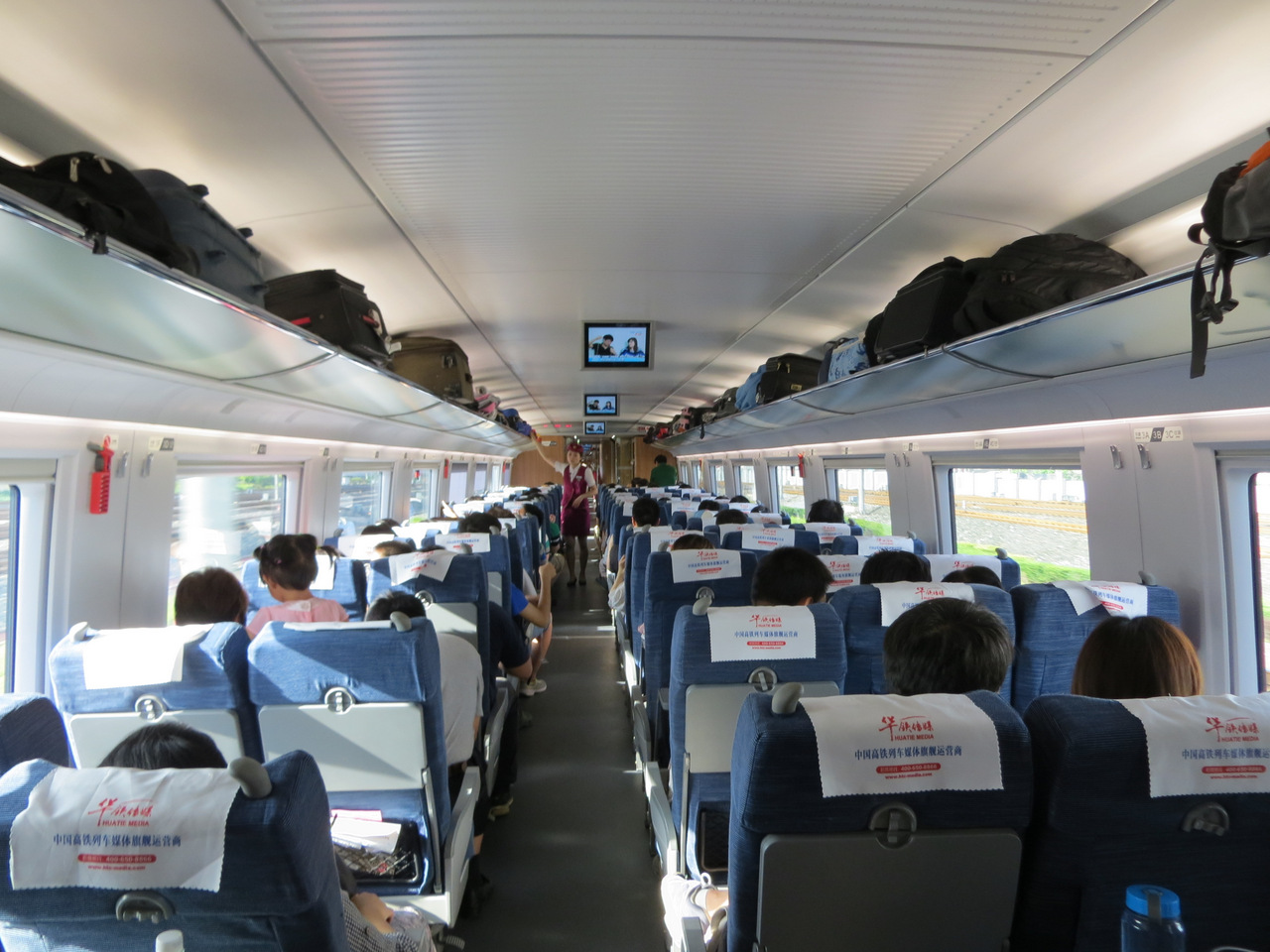
Photo credits.
Second class on a CRH3C train: Coche Siemens CRH3C de segunda clase by galio, CC BY-SA 2.0, via Wikimedia Commons.