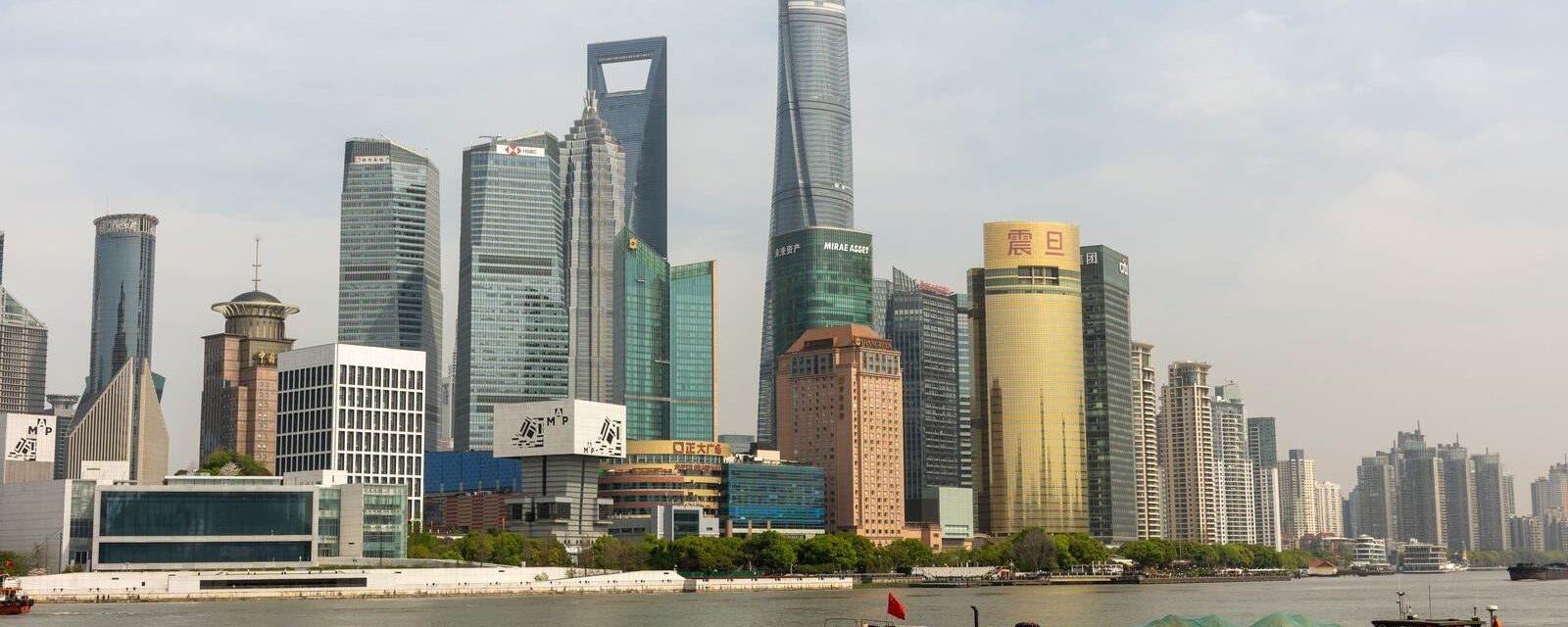
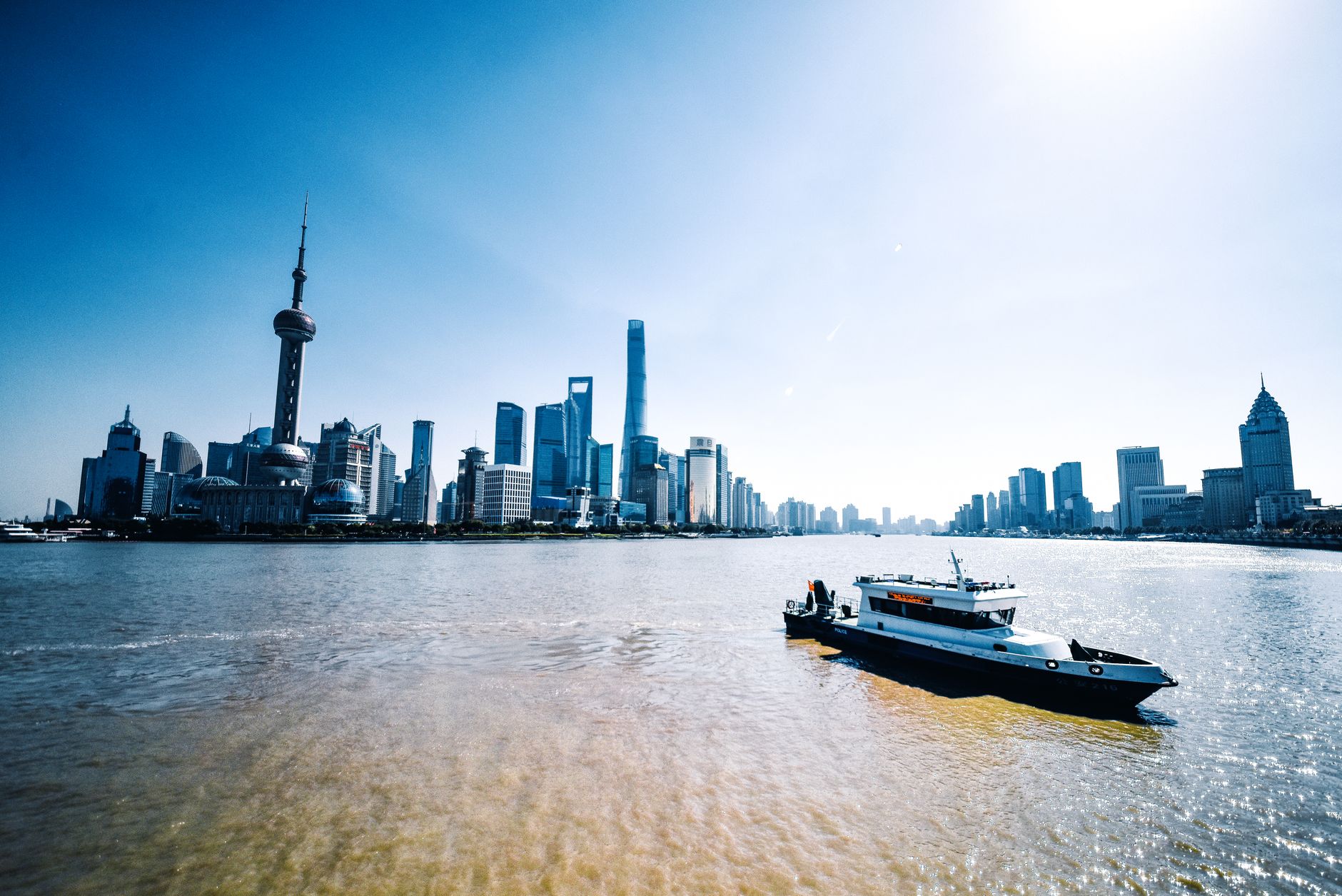
In 1990 the east bank of the Huangpu River opposite the Bund was farmland, warehouses and low-rise housing, and Shanghainese had a saying about preferring a bed in Puxi to a house in Pudong. Thirty-five years later the three supertall towers, the Oriental Pearl and the riverside promenade that make up Lujiazui Shanghai occupy roughly a square kilometre of that same ground, and the skyline they form is the image the whole country uses to mean modernity.
Almost every visitor sees it from the Bund and stops there, which is a mistake. Lujiazui is genuinely walkable, and doing it properly — the riverside path, the raised ring bridge, one deck rather than three, the ¥2 ferry back across — is a half-day that explains the city far better than a photograph from the other side does. This guide covers the thirty-year story, a practical loop with the walking times, which tower to go up and which to skip, and what the district does badly.
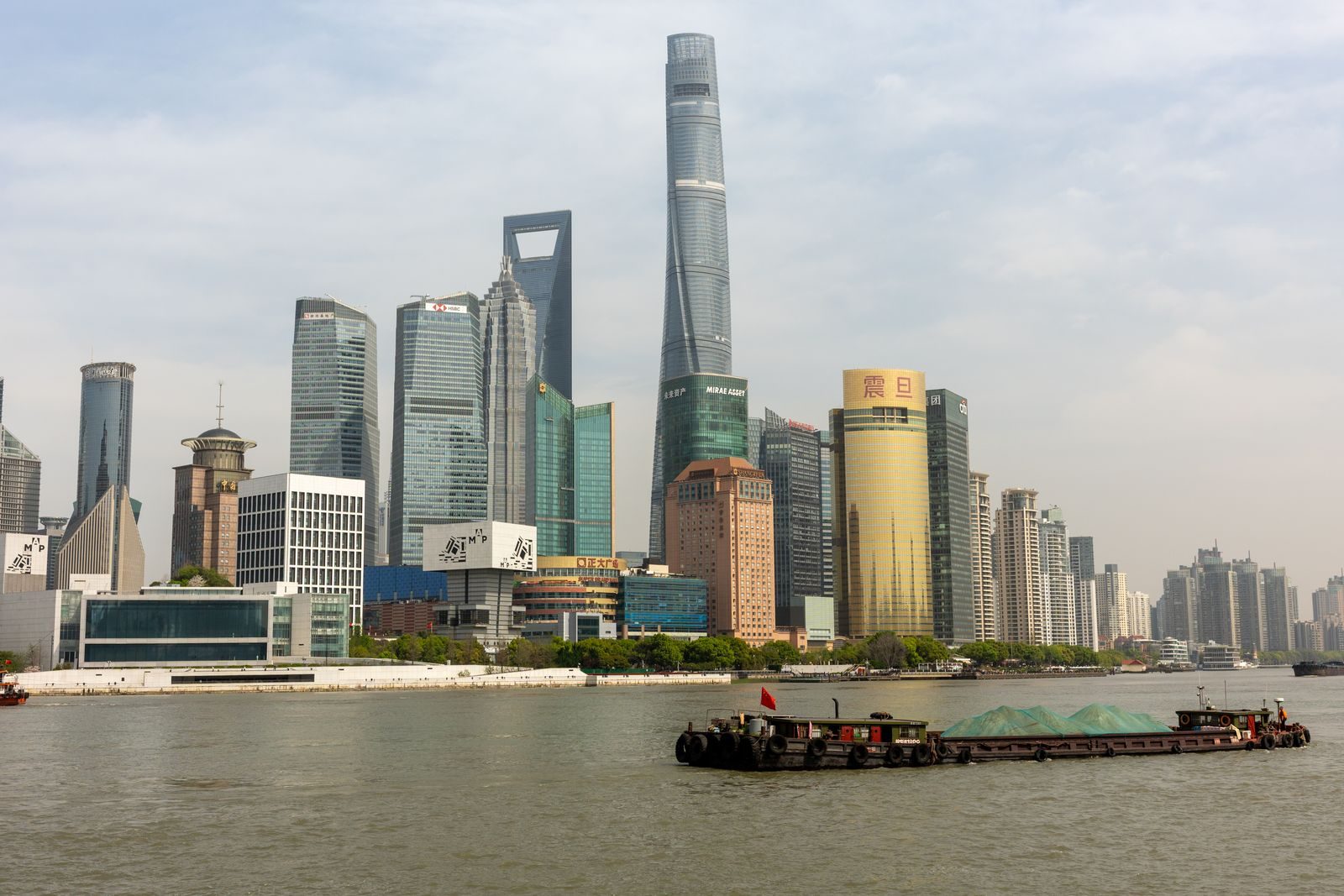
Table of Contents
- How Lujiazui was built in thirty years
- The towers, in order of height
- Which observation deck to choose
- The Lujiazui Shanghai walking loop
- The Binjiang riverside walk
- The circular pedestrian bridge
- IFC, Super Brand Mall and eating in Lujiazui
- The ¥2 ferry back
- Photographing the Pudong skyline
- Practicalities
- What Lujiazui does badly
- What people get wrong
- Frequently Asked Questions
- Where to go next
How Lujiazui was built in thirty years
The Pudong New Area was announced in April 1990, and the Lujiazui Finance and Trade Zone was carved out of the bend in the river directly opposite the Bund. The site was chosen for exactly that reason: whatever was built there would be seen from the most photographed waterfront in China, every day, by everyone.
The sequence is easy to read off the skyline once you know it.
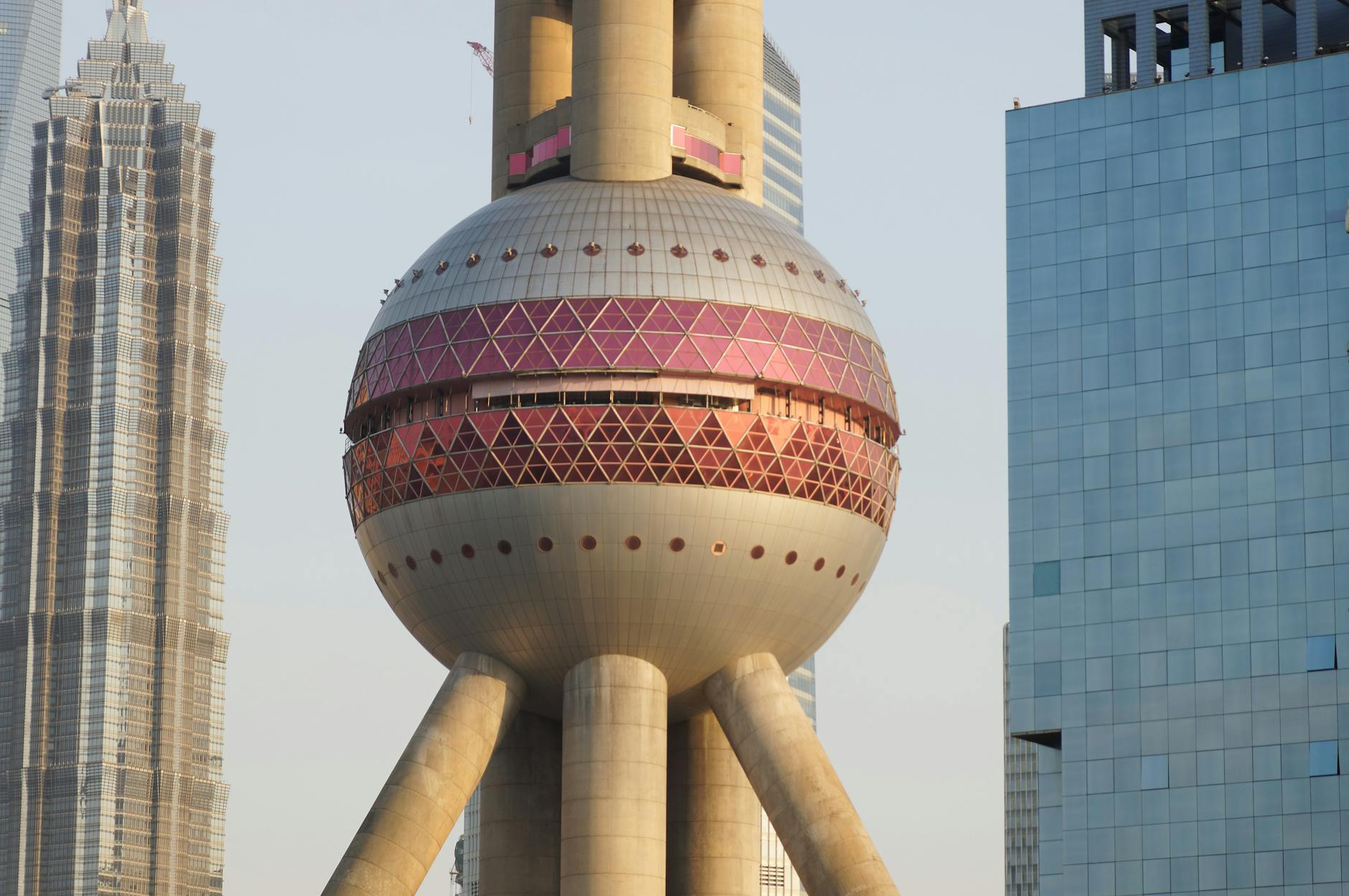
- Oriental Pearl Radio and Television Tower, 1994. 468 metres, three spheres on a tripod, and for a decade the only thing on the skyline. It is not a very good building and it is completely essential to the composition — take it away and the whole view stops working.
- Jin Mao Tower, 1999. 420.5 metres, a stepped pagoda form built on a repeating ratio of eight. The first of the supertalls and still the most architecturally satisfying of them.
- Shanghai World Financial Center, 2008. 492 metres, and universally known as the bottle opener because of the trapezoidal void at the top, originally designed as a circle and changed after objections that it resembled a rising sun.
- Shanghai Tower, completed 2015. 632 metres, the tallest building in China, a twisted glass skin rotating 120 degrees over its height — a form that reduces wind load by around a quarter and paid for itself in structural steel. The engineering behind the twist is unusually well documented for a building of its age.
Four towers, twenty-one years, on land that grew rice. The reason this matters to a visitor rather than an urbanist is that the district is legible: you can stand in one place and see the entire arc of a country’s economic transformation, arranged by date, in order of height.
The towers, in order of height
| Building | Height | Completed | Deck | Adult ticket | Hours |
|---|---|---|---|---|---|
| Shanghai Tower | 632 m | 2015 | 546 m (F118) | ¥180 | 08:30–22:00, last entry 21:30 |
| Shanghai World Financial Center | 492 m | 2008 | 474 m (F100) | — | Closed since 2023 |
| Oriental Pearl | 468 m | 1994 | 259 / 263 / 351 m | ¥199 combined | 09:00–21:00, last entry 20:30 |
| Jin Mao Tower | 420.5 m | 1999 | 340 m (F88) | ~¥120–160 | 08:30–21:30, last entry 21:00 |
Note the second row, because it catches a great many people. The SWFC observatory has been closed since 2023 for renovation with no announced reopening date. It appears as open in a large number of guidebooks and competitor articles. The rest of the building runs normally — offices, shops, the Park Hyatt on floors 79 to 93, and the restaurants and bar on 87 and 91 — but the observation floors are not selling tickets.
Which observation deck to choose
The honest answer is that you should go up one of them, not three, and probably not the tallest.
Shanghai Tower, ¥180, puts you at 546 metres on floor 118, reached by a lift that covers the distance in about 55 seconds at 20.5 metres per second. It is the highest and the newest, the views are enormous, and there is no glass floor — the windows are set back behind a low barrier, which disappoints people expecting a vertigo experience. Queues run 20 to 40 minutes ordinarily and up to two hours on public holidays.
Oriental Pearl, ¥199, is the better ticket for most visitors and almost nobody realises why. You get the 259-metre Transparent Observatory with an actual glass floor, the 263-metre Sightseeing Galleria, the 351-metre Space Module, a 90-metre outdoor observatory, and — the part that matters — admission to the Shanghai Urban History and Development Museum in the basement, which is excellent. Reconstructed 1930s streets, trams, shopfronts, a genuinely well-made account of how the city became what it is. It is worth the ticket on its own and is sold separately for ¥35. Queues run 30 to 60 minutes.
Jin Mao, roughly ¥120–160, is the connoisseur’s answer: 340 metres, under ten minutes of queue, and the best view of the other towers rather than from the tallest of them. Its 33-storey Grand Hyatt atrium is free to walk into and look up, which is one of the better free five minutes in Shanghai. The Skywalk — an outdoor harnessed ledge around floor 88 at 340 metres — is a separate and pricier ticket and the only experience of its kind in the city.
Our dedicated guide to the Shanghai Tower observation deck covers that one in detail, and the best views in Shanghai makes the case for several free alternatives at bar level that cost the price of a drink instead.
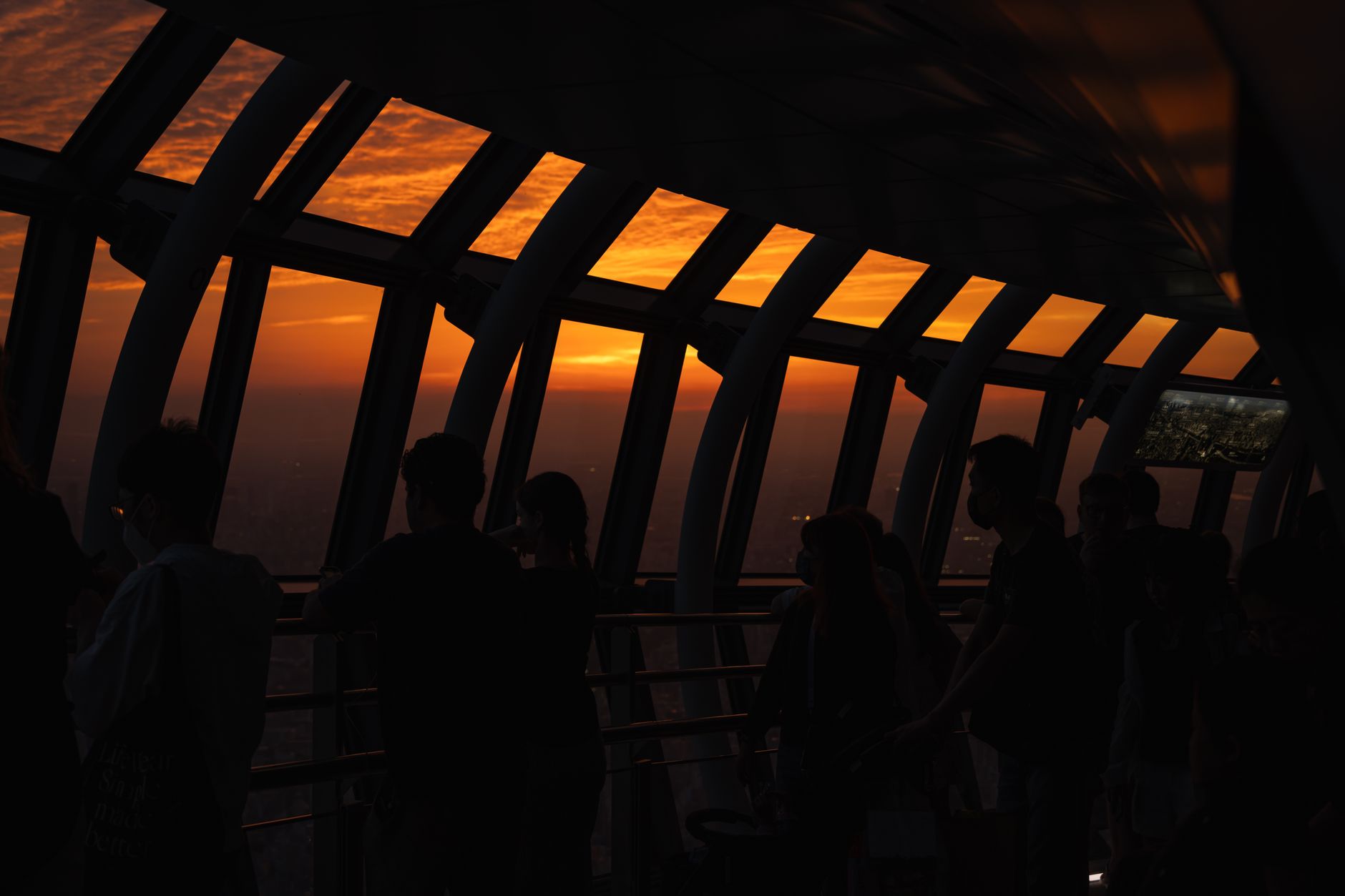
Timing matters more than which tower. The clearest air of the year is late October and November, and after rain or a windy front at any time. Summer afternoons are frequently a white murk in which you can see almost nothing. The best slot is about forty minutes before sunset — join the queue ninety minutes before. Quiet windows are opening until 10:30 and after 20:30.
The Lujiazui Shanghai walking loop
Three to four hours including one tower, or ninety minutes without. Start at Lujiazui metro station and walk it anticlockwise.
- Lujiazui station, Line 2 or Line 14, Exit 1 or 2. Come up into the middle of the roundabout complex rather than at street level.
- The circular pedestrian bridge, immediately above you. Walk the full ring — five to ten minutes — for the only ground-level view that gets all four towers into one frame.
- Oriental Pearl, five minutes’ walk from the station. Go up, or at minimum go down to the Urban History Museum in its basement.
- The Binjiang riverside promenade, ten minutes north-west from the tower’s base. Turn left and walk with the Bund across the water on your right.
- Continue past Super Brand Mall and the IFC, roughly twenty-five minutes of riverside walking at an easy pace.
- Shanghai Tower and Jin Mao, inland from the IFC — five minutes on foot, and the base of the Shanghai Tower is worth seeing at ground level for the sheer scale of the twist.
- The Dongchang Road ferry pier, fifteen minutes south along the river, and ¥2 back to Puxi.
The whole thing is flat, largely traffic-free once you are on the bridge or the promenade, and entirely signposted in English. It is one of the easier city walks in Asia.
The Binjiang riverside walk
The Huangpu waterfront redevelopment is the least-known good thing in Shanghai. Both banks were opened as a continuous public promenade in 2018, running 45 kilometres in total across five districts — Yangpu 2.8 km, Hongkou 2.5 km, Huangpu 8.3 km, Xuhui 8.4 km, and Pudong 23 km, by far the longest stretch. The city government treats the waterfront opening as one of its signature projects, and the maintenance shows.
The Lujiazui section is the busy end of it, and it is properly done: a wide paved walkway, a separated cycle lane, grass, benches, and the entire Bund laid out across the water. Walk it in either direction. Going north-east from the Oriental Pearl takes you towards the quieter stretches and eventually to the North Bund; going south-west leads past the IFC towards the old shipyard district and the art museums.
It is at its best in the hour before sunset, when the Bund’s 1920s facades go gold and the towers behind you start lighting up. It is also, unlike the Bund itself, rarely crowded — most visitors are standing on the other bank photographing the towers you are standing underneath.
The circular pedestrian bridge
The Lujiazui Ring Road Circular Footbridge, completed in 2009, is a raised circular walkway that loops right around the roundabout at the district’s core, 5.5 metres above the traffic and wide enough for about fifteen people abreast.
It was built as infrastructure — a way of getting pedestrians out of a junction that had become impossible to cross — and it turned into the district’s best free viewpoint by accident. Walking the full circle takes five to ten minutes and rotates the four towers past you one at a time. Escalators and lifts connect it to the metro station, both malls and the Oriental Pearl, so in practice you can cross the whole of central Lujiazui without touching a road.
At night it is busy with people photographing, and it is the single best place to stand if you want the towers lit and close rather than distant and composed. Free, open at all hours, no ticket.
IFC, Super Brand Mall and eating in Lujiazui
Lujiazui is a financial district, which means it empties at seven and its food is aimed at bankers and tourists. Manage expectations accordingly. Two malls do most of the work.
Shanghai IFC, 8 Century Avenue, 10:00–22:00, directly above Lujiazui station. Top-tier luxury, an Apple flagship, a good supermarket in the basement and a solid restaurant floor. This is the one to use.
Super Brand Mall, 168 West Lujiazui Road, 10:00–22:00. Over a thousand brands across ten floors, river views from the upper levels, more family-oriented and considerably less expensive. The upper-floor restaurants with a window are a decent, unglamorous way to eat with the Bund in front of you.
For anything better, cross the river. The food in Lujiazui is fine and it is not why you came. If you want a view with dinner, the bars on floors 87 and 91 of the SWFC are open even though its observatory is not, and the Park Hyatt’s upper floors do the same job — a drink at that altitude costs less than a second observation-deck ticket and comes with a chair.
The ¥2 ferry back
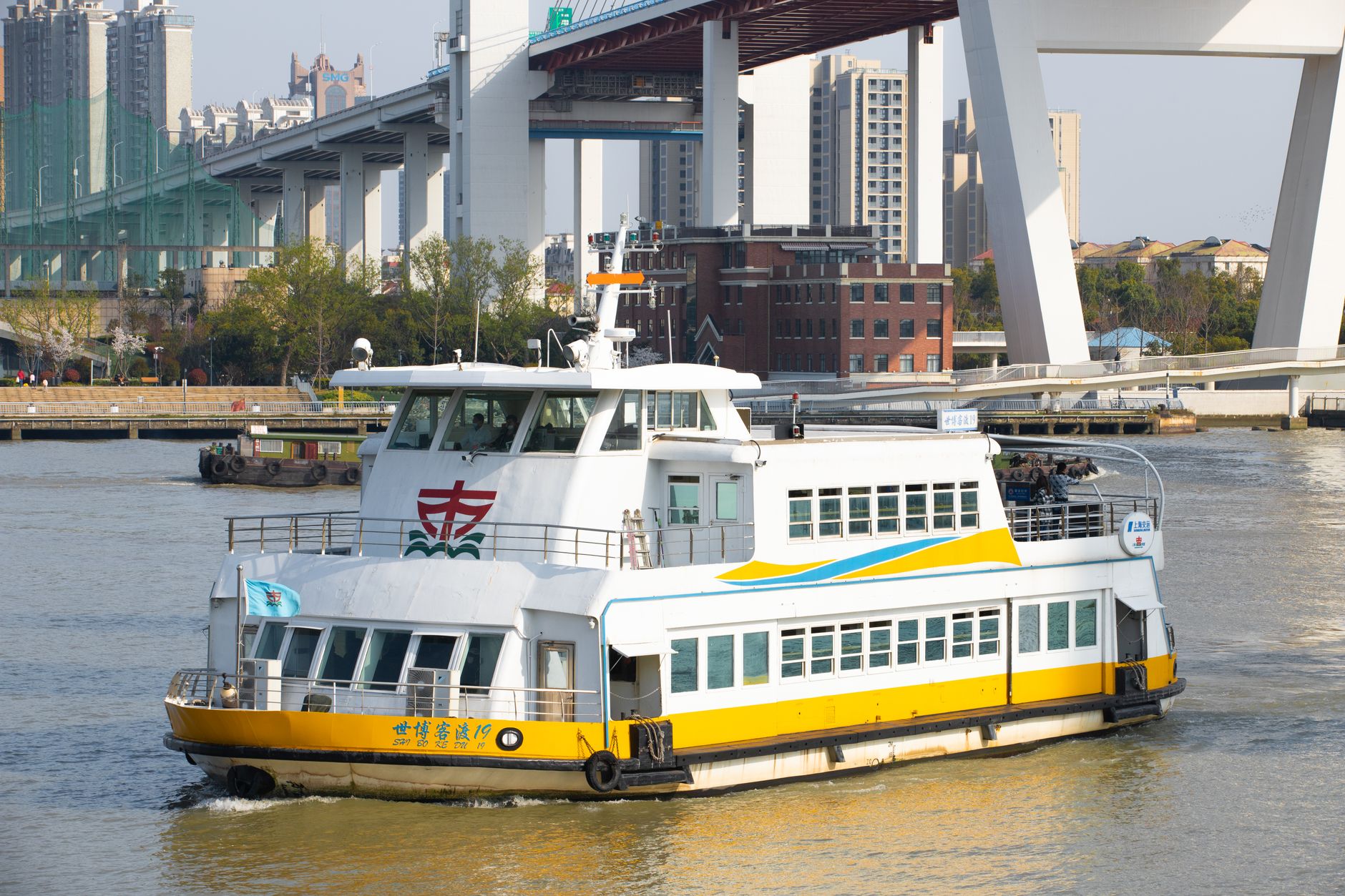
The best-value thing in Shanghai and almost nobody on a short trip knows about it. The public ferry between Dongchang Road on the Pudong side and Jinling Road East on the Puxi side costs ¥2, takes about five minutes, and gives you the same river-level view of both banks that a tour boat charges twenty times more for.
It is a working commuter service — scooters roll on, people are going home from work — and that is the appeal. Pay with a transport card or Alipay. Boats run frequently through the day and into the evening.
For comparison: the Bund Sightseeing Tunnel, at around ¥50, is a light show in a tube and not a form of transport in any meaningful sense. The evening Huangpu River night cruise is a genuinely good hour and worth its price for the full length of the waterfront at night — but if you simply want to cross the river with a view, take the ferry.
Photographing the Pudong skyline
The compositions worth knowing, in rough order of how good they are:
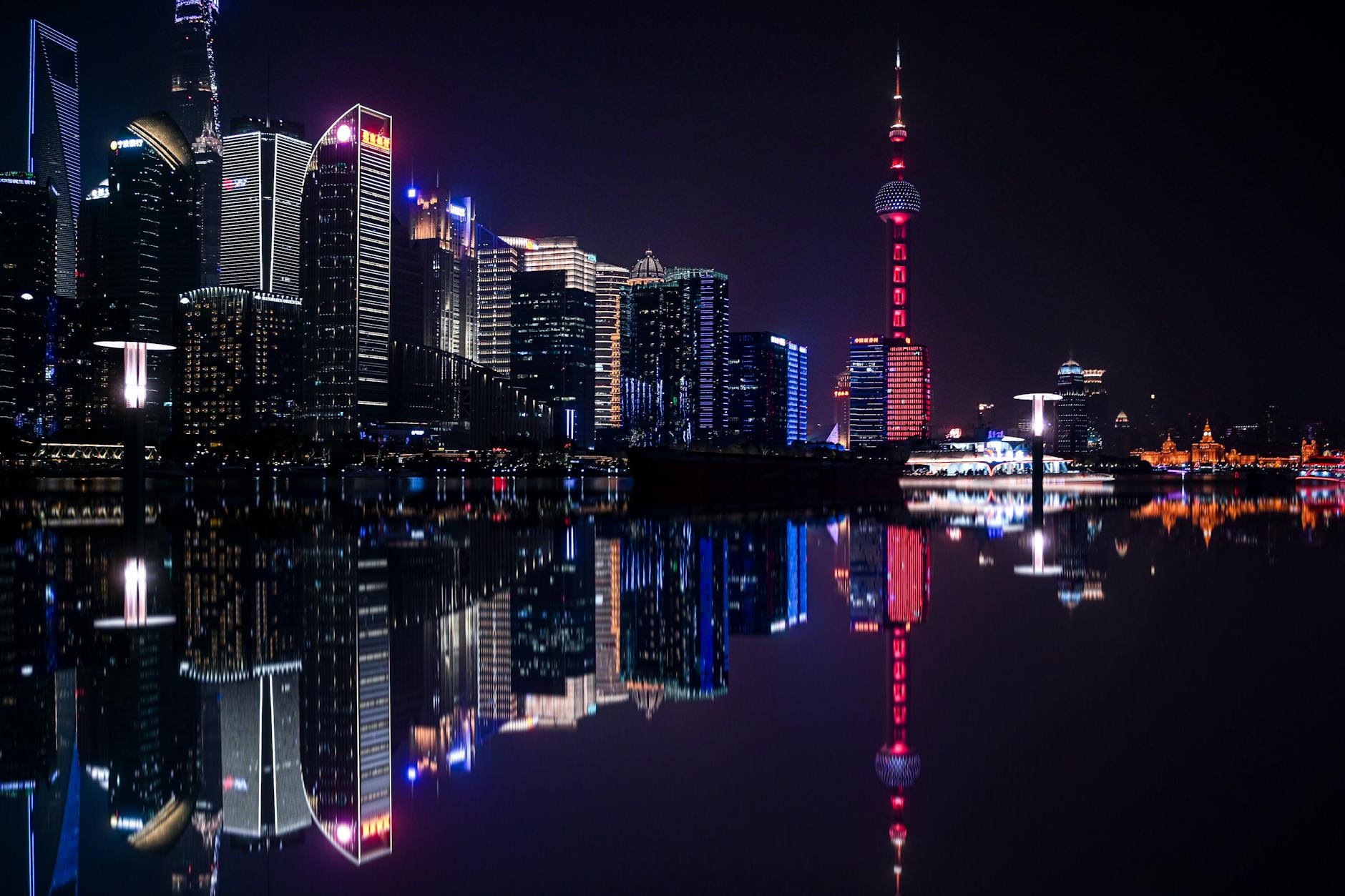
- From the Bund promenade at blue hour, twenty to forty minutes after sunset, when the sky still has colour and the towers are lit. The classic, and worth the crowd.
- From the circular bridge, looking up. Close, vertical, and completely different from the postcard.
- From the ferry mid-river, which gives you both banks and a moving foreground for two yuan.
- From the Binjiang promenade, with the Bund as the subject rather than Pudong — the reverse angle almost nobody shoots.
- From a bar terrace above the Bund, which buys you elevation, no crowd and a drink.
Air quality is the variable that matters most. Late October and November are the clearest months; the day after rain or a windy front is reliably good at any time of year. Our photography guide to Shanghai goes into the timing in more detail, and the Bund at night covers the opposite bank, which is where you will actually stand for the classic shot.
Practicalities
Getting there. Metro Line 2 or Line 14 to Lujiazui, Exit 1 or 2, which brings you out at the foot of the Oriental Pearl and directly under the ring bridge. Line 2 runs from People’s Square in about eight minutes and from Hongqiao in around fifty. From the Bund, the ferry is the pleasant option and the Line 2 crossing is the fast one.
Money. Alipay or WeChat Pay everywhere, including the ferry and the observation-deck ticket counters. Deck tickets are cheaper booked online through Trip.com or Klook than at the window, and booking ahead also skips one of the two queues.
Time needed. Ninety minutes for the walk alone. Three to four hours with one tower. A full day if you add the museum, a mall and dinner, which is a reasonable way to spend a day if the weather is poor — most of this is either indoors or covered.
Accessibility. Excellent. Lifts to the ring bridge, step-free metro access, flat promenades, and lifts in all the towers. This is one of the most wheelchair-navigable districts in the city.
Children. The Oriental Pearl glass floor and the Space Module are a hit; under 1 metre is free and 1 to 1.4 metres or age six and under is half price. The Shanghai Science and Technology Museum is four stops east on Line 2 and pairs well with a Lujiazui morning.
What Lujiazui does badly
It is worth being straight about this, because a lot of visitors arrive expecting a neighbourhood and find a business park with towers on it.
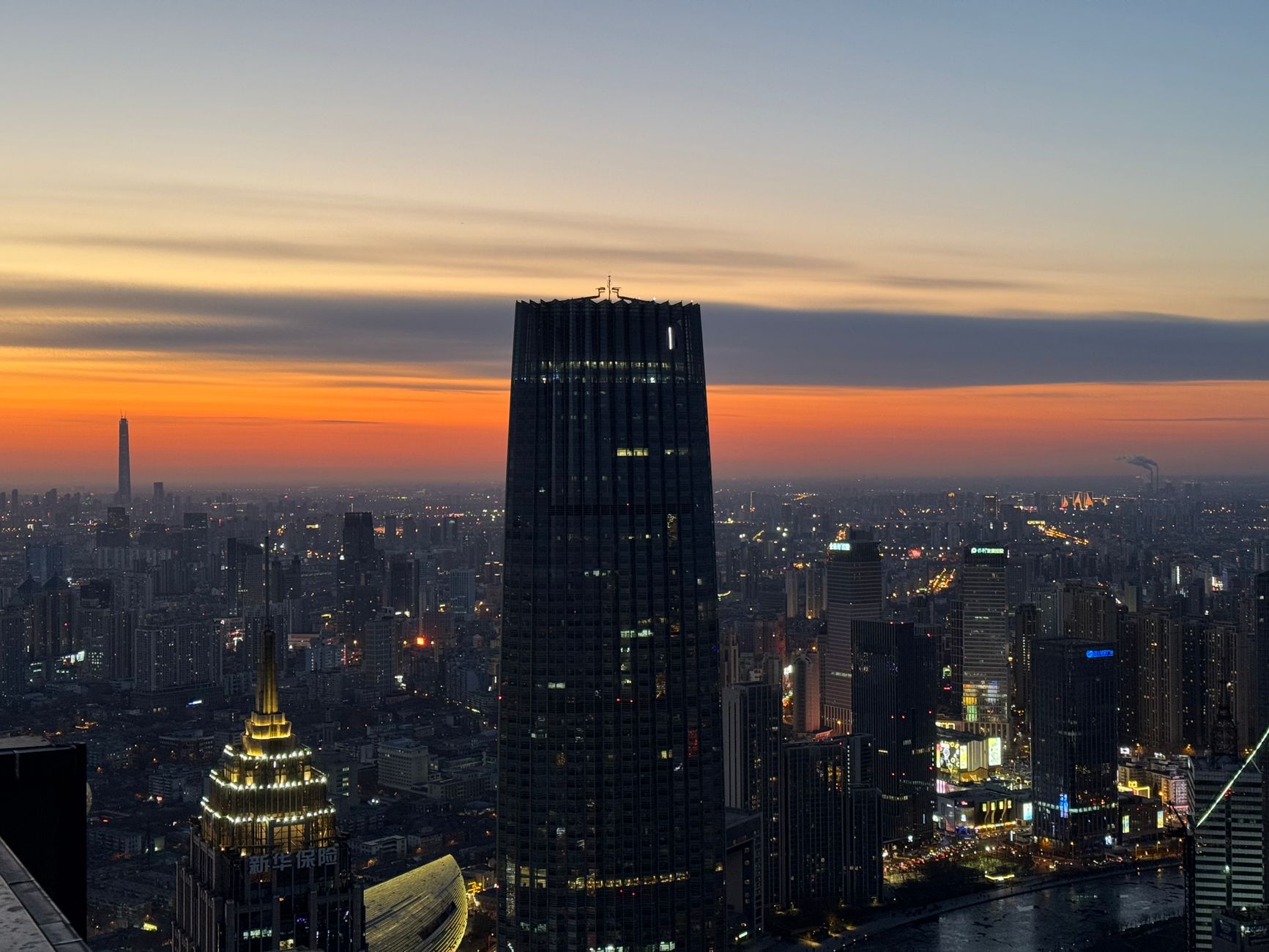
There is no street life. The blocks are enormous, the ground floors are bank lobbies, and the pedestrian experience at street level is genuinely poor — which is precisely why the ring bridge above it exists. Nothing here is old. The food is mall food. And after about eight in the evening the district empties, leaving lit towers and very few people, which is atmospheric for about ten minutes and then simply quiet.
Set against that: the riverside promenade is first-rate, the towers are extraordinary at close range, the museum under the Oriental Pearl is one of the best small museums in the city, and the whole thing is a twenty-minute walk end to end. Come for half a day, understand what you are looking at, and go back across the river for the evening. The districts guide sets out where the neighbourhoods with actual street life are.
What people get wrong
Booking the SWFC observatory. It has been closed since 2023. Any listing selling it is stale.
Going up more than one tower. The views are variations on the same view. Pick one and spend the money on the river cruise instead.
Missing the museum under the Oriental Pearl. It is included in the ¥199 ticket and it is better than the view.
Going up at midday in July. Summer haze routinely reduces visibility to a few hundred metres. Check the sky before you buy.
Expecting a glass floor at the Shanghai Tower. There isn’t one. The Oriental Pearl has it.
Paying ¥50 for the Bund Sightseeing Tunnel. Take the ¥2 ferry.
Only seeing it from the Bund. The district is walkable and interesting from the inside. Cross over.
Eating dinner in Lujiazui. Cross back and eat somewhere with a street.
Frequently Asked Questions
What is Lujiazui?
The financial district on the Pudong side of the Huangpu River, directly opposite the Bund, containing the Shanghai Tower, the Shanghai World Financial Center, Jin Mao Tower and the Oriental Pearl. It was designated in 1990 on land that was farmland and warehouses.
How do I get to Lujiazui?
Metro Line 2 or Line 14 to Lujiazui station, Exit 1 or 2 — about eight minutes from People’s Square. From the Bund you can also take the ¥2 public ferry from Jinling Road East to Dongchang Road.
Which Lujiazui tower should I go up?
One, not three. Shanghai Tower at ¥180 for the highest deck; Oriental Pearl at ¥199 for the glass floor and the excellent Urban History Museum included in the ticket; Jin Mao at ¥120–160 for the shortest queue and the best view of the other towers. Jin Mao’s Skywalk is the only outdoor harnessed ledge in Shanghai.
Is the Shanghai World Financial Center observation deck open?
No. It has been closed since 2023 with no announced reopening date. The rest of the building — offices, shops, the Park Hyatt on floors 79–93 and the bar and restaurants on 87 and 91 — operates normally.
How long do you need in Lujiazui?
Ninety minutes for the walking loop alone, three to four hours if you go up one tower, and a full day if you add the museum, a mall and a meal. It works well as a bad-weather day because most of it is covered.
Is there an entrance fee to walk around Lujiazui?
No. The circular pedestrian bridge, the Binjiang riverside promenade and the streets are all free. Only the observation decks and the museum charge.
What is the circular bridge in Lujiazui?
The Lujiazui Ring Road Circular Footbridge, completed in 2009 — a raised walkway looping the central roundabout 5.5 metres above the traffic, wide enough for about fifteen people abreast. Free, always open, and a good ground-level view of the Pudong towers.
When is the best time to see the Pudong skyline?
Late October and November for the clearest air, or the day after rain or a windy front at any time of year. For the classic photograph, blue hour — twenty to forty minutes after sunset. Summer afternoons are often too hazy to see anything from a deck.
How much is the Huangpu River ferry?
¥2, between Dongchang Road in Pudong and Jinling Road East in Puxi, about five minutes. Pay with a transport card or Alipay. It is a working commuter service and the best-value view in Shanghai.
Is Lujiazui worth visiting or is the Bund enough?
The Bund gives you the picture; Lujiazui gives you the scale. If you have three days or more, cross over and walk it — the riverside promenade and the ring bridge are both first-rate and neither costs anything. If you have one day, the Bund view is the more efficient use of your time.
Are there good restaurants in Lujiazui?
Competent rather than good. It is a financial district and the food is mall food and hotel food. The upper floors of Super Brand Mall and the IFC do the job with a river view. For a proper meal, cross the river.
Can I see the Shanghai Tower for free?
You can walk to its base and into the lower public levels, which is worth doing for the scale of the twist. The Jin Mao next door has a 33-storey Grand Hyatt atrium that is free to walk into and look up. Bar terraces above the Bund give you height for the price of a drink.
Where to go next
Lujiazui is one half of a pair, and it does not make full sense without the other. Read the Bund guide for the 1920s waterfront it was built to face, and the Bund architecture guide for the buildings themselves — the contrast between the two banks is the single most instructive thing in Shanghai.
Beyond that, the best views in Shanghai covers the alternatives to a paid deck, the best museums puts the Urban History Museum in context, and the transport guide covers the ferries, the metro and the last-train times you will need for the walk back.