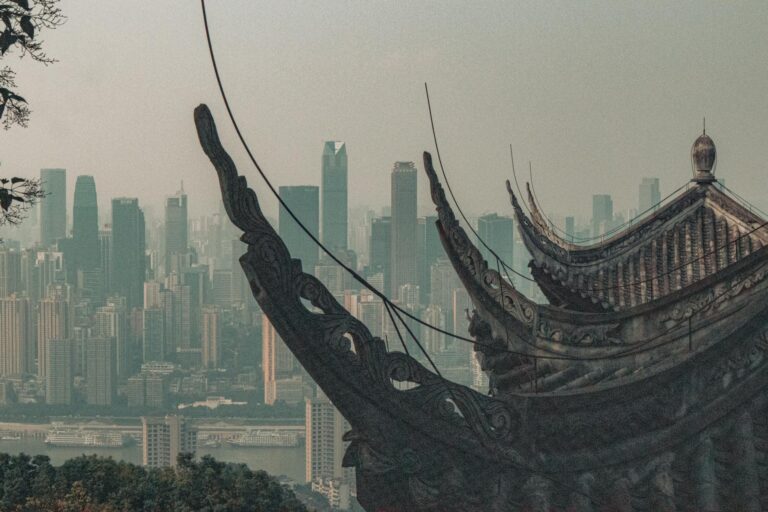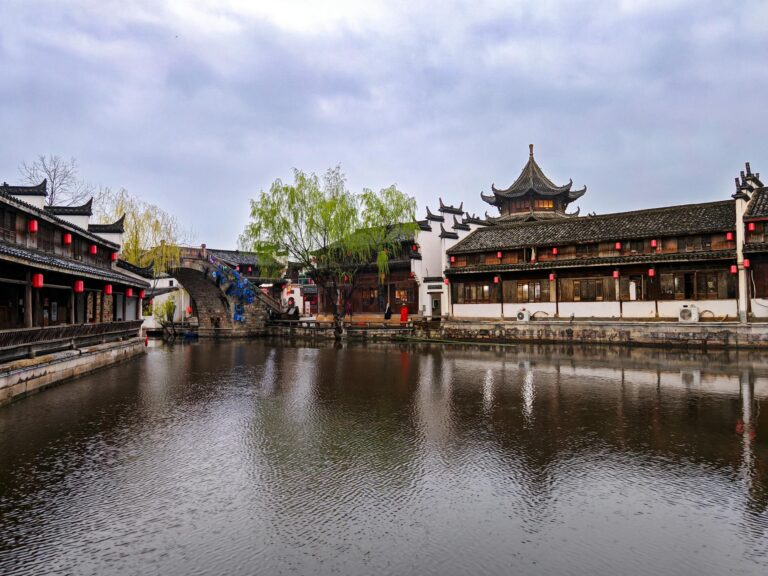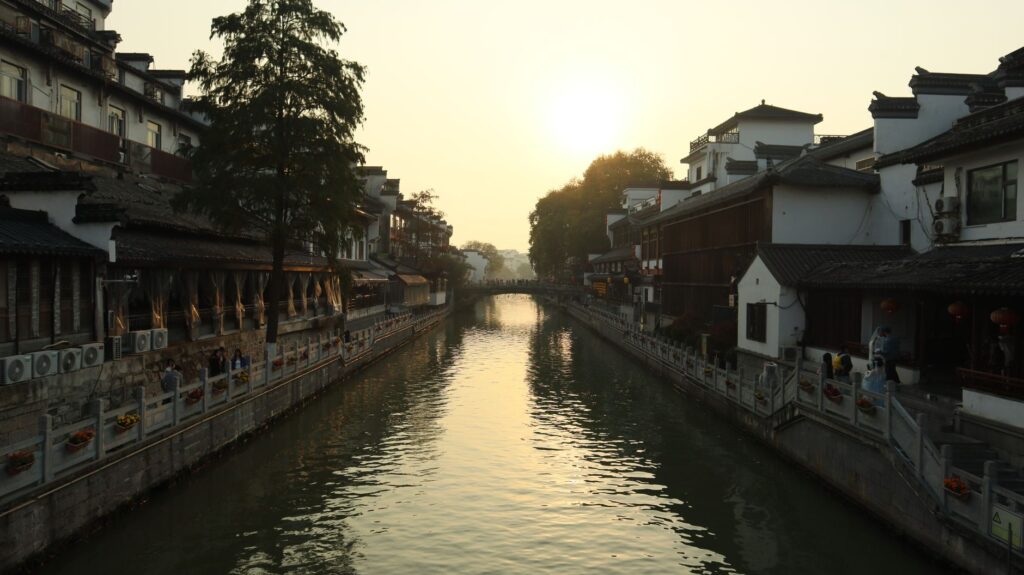
Almost everyone who day-trips from Shanghai to a canal town goes to Zhujiajiao, because it is on the metro and takes an hour. Xitang water town takes a little more effort — a half-hour train into Zhejiang and then a short bus — and that small friction is precisely why it is better. Fewer tour groups, a genuinely lived-in old town, 1.3 kilometres of covered waterside corridor that no other Jiangnan town has at that length, and the option to stay the night, which changes the place entirely.
The case for Xitang rests on two things. The first is the Misty Rain Corridor, a continuous roofed walkway along the canal that keeps you dry in the summer rains and shaded in August, and which was used as a location in Mission: Impossible III. The second is that Xitang is one of the few water towns where the evening is the point rather than an afterthought — the day-trippers leave around five, the red lanterns come on, and between about 19:30 and 21:00 the town is at its best with perhaps a fifth of the people in it. This guide covers exactly how to get there, what the tickets cover, where the crowds are and are not, whether to stay over, and how it compares with the other four towns you might go to instead.
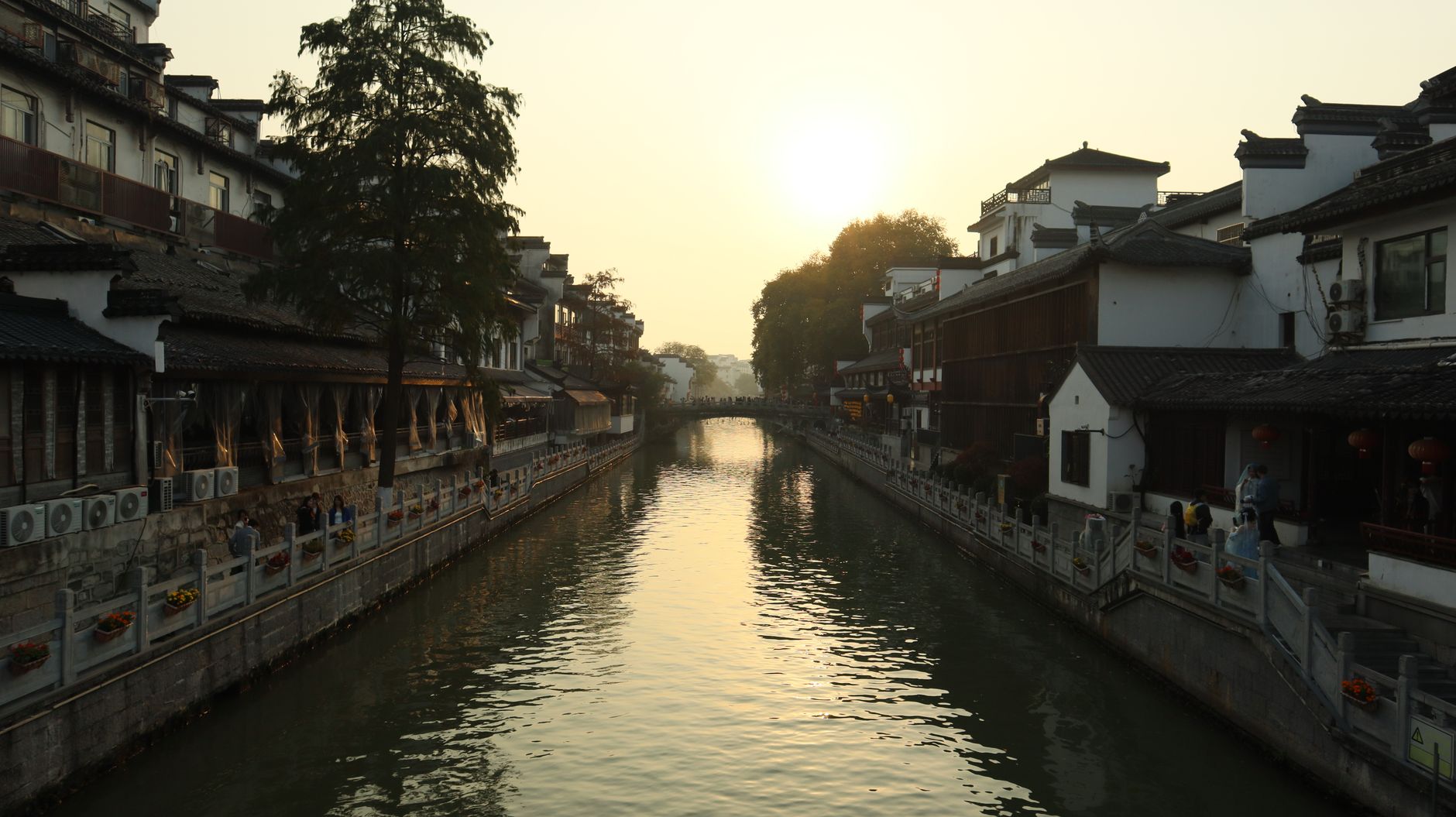
Table of Contents
- Why Xitang water town rather than Zhujiajiao
- Getting there from Shanghai
- Tickets, hours and what is included
- What to actually see
- The evening, which is the whole point
- Staying overnight in Xitang water town
- What to eat
- All five water towns compared
- When to go, and when not to
- Practical notes
- What people get wrong
- Frequently Asked Questions
Why Xitang water town rather than Zhujiajiao
Both are canal towns of roughly the same era, both have stone bridges and timber houses over water, and photographs of the two are hard to tell apart. The differences are about scale, access and how the town is used.
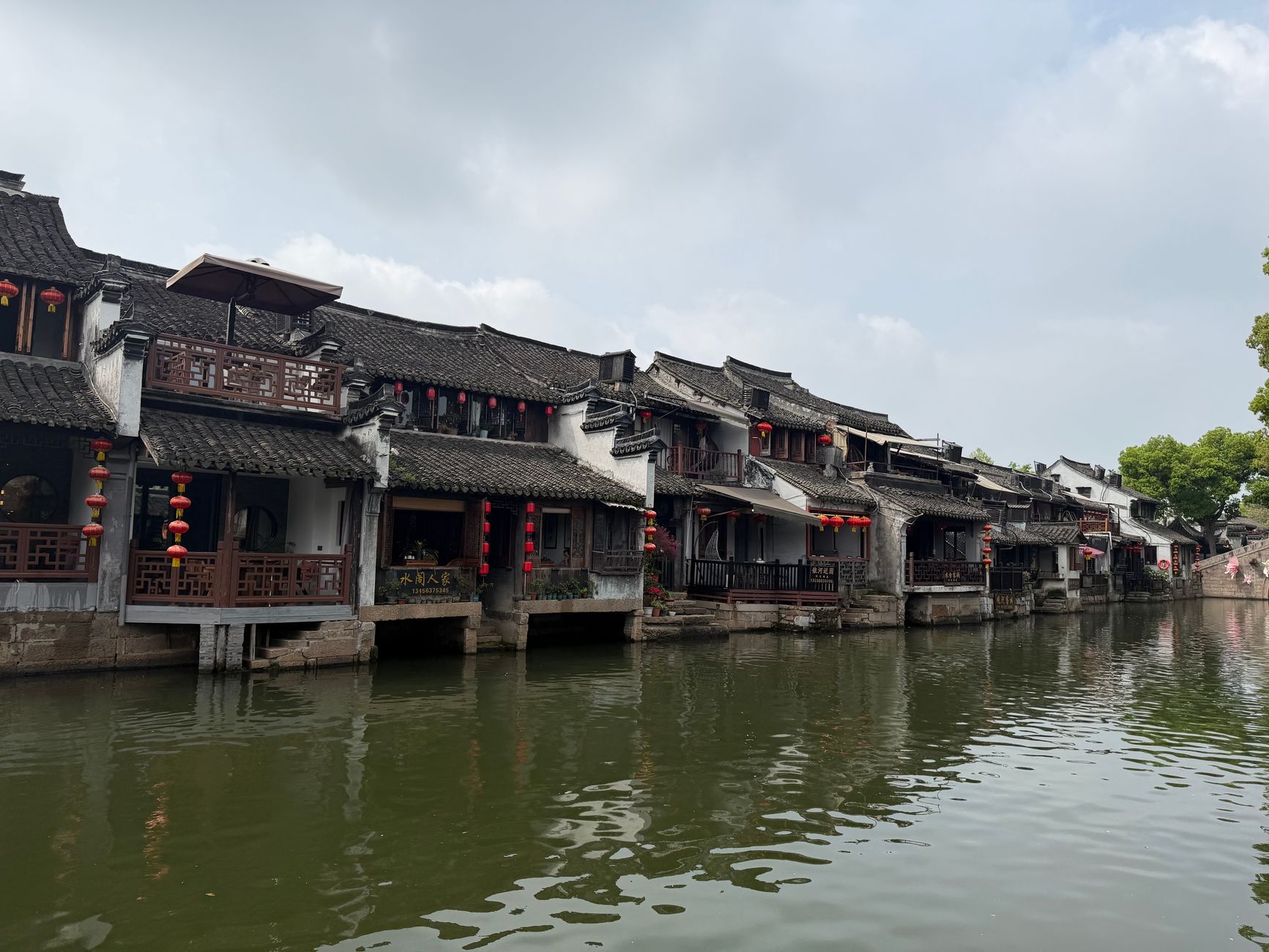
Xitang is bigger. Around 1.04 square kilometres, with nine waterways dividing the town into eight blocks joined by twenty-seven bridges. Zhujiajiao is more compact and easier to walk out of by accident. Xitang takes four to five hours to see properly, which is a day rather than a morning.
Xitang is further, so it is quieter. Zhujiajiao is on metro Line 17 and receives the full weight of Shanghai’s weekend day-trip traffic. Xitang needs a train and a bus, which filters out a large share of casual visitors — and almost all of the ones who did not plan.
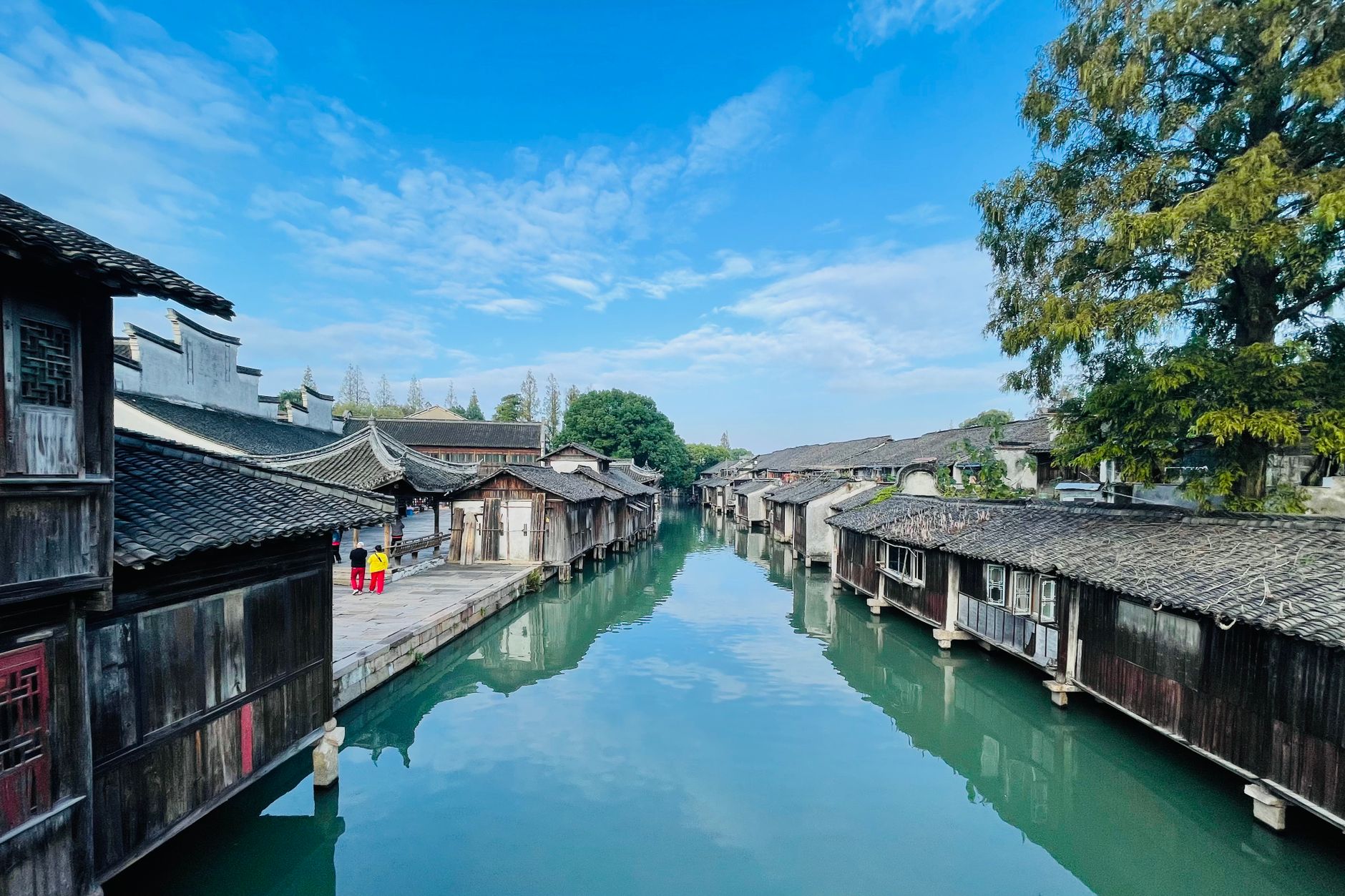
Xitang has the corridors. The Misty Rain Corridor runs 1.3 kilometres along the waterfront and is the longest covered riverside walkway of any Chinese old town. In practical terms this means Xitang works in the rain, which is not a small thing in a region that rains a great deal, and it works in August when the alternative is walking in full sun.
Xitang has a night. Because it has hotels and guesthouses inside the old town, it stays alive after the coaches leave. Zhujiajiao largely closes.
What Zhujiajiao has that Xitang does not: a direct metro connection, and the ability to be back in central Shanghai for dinner. If your time is genuinely limited, Zhujiajiao is the pragmatic choice and this article is not arguing otherwise.
Getting there from Shanghai
Xitang sits in Jiashan County in northern Zhejiang province, roughly 90 kilometres from central Shanghai. Two routes.
Route 1 — train plus bus (recommended). High-speed train from Shanghai Hongqiao to Jiashan South (嘉善南), around 25 to 35 minutes depending on the service. From the station forecourt, a local bus or a taxi covers the remaining 10 to 15 kilometres to the Xitang gate in about 20 to 30 minutes. Taxis wait outside and the fare is modest; agree it or insist on the meter before you get in.
Trains run frequently on this corridor because it is the main Shanghai–Hangzhou line. Book as soon as sales open, as with any Chinese train — tickets go on sale 14 days before departure (the 15-day window counts the day you buy), on 12306 or Trip.com. The release time depends on the departure station, so check it on 12306. On an ordinary weekday this route rarely sells out, but a Saturday morning in autumn can.
Route 2 — direct coach. Buses run to Xitang from Shanghai South Bus Station and Shanghai North Bus Station. Slower than the train — allow around two hours — but it is a single leg with no transfer, and it drops you closer to the town. Worth considering if you are staying near either terminus or if trains are sold out.
| Route | Time | Legs | Best for |
|---|---|---|---|
| Hongqiao → Jiashan South → bus/taxi | 1h15m–1h45m total | Two | Almost everyone |
| Direct coach from Shanghai South | About 2 hours | One | No-transfer simplicity |
| Private car or organised tour | 1h30m–2h | One | Groups, families, poor mobility |
| Add-on from Hangzhou | 1h30m coach, ¥42–62 | One | Combining with a Hangzhou trip |
The Hangzhou option is worth flagging. Xitang sits between Shanghai and Hangzhou, so it works well as a stop on the way rather than an out-and-back day trip. If you are already planning Hangzhou, consider a night in Xitang between the two cities.
Tickets, hours and what is included
| Ticket | Price | Covers |
|---|---|---|
| Standard day ticket | ¥100 | Town entry plus 11 small museums and gardens |
| Night ticket | ¥50 | Town entry after hours; most museums shut |
| Boat ride | From ¥20 | Shared canal boat; private boats cost more |
| Children under 1.2 m | Free | — |
| Children 1.2–1.5 m | Half price | — |
| Over 70 | Free | Passport required |
| Ticketed sites’ hours | 08:00–17:00 | 16:30 in winter |
The ¥100 combined ticket covers eleven small scenic spots inside the town, including Xiyuan Garden, Zui Garden, the Ni Family Residence and the China Button Museum — which is more interesting than it sounds, Jiashan having been a centre of button manufacturing. Realistically most visitors go into three or four of the eleven. The value is in the town itself rather than the museums.
The night ticket at ¥50 is the interesting one. It gets you into the town after the day sites close, when the lanterns are lit and the crowd has thinned. If you are staying overnight, your guesthouse booking generally handles entry — confirm this when you book, because arriving after dark without a ticket is a small ordeal.
Pay by Alipay or WeChat Pay; both work at the gate and everywhere inside. Cash is accepted but slower. Set them up before you leave Shanghai — see our Alipay and WeChat Pay guide.
What to actually see
Xitang rewards wandering more than ticking off, but four things are genuinely worth going to find.
The Misty Rain Corridor (烟雨长廊). The reason to come. A continuous covered walkway running roughly 1.3 kilometres along the waterfront — timber posts, tiled roof, the canal on one side and shops and houses on the other. It is the longest such corridor in any Chinese old town, it is genuinely beautiful in rain, and it is where the Mission: Impossible III sequences were shot. Walk the full length once in each direction; it looks completely different depending on which way the light falls.
Shipi Lane (石皮弄), the Stone Skin Alley. Sixty-eight metres long and just 0.8 metres wide at its narrowest — you turn sideways. It runs between two branches of the Wang family’s houses and is paved with 216 thin stone slabs, hence the name. It is a two-minute experience and everyone photographs it, so go early.
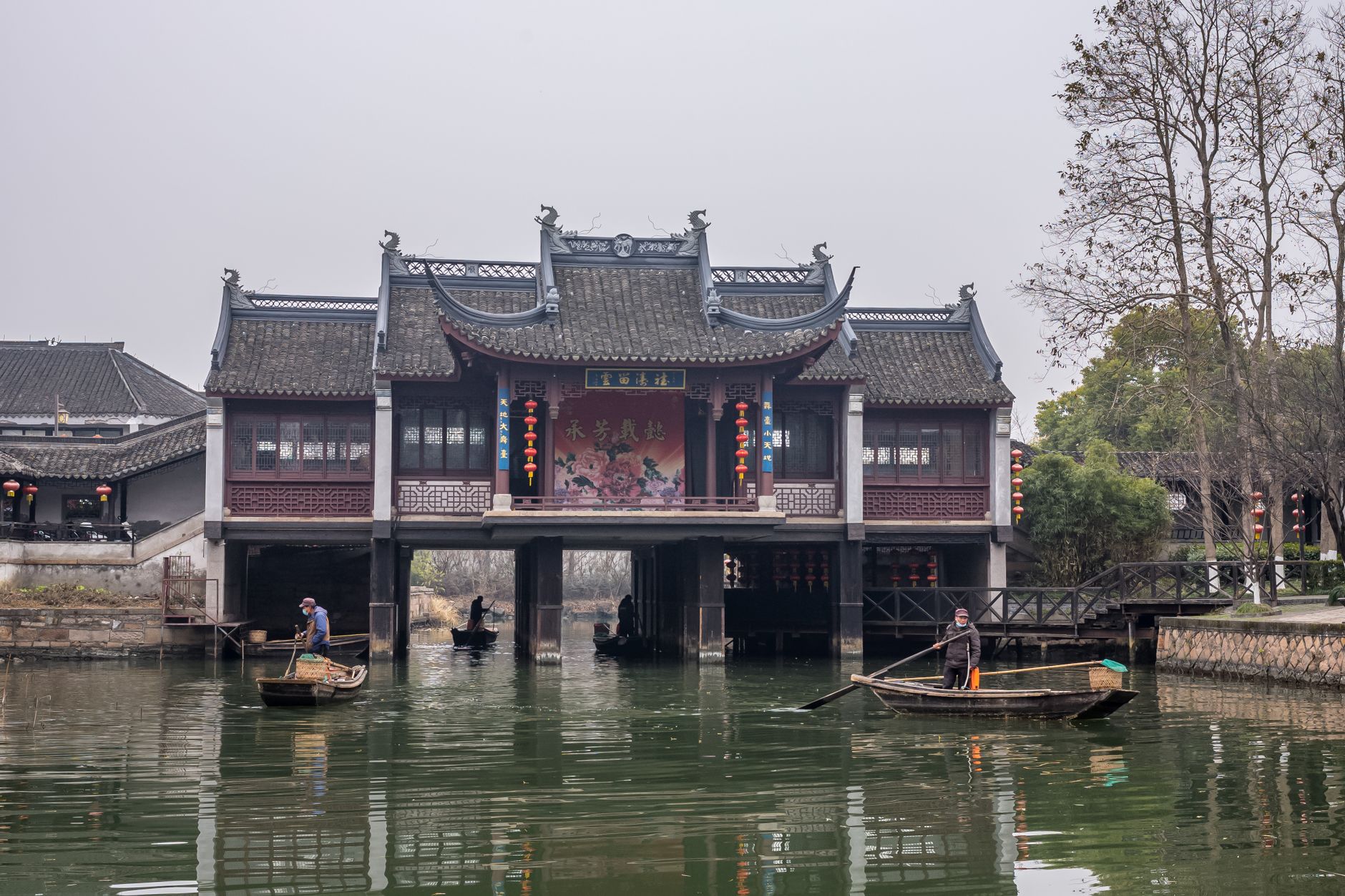
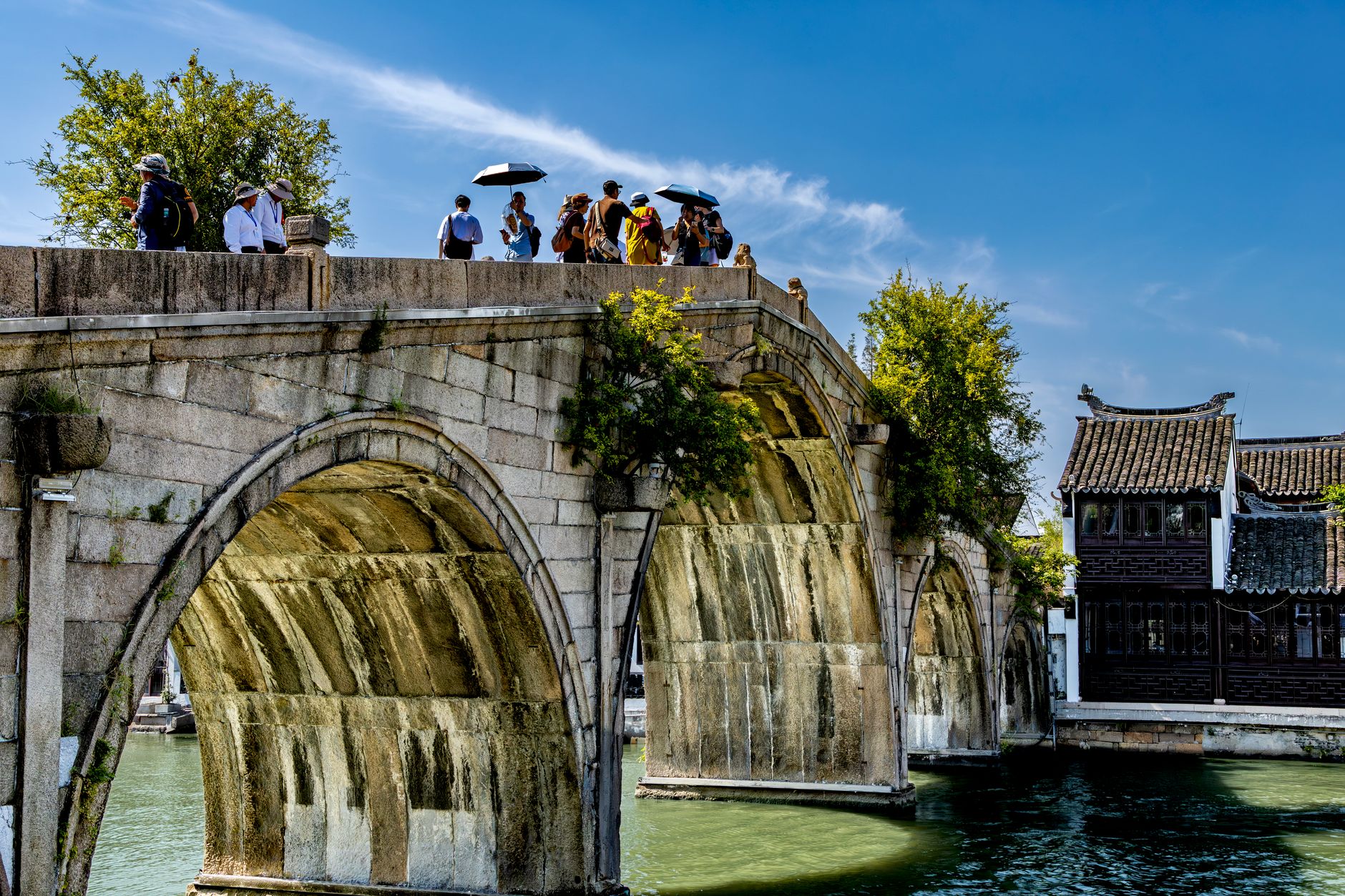
The twenty-seven bridges. Nine waterways, eight blocks, twenty-seven crossings. The named ones — Wolong, Songzi Laifeng, Huanxiu — are worth seeking out, but the pleasure is in crossing them at random and losing your bearings, which you will.
The lanes behind the waterfront. Xitang has more than a hundred narrow lanes running back from the canals, and this is where the town is still a town: laundry, cooking smells, people playing cards, cats. Two minutes off the main corridor and the shops stop. This is the single best thing about Xitang and the thing most day-trippers miss entirely.
The eleven ticketed sites are small — a garden here, a merchant’s house there, the button museum, a wine museum. Pick two or three rather than dutifully doing all of them.
The evening, which is the whole point
If you take one thing from this article: Xitang at night is a different and better town, and it is the main argument for choosing it over Zhujiajiao.
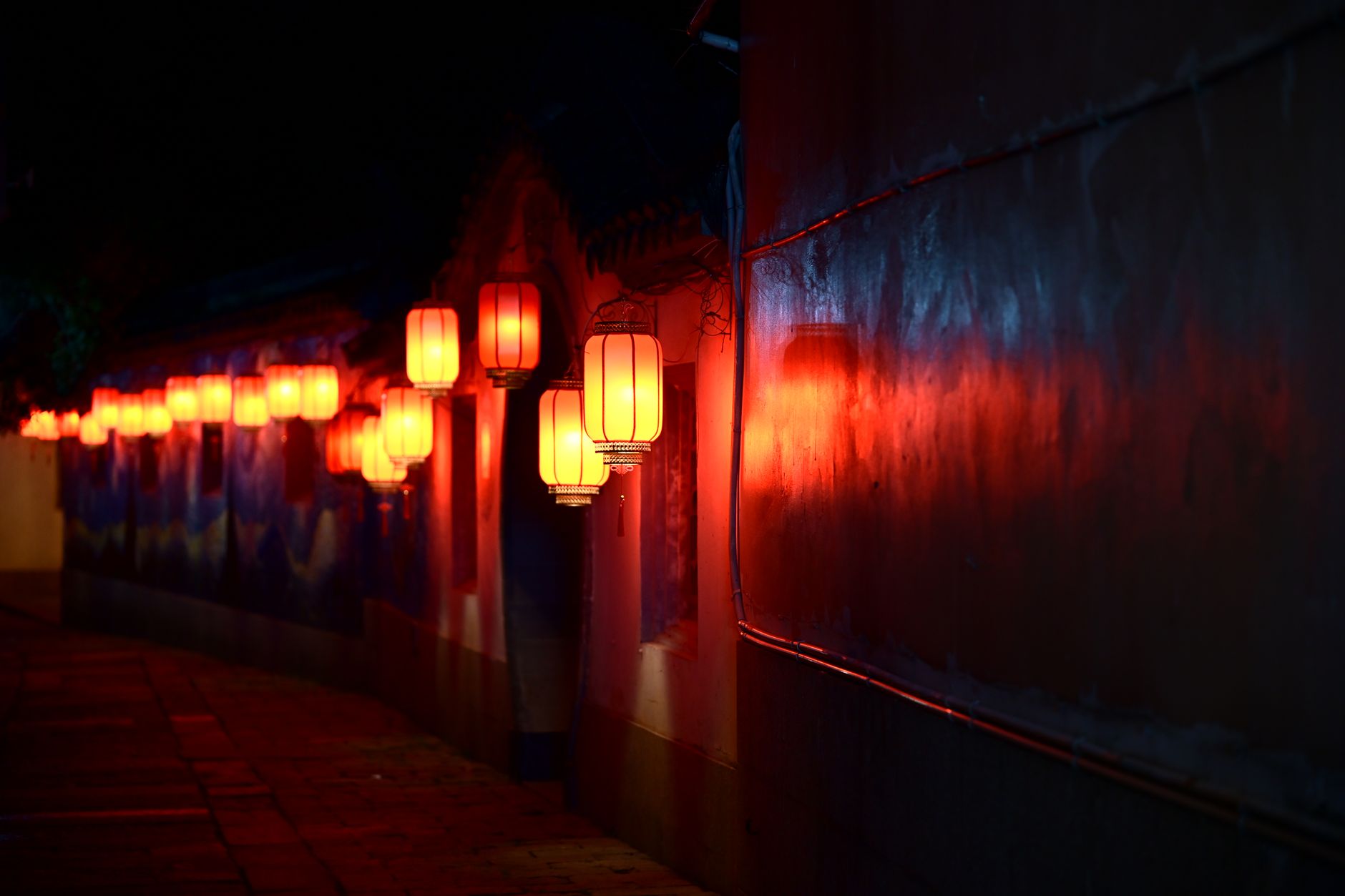
The day-trip coaches begin leaving around 16:00 and are largely gone by 17:30. The ticketed sites close at 17:00. And then, at dusk, the red lanterns along the corridor and the bridges come on and reflect off the water. The consensus window is 19:30 to 21:00, when the lanterns are fully lit and the town is quiet.
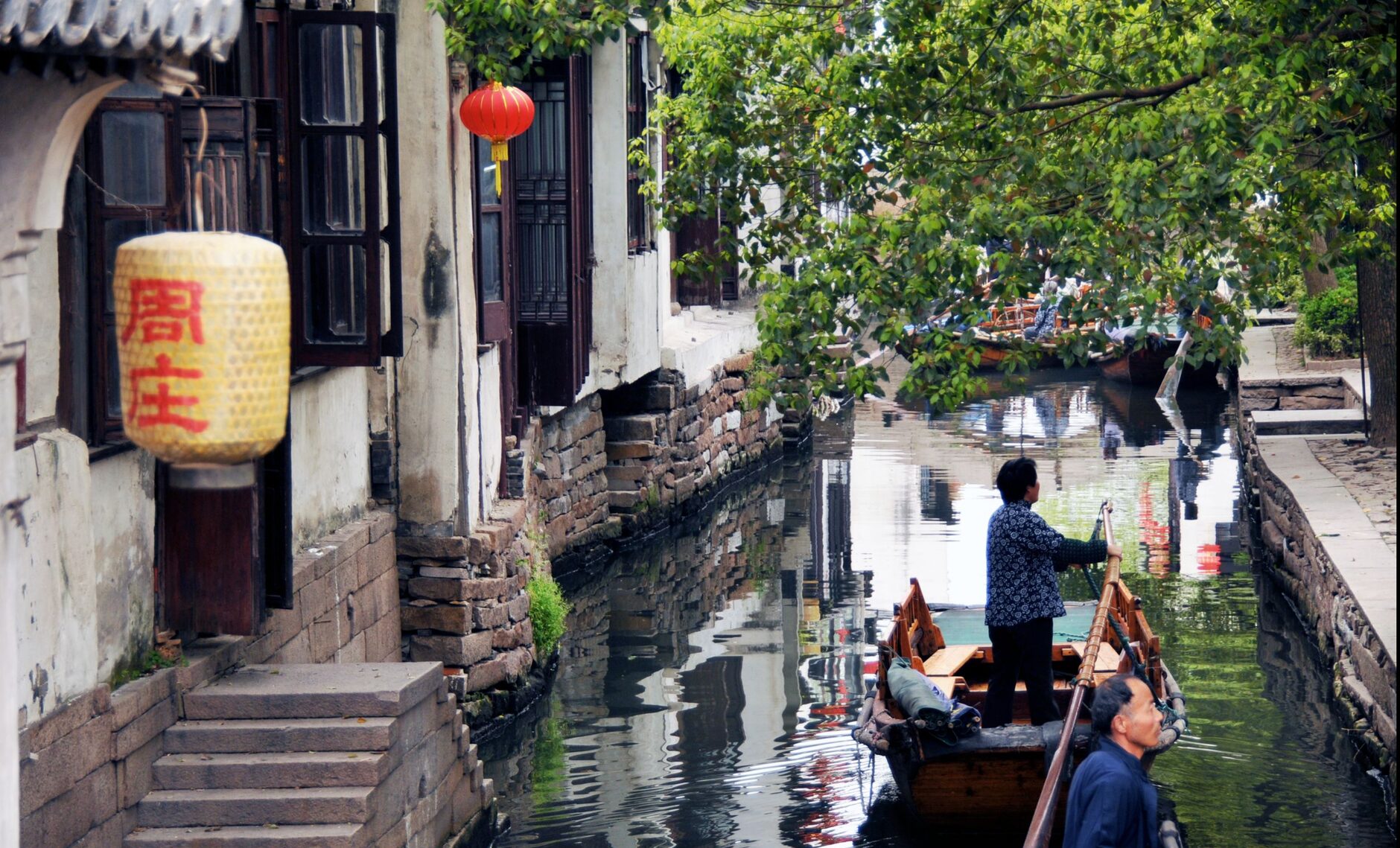
Night boat rides run roughly 18:00 to 22:00. A shared boat is inexpensive; a private one costs more and is worth it if there are two of you and you want the canal to yourselves for twenty minutes. The boatmen do not speak English but the transaction needs about four words.
The bar street is the one caveat. Xitang has a run of small bars along one canal that get loud, and if you have come for tranquillity you should book a guesthouse away from it. Ask specifically when booking; “quiet room” is a phrase worth translating in advance. Our language barrier guide covers the apps that make this easier.
A day-tripper can still get some of this. The last trains from Jiashan South to Shanghai run into the evening, so it is possible to stay until around 20:00 and still get back. Check the last service before you commit — this is not a route where you want to guess.
Staying overnight in Xitang water town
There are hotels and family-run guesthouses inside the old town core, and this is the version of Xitang worth planning for.
What staying gets you: the town from about 17:30 to 22:00 with the crowd gone, and again from 06:30 to 09:00 before it arrives — the early morning is genuinely the best hour of the day, with mist on the water, boats being loaded and old men fishing. It also removes the return-journey clock-watching entirely.
What to know before booking:
- Guesthouses are small and simple. Expect a clean room, thin walls, variable hot water and limited English. Charming rather than comfortable.
- Not every property is licensed to take foreign guests. This is a real constraint in smaller Chinese towns. Book through Trip.com or Booking.com, which filter for it, rather than a Chinese-only platform.
- Police registration. Foreigners must be registered with the local police within 24 hours of arriving somewhere new. Hotels and licensed guesthouses do this at check-in — which is another reason to use a licensed one.
- Ask about the bar street. Noise until late is the commonest complaint.
- Confirm entry arrangements. Your booking should cover town access; check rather than assume.
An overnight in Xitang also makes a natural break in a Shanghai–Hangzhou–Suzhou loop. See our weekend getaway guide for how that assembles.
What to eat
Xitang has genuine local specialities rather than generic tourist food, which is not true of every water town.
- Guan Laotai stinky tofu. The town’s signature. Deep-fried, served with chilli sauce, and it smells considerably worse than it tastes. There is a queue and it is the correct queue to join.
- Steamed pork with glutinous rice (粉蒸肉), often served in a lotus leaf. The best thing on most menus here.
- Euryale ferox cake (芡实糕) — a dense, sweet, chewy slab made from the seeds of the prickly water lily, sold everywhere in slices. Buy from a shop where they are cutting it fresh, not the pre-wrapped version.
- Xitang rice wine and osmanthus wine. The town has a rice-wine tradition and a small wine museum to go with it. The osmanthus version is sweet and floral and travels well as a gift.
- Canal-side restaurants do river fish, freshwater shrimp and seasonal greens. In autumn, hairy crab appears here as it does everywhere in the region.
Prices are modest — ¥50–120 a head for a proper sit-down meal, less if you graze the street stalls. Portions assume sharing.
All five water towns compared
This is the table people actually want. Prices move and should be checked before you travel, but the shape of the comparison holds.
| Town | From Shanghai | Entry | Crowds | Stay over? | Best for |
|---|---|---|---|---|---|
| Xitang | 1h15m–1h45m, train + bus | ¥100 day / ¥50 night | Moderate | Yes, genuinely good | Evenings, corridors, rain |
| Zhujiajiao | 1h, metro Line 17 | Town free; site tickets extra | Heavy | Limited | Half a day, no planning |
| Tongli | 1h30m via Suzhou | Around ¥100 | Moderate | Yes | Classical gardens |
| Zhouzhuang | 1h30m–2h | Around ¥100 | Heavy | Yes | The famous one, most commercial |
| Wuzhen | 2h–2h30m | Roughly ¥110–190 by zone | Heavy but managed | Yes, best hotels | Polish, comfort, families |
The short version of each: Zhujiajiao is the convenient one and it shows. Zhouzhuang is the famous one and is the most commercialised of the five. Wuzhen is the most comfortable and the most restored — beautifully run, and the residents were moved out, which some people mind and others do not. Tongli pairs a water town with a serious classical garden. Xitang is the one that is still lived in, works after dark and works in the rain.
Full guides to each: Zhujiajiao, Tongli, Zhouzhuang and Wuzhen. If you are only doing one and you have a full day plus an evening, do Xitang. If you have half a day, do Zhujiajiao.

When to go, and when not to
Best months: late October and November, when the air is clear and the humidity has gone, and late March to early May. Autumn is the strongest of the two — see Shanghai in autumn.
Best day: a weekday, decisively. Weekend day-trip traffic from Shanghai and Hangzhou both land here.
Best hours: before 09:30 or after 17:30. The middle of the day, roughly 11:00 to 15:00, is when the coach groups are in the town.
Rain is not a reason to cancel. This is the one water town built for it — that is what the corridors are for, and wet stone and mist are what these towns were painted in. It is arguably better in drizzle.
Avoid: the National Day week in early October and Chinese New Year, when the town is genuinely full, and summer weekends, when the combination of heat, humidity and crowds is unpleasant. Our day trips guide ranks the alternatives by how much holiday traffic they absorb.
Practical notes
- Time needed: four to five hours to see it properly; a full day if you are eating there and staying for the lanterns.
- Footwear: uneven stone, worn steps and canal edges without railings. Not a place for smooth soles or heels.
- Accessibility: poor. Stepped bridges, narrow lanes, cobbles. Difficult with a pram and very difficult with a wheelchair.
- Payment: Alipay and WeChat Pay everywhere; carry ¥200 in cash for boatmen and small stalls.
- Language: minimal English. A translation app with camera OCR is worth more here than in Shanghai. See essential apps.
- Toilets: public facilities throughout, basic; carry tissues.
- Photography: the corridor at dawn and the bridges at dusk. Our photography guide covers the technique for lantern-lit water.
- Getting back: check the last train from Jiashan South before you settle in for dinner. Allow 30 minutes from the town gate to the station.
What people get wrong
Treating it as a half-day trip. Xitang is a full day, and a day that ends at 21:00 rather than 16:00. Squeezing it into a morning wastes the journey.
Leaving before the lanterns. The single biggest error. The town you paid ¥100 to see at 14:00 is not the town it becomes at 19:30.
Staying on the waterfront. The corridor is lovely and it is where every visitor walks. The lanes behind it are where the town lives.
Doing all eleven museums. They are small. Pick two or three.
Booking an unlicensed guesthouse. Not every property can legally host foreign guests, and the one that cannot will also not register you with the police. Book through a platform that filters for it.
Cancelling because of rain. The covered corridors exist for exactly this. Come anyway.
Not booking the train. Tickets release 15 days out at 08:00 Beijing time. Turning up at Hongqiao on a Saturday morning hoping for a seat to Jiashan South is optimistic.
Going during Golden Week. Every water town within two hours of Shanghai is full during the October holiday. Xitang included.
Frequently Asked Questions
How do I get to Xitang from Shanghai?
Take a high-speed train from Shanghai Hongqiao to Jiashan South, which takes 25 to 35 minutes, then a local bus or taxi for the remaining 10 to 15 kilometres, about 20 to 30 minutes. Total journey time is roughly an hour and a quarter to an hour and three quarters. Direct coaches also run from Shanghai South and Shanghai North bus stations in about two hours.
How much does Xitang cost to enter?
¥100 for the standard day ticket, which includes eleven small museums and gardens, or ¥50 for a night ticket after the ticketed sites close. Boat rides start around ¥20. Children under 1.2 m and visitors over 70 go free; children between 1.2 m and 1.5 m pay half.
Is Xitang better than Zhujiajiao?
If you have a full day, yes. Xitang is larger, less crowded, still genuinely lived in, has 1.3 km of covered waterside corridor and comes alive after dark. Zhujiajiao’s advantage is access — an hour on metro Line 17 with no planning at all — which makes it the better half-day option.
What is the Misty Rain Corridor?
A continuous covered walkway running roughly 1.3 kilometres along Xitang’s waterfront, the longest riverside corridor in any Chinese ancient town. Timber posts and a tiled roof shelter you from rain and summer sun, with the canal on one side and shops and houses on the other. It was a filming location for Mission: Impossible III.
Can you visit Xitang at night?
Yes, and you should. A ¥50 night ticket covers entry after the ticketed sites close at 17:00. The day-trip coaches leave from around 16:00, the red lanterns come on at dusk, and the best window is 19:30 to 21:00. Night boat rides run roughly 18:00 to 22:00.
Is it worth staying overnight in Xitang?
For most visitors, yes — it is the main reason to choose Xitang over the closer water towns. Staying gives you the town from 17:30 to 22:00 without the crowd, and again from 06:30 to 09:00 with mist on the water. Book a licensed property through Trip.com or Booking.com, since not every guesthouse can legally host foreign guests.
How long do you need at Xitang?
Four to five hours to walk it properly, or a full day if you eat there and stay for the lanterns. The town covers about 1.04 square kilometres with nine waterways, eight blocks and twenty-seven bridges, so it is considerably bigger than it looks on a map.
What is Shipi Lane?
The Stone Skin Alley — 68 metres long and only 0.8 metres wide at its narrowest, running between two branches of the Wang family houses and paved with thin stone slabs. You turn sideways to pass. It takes two minutes, everyone photographs it, and it is best visited before 10:00.
What should I eat in Xitang?
Guan Laotai stinky tofu is the local signature and the queue is the correct queue. Also steamed pork with glutinous rice, euryale ferox cake bought fresh-cut rather than pre-wrapped, and the local rice wine and osmanthus wine. A sit-down meal runs ¥50–120 a head.
Is Xitang good in the rain?
Better than most, and arguably better than in sun. The 1.3 km of covered corridor exists precisely because this region rains heavily, and wet stone, mist and lantern reflections are the conditions these towns were painted in. Rain is not a reason to cancel a Xitang trip.
Which water town near Shanghai is the least crowded?
Of the five main options, Xitang and Tongli handle crowds best — Xitang because the train-plus-bus journey filters out casual visitors and the town is large enough to absorb them, Tongli because most Shanghai day-trippers stop at Zhujiajiao. Zhujiajiao and Zhouzhuang are the busiest. Any of them is full during the October National Day week.
Can I do Xitang and Hangzhou on the same trip?
Yes, and it works well — Xitang sits between Shanghai and Hangzhou, with a direct coach from Hangzhou in about an hour and a half at ¥42–62. Rather than an out-and-back day trip, use Xitang as an overnight stop between the two cities.
Take the morning train, walk the corridor twice, get lost in the lanes behind it, eat stinky tofu you will pretend to regret, and stay until the lanterns are on. If you would rather keep it simple, Zhujiajiao is an hour away on the metro; if you want gardens with your canals, Tongli pairs well with a day in Suzhou. Our day trips from Shanghai guide ranks everything within two hours. Ticket tiers, opening hours and the corridor’s dimensions are set out by China Hangzhou Tour, with transport detail at China Xian Tour.